How Artificial Intelligence Is Changing the Way Small Businesses Operate
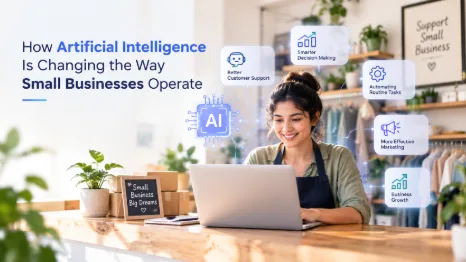
Being a small business owner is synonymous to wearing around five different hats by midday. You might be pursuing a deal, trying to correct an error in billing, answering your customers who have questions that need answers right away, and along the way, there should be room for thinking about the future direction of the business. There is less money available, fewer hands to help you out, and higher expectations from the customers each passing year. And this is where AI could help you out.
Not long ago, AI for small businesses sounded like a luxury for big companies with their own tech departments. That’s no longer true. Affordable software can now write marketing copy, answer common customer questions, spot patterns in your sales, and take care of the repetitive admin that eats up your week. The key is to point it at problems you actually have, not to adopt it because everyone else is talking about it.
The statistics reveal that it is already taking place. According to the U.S. Chamber of Commerce’s Small Business Technology Adoption Report in 2025, close to 60% of the small businesses polled by it have been using AI for their business.
It has started changing the way small companies compete, serve their clients, and make decisions.
1. Automating Repetitive Tasks and Saving Time
Ask any owner and they can list a few jobs that swallow hours and follow the same steps every time: booking appointments, sending follow-up emails, updating customer records, preparing invoices, sorting new inquiries.
Small business automation takes that off your plate by connecting AI features to the software you already use. Instead of handling every routine job yourself, you and your team can spend your time on work that needs conversation, creativity, and good judgment.
A service company, for example, can send automatic appointment reminders and cut down on no-shows. An online shop can sort customer messages by topic and flag the angry ones so they get a fast reply.
These are the areas where it usually helps most:
- Office activities: Summary of meetings, arrangement of documents, and writing standard emails.
- Sales activities: Recording potential customers, following up on leads, and evaluating customer interest based on their attractiveness.
- Inventory management: Spotting buying patterns and flagging items that might be running low.
- Reporting: Turning raw business data into short summaries that are easy to read.
You don’t have to automate everything. Find the repetitive work that quietly drains your time, fix that first, and keep your setup as simple as you can.
2. Improving Customer Service and Personalization
Customers want quick answers, useful suggestions, and the same quality of service every time they reach out. That will be tedious for a small team, especially when messages arrive all day long.
AI-driven chatbots and assistants can deal with frequent inquiries, give details about products, provide information on order status, and direct individuals to relevant sources of information. They are capable of continuing their work even when your office hours are over depending on their configuration.
Artificial intelligence for small businesses also makes personalization much easier. Once you look at the right customer data, you can see what people tend to buy, recommend products that suit them, and tailor your marketing to different groups of customers.
Suppose a local online store uses past purchases to suggest items that go well together, or sends a gentle nudge when a customer is probably ready to reorder. That leaves your team free to deal with the unusual requests, the delicate complaints, and anything that requires a bit of empathy.
One thing to keep in mind: this only works if customers can still reach a real person without a fight. AI should make your service faster and more helpful. It shouldn’t become one more wall between you and the people you serve.
3. Making Marketing More Effective
Marketing drives growth, but creating content and running campaigns can take up a big share of a small business’s time and money. AI tools for small businesses can help with research, content creation, audience analysis, and campaign fine-tuning.
You could use one to brainstorm blog topics, write social media captions, outline a newsletter, or turn a long article into a handful of short promotional posts. Analytics tools can also show which pages people visit, what they engage with, and which campaigns are actually paying off.
A few practical ways to use AI in your marketing:
- Creating first drafts of blog posts, emails, and social media updates.
- Grouping customer feedback to see what people keep asking about or complaining about.
- Reviewing how your campaigns performed so you can plan better next time.
- Tailoring messages to different customer segments.
- Exploring search trends to find content ideas people are looking for.
AI-written content still needs a human to look it over. Check the facts, keep your brand voice consistent, and make sure everything you publish is useful to the reader. Your own insights and real customer stories are what set you apart, and no tool can fake those.
Used carefully, AI can help a small marketing team publish better content without losing so much time to repetitive production.
4. Supporting Better Financial and Business Decisions
Guesswork gets expensive. A small business needs to know which products are selling, where costs are creeping up, and which activities bring in the most money.
AI business solutions can work through your past sales, customer behavior, and operational data to find patterns. Depending on the quality of your data and the tool you pick, those insights can help you forecast demand, manage stock, keep an eye on expenses, and plan your marketing budget.
A retailer might discover that certain products sell far better in particular months. A service provider might compare lead sources and find out which channels bring in customers who actually pay.
AI can also lighten the bookkeeping load by sorting transactions into categories, pulling details from receipts, and flagging odd entries for a closer look. Even so, financial reports and tax decisions should be reviewed by qualified people.
The benefits of AI for small businesses really show up when you pair its suggestions with your own experience and verified financial records. AI can help you spot patterns, but it can’t guarantee that a forecast or recommendation will turn out to be right.
5. Building Smarter Business Software
Ready-made apps are a good place to start, but some businesses work in ways that standard tools can’t handle. As a company grows, it may need its customer relationship software, inventory system, accounting platform, and support channels to share information with each other.
This is where customized business operations using artificial intelligence could provide value. For instance, you may need a support assistant with knowledge from approved product documents only, a sorting mechanism for sales inquiries, or even forecasting software based on your existing data.
If you’re curious about what’s possible, it’s worth exploring AI software development to see how tailored software can solve the specific problems in your operations. What makes sense depends on your business problem, your current systems, the data you have, and the return you can realistically expect on the investment.
Development of custom software is not needed by many businesses. The importance of this process lies in situations where ready-made software fails to satisfy needs, when different systems interfere with efficiency, and where some workflow could use automation.
6. Understanding the Risks Before Adopting AI
AI does have benefits, but getting into it without proper security measures may just lead to more problems. Generated material may be inaccurate, an automated system may misunderstand what the customer wants, and negligent handling of data may expose the company’s confidential information.
Before AI becomes part of your daily work, set a few simple ground rules:
- Protect sensitive information: Don’t enter confidential customer, financial, or employee data into tools that haven’t been approved for it.
- Check important outputs: Look over financial calculations, anything customers will read, and factual claims before you rely on them.
- Maintain human oversight: Always involve humans in the decision-making process for finances, complaints, employment, and obligations.
- Review costs: Weigh subscription fees, integration costs, staff training, and upkeep against the benefits you can actually measure.
- Train employees: Make sure your employees know which tools have been sanctioned for use and when it requires personal intervention.
With a clear process in place, you get the value without treating AI as something that’s always right.
7. How Small Businesses Can Get Started With AI
A good AI strategy doesn’t mean ripping out everything you already use. Pick one recurring problem and see whether technology can improve it.
Here’s a simple way to begin:
- Identify a time-consuming task. Pick one that is quantifiable, such as handling repetitive queries or compiling weekly reports.
- Select an appropriate tool. Compare features, pricing, privacy terms, and how well it works with your existing software.
- Run a small pilot. Test it on a limited workflow before rolling it out more widely.
- Measure the results. Note the improvement in the time required, the error rate, customer satisfaction, or even the cost per task.
- Refine and expand. Keep the useful aspects, discard the unnecessary elements, and develop new applications only where justified.
If your needs are more complex, take time to learn the fundamentals of AI and decide whether a ready-made product or a tailored solution suits your goals better.
The Future of AI in Small Business Operations
Artificial intelligence is changing how small businesses handle their daily responsibilities, understand their customers, and plan for growth. From marketing help and customer support to forecasting and workflow automation, it’s becoming easier for any business to put these tools to work.
But success takes more than grabbing the newest tool. You need clear goals, reliable data, sensible safeguards, and a team that knows how to use the technology well.
The best place to start is simple: pick one operational problem, try a practical solution, and see what happens. Approached thoughtfully, AI can help small businesses make better use of their time, serve customers better, and build a stronger base for steady, lasting growth.