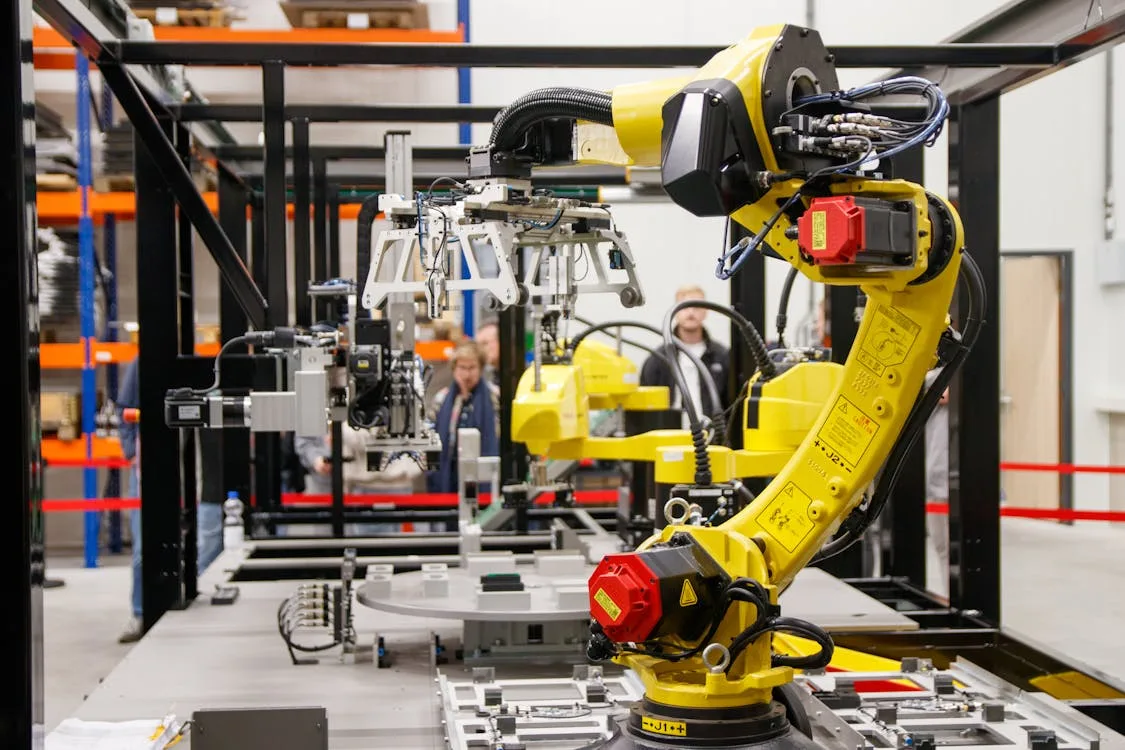
How Automation Supports Consistency in Production
Have you ever wondered why production lines still face errors even with advanced machines and skilled workers? In a world pushing for faster output and tighter deadlines, consistency often becomes the first casualty. As industries scale and demands rise, even small mistakes multiply quickly. In this blog, we will share how automation supports consistency in production and why it matters more now than ever.
The Real Problem Is Not Speed, It Is Variability
Production today is not just about making more units. It is about making them the same way, every time, without drift. Variability is what quietly disrupts operations. Two operators might follow the same process but interpret steps differently. One might skip a minor check to save time, while another may adjust a setting based on instinct. These small differences stack up and lead to defects, rework, and delays.
This issue has become more visible as global supply chains face pressure. Delays, shortages, and rising costs have forced manufacturers to focus on efficiency and predictability. When materials are expensive and timelines are tight, there is less room for inconsistency. A single mistake can ripple through the entire system.
Automation steps in here not just as a way to increase speed, but as a way to reduce variation. It creates a baseline where processes follow defined rules instead of relying on memory or judgment alone. This does not remove human involvement. It supports it by making expectations clear and repeatable.
Within this shift, the operator guidance system by Ansomat is gaining attention because they help manufacturers improve quality, consistency, and traceability across manual operations on the shop floor. Instead of leaving operators to rely on training alone, these systems provide step-by-step direction that keeps processes aligned, even when teams change or workloads increase.
Human Error Is Predictable, Not Random
There is a common belief that errors happen because someone was careless. In reality, most mistakes follow patterns. Fatigue, distractions, unclear instructions, and time pressure all increase the chance of error. These factors exist in every production environment, no matter how experienced the workforce may be.
Automation helps by removing guesswork from routine tasks. When instructions are clear and delivered in real time, operators do not need to rely on memory. This reduces the mental load and allows them to focus on execution instead of recalling details. Over time, this leads to fewer errors and more stable output.
There is also a broader workforce trend at play. Many industries face labor shortages and high turnover, which means new workers are constantly entering production environments. Training alone is not enough when teams change frequently. Systems that guide operators during tasks help maintain consistency even when experience levels vary.
This is where automation becomes less about replacing people and more about supporting them. It creates a structure that helps workers perform at a consistent level, regardless of external pressures.
Standardization Turns Good Processes Into Repeatable Ones
A process can work well once and still fail over time if it is not standardized. Standardization means defining each step clearly and making it easy to follow without variation. Without it, even the best-designed workflows can drift as people adapt them to fit their habits.
Automation enforces this structure by embedding instructions directly into the workflow. Instead of relying on manuals or training sessions, operators receive guidance as they perform tasks. This keeps actions aligned with the intended process and reduces the chance of deviation.
In industries where precision matters, such as automotive or electronics manufacturing, this level of control is essential. A small variation in assembly or inspection can lead to defects that are difficult to trace later. Standardized processes make it easier to identify where issues occur and fix them quickly.
There is also an economic angle here. With rising costs and tighter margins, manufacturers cannot afford repeated errors. Standardization supported by automation helps reduce waste and improve efficiency, which directly impacts profitability.
Consistency Reduces Stress Across the System
One of the less obvious benefits of automation is how it reduces stress within production environments. When processes are inconsistent, workers spend time fixing errors, rechecking work, and dealing with unexpected issues. This creates a cycle where pressure increases and performance drops.
Consistent processes break this cycle. When tasks follow a predictable pattern, workers can focus on doing their job without constant interruptions. This improves not only output but also morale. A stable environment allows teams to work more efficiently and with greater confidence.
There is an irony here. Automation is often seen as adding complexity, yet in practice, it simplifies operations. By removing variability, it creates a smoother workflow that benefits everyone involved.
Practical Steps to Improve Consistency Through Automation
Improving consistency does not require a complete overhaul of your production system. It starts with identifying where variability occurs and addressing those points first. Look at tasks that depend heavily on human judgment or memory. These are often the areas where automation can have the most impact.
Introduce systems that provide real-time guidance instead of relying solely on training. This helps operators follow processes accurately, even under pressure. Combine this with data tracking to monitor performance and identify trends.
Regularly review your processes to check for drift. Even automated systems need updates as conditions change. Keeping instructions current ensures that consistency is maintained over time.
It is also important to involve workers in the process. They understand the challenges on the floor and can provide valuable input on where improvements are needed. Automation works best when it supports the people using it, not when it is imposed without context.
The Future of Production Relies on Stability
As industries continue to evolve, the focus is shifting from pure output to reliable output. Customers expect products to meet the same standards every time, and businesses need to deliver without delays or defects.
Automation supports this shift by creating systems that reduce variation and improve control. It does not eliminate the human element. It strengthens it by providing the structure needed for consistent performance.
This trend is likely to continue as technology advances and expectations rise. Companies that invest in consistency now will be better prepared to handle future challenges. Those that rely on manual processes alone may find it harder to keep up.
Consistency may not sound as exciting as innovation, but it is what allows innovation to scale. Without it, even the best ideas struggle to move beyond small success. With it, production becomes more predictable, more efficient, and more resilient in the face of change.