How Baby Travel Brands Can Plan Seasonal Demand and Product Launches
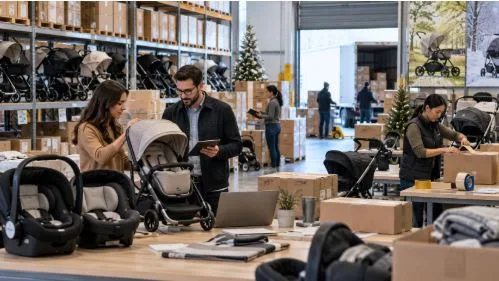
Launching and restocking baby travel products requires more than choosing the right design. Timing can have a major effect on how smoothly a product reaches the market. Retailers, distributors, and private-label brands need to think about production schedules, shipping time, seasonal demand, promotional periods, inventory levels, and possible delays before placing an order.
For businesses planning a new stroller or car seat range, working with a dependable car seat and stroller manufacturer can support the sourcing process, but buyers still need a clear plan for when products should be developed, produced, shipped, and made available to customers.
A strong seasonal strategy can help businesses avoid two common problems: running out of popular products when demand is high and holding too much inventory when sales are slower than expected.
Baby Product Demand Can Change During the Year
Demand for baby travel products may not remain exactly the same throughout the year.
Retail activity can change around holiday periods, major sales events, family travel seasons, new-year promotions, or periods when retailers traditionally introduce fresh collections.
Different markets may also have their own buying patterns.
For example, a retailer serving families who travel frequently may see stronger interest in compact strollers before holiday periods. Another business may see more activity during major promotional events when customers are comparing larger purchases.
Brands should therefore review their own sales history whenever possible.
Instead of assuming that demand will remain constant, they can look for patterns in:
- Monthly sales
- Popular colors
- Best-selling models
- Customer inquiries
- Promotional periods
- Previous stock shortages
- Slow-moving products
These patterns can help businesses make better purchasing decisions.
Product Launches Should Be Planned Backward
A useful way to plan a launch is to start with the intended sales date and work backward.
If a business wants products available for a particular retail period, it should consider every stage that must happen before that date.
The timeline may include:
- Product selection
- Sample development
- Sample approval
- Packaging design
- Branding approval
- Production
- Quality checks
- Final packing
- Shipping
- Customs or import procedures
- Warehouse receiving
- Product photography
- Website preparation
- Retail launch
If any of these steps are ignored, the launch date can become unrealistic.
Planning backward helps businesses understand when they actually need to begin the sourcing process.
Sampling Should Not Be Rushed
When businesses are working toward a seasonal launch, they may feel pressure to approve samples quickly.
However, rushing this stage can create bigger problems later.
The sample gives the buyer an opportunity to review the product before larger production begins.
This can include checking:
- Product function
- Materials
- Colors
- Branding
- Packaging
- Accessories
- General finish
- Instructions
If a sample needs changes, those revisions may require additional time.
It is therefore better to include enough room in the schedule for careful review instead of assuming that the first sample will always be perfect.
A slightly longer development stage can be more manageable than correcting a problem after mass production.
Lead Times Need to Be Understood Clearly
Lead time refers to the amount of time needed to prepare and complete an order.
For baby travel products, lead time may depend on several factors.
These can include order quantity, customization, material availability, packaging requirements, production capacity, and the time of year.
A simple existing model may require less preparation than a heavily customized product.
Businesses should ask about expected lead times early in the discussion.
They should also understand what the estimated time actually includes.
Does it begin after sample approval?
Does it include packaging production?
Does it include final inspection?
Does shipping time come separately?
Clear answers can help businesses create more realistic launch plans.
Packaging Can Affect the Schedule
Packaging is often one of the final elements customers see, but it needs to be planned early.
Custom boxes, labels, manuals, inserts, and branded materials may require their own preparation and approval.
If packaging files are delayed, finished products may not be ready to ship even if manufacturing is complete.
Brands should therefore prepare artwork and packaging information early enough for review.
The packaging should also be checked for accuracy.
A small mistake in product information, model names, barcodes, branding, or instructions can create unnecessary delays.
Including packaging in the main project timeline helps prevent it from becoming a last-minute issue.
Shipping Time Should Not Be Treated as Fixed
Transportation is another important part of seasonal planning.
Shipping time can vary depending on the method, destination, route, port conditions, customs procedures, and other factors.
Businesses should avoid planning a major product launch around the assumption that every shipment will arrive on the earliest possible date.
A more practical approach is to allow some flexibility.
This does not mean expecting problems with every order. It simply means recognizing that international logistics can involve factors outside the control of either the buyer or manufacturer.
A small time buffer can make a launch plan more realistic.
Inventory Planning Should Balance Availability and Risk
Ordering too little can lead to stock shortages.
Ordering too much can create storage costs and tie up money in slow-moving inventory.
Businesses therefore need to find a reasonable balance.
For new products, forecasting can be difficult because there may be no previous sales history.
In this situation, retailers may prefer a more focused first order and then adjust future purchases based on actual customer response.
Existing brands can use previous sales data to guide decisions.
They may compare:
- Sales by model
- Sales by color
- Average monthly demand
- Seasonal peaks
- Return rates
- Promotional performance
This information can make future ordering more accurate.
Not Every Color Needs the Same Quantity
One mistake businesses sometimes make is ordering equal quantities of every color or variation.
Customer preferences are rarely perfectly balanced.
One neutral color may sell much faster than a brighter option. Another market may strongly prefer a particular finish or style.
Instead of automatically dividing an order equally, businesses can use past sales information or customer feedback to create a more realistic mix.
If the product is completely new, the first order can also help reveal which variations customers prefer.
Future production can then be adjusted accordingly.
This approach can reduce the risk of having large quantities of less popular options remaining in storage.
Restocking Should Begin Before Inventory Becomes Critical
Waiting until a product is almost sold out before placing another order can create gaps in availability.
Businesses should understand how long a repeat order may take from confirmation to delivery.
If production and shipping require several weeks, the restocking decision needs to happen before inventory reaches a very low level.
A simple reorder point can help.
The business can consider:
- Current stock
- Average weekly sales
- Expected demand
- Production lead time
- Shipping time
- Safety stock
This creates a more structured approach than waiting until shelves are nearly empty.
Promotions Should Be Connected to Stock Levels
Sales campaigns can increase demand quickly.
A discount, holiday promotion, influencer campaign, or retail event may bring more customers than usual.
Before launching a major promotion, businesses should check whether enough inventory is available.
Promoting a product heavily without sufficient stock can create customer frustration.
At the same time, promotions can be useful for managing slower-moving products when handled carefully.
Retailers can plan campaigns around inventory goals instead of treating marketing and stock management as separate activities.
This can make promotional spending more effective.
Clear Communication Helps Seasonal Projects Stay on Track
When a business has a fixed launch date, communication becomes especially important.
A car seat and stroller manufacturer should receive clear information about product specifications, branding, packaging, quantities, target dates, and any special requirements.
Buyers should also respond to sample approvals, artwork questions, and production decisions without unnecessary delays.
A project timeline can become difficult to maintain if important decisions remain unresolved.
Keeping specifications organized and confirming changes in writing can help both sides understand what has been agreed.
This is particularly important when several models or color options are being produced at the same time.
Backup Planning Can Reduce Disruption
Even a well-planned project may face unexpected changes.
Materials can take longer than expected.
A sample may need revision.
A shipment may arrive later than planned.
A particular color may sell faster than expected.
Businesses can prepare for these situations by building flexibility into their planning.
This may include keeping some safety stock, avoiding overly tight launch schedules, having alternative promotional dates, or identifying which products can temporarily replace a sold-out model.
Backup planning is not about expecting failure.
It is about reducing the impact of normal business uncertainty.
Seasonal Planning Should Improve With Every Order
The first year of selling a product provides valuable information.
Businesses can learn which months were strongest, which colors sold best, how quickly inventory moved, and whether the original launch timing worked well.
These lessons can improve the next production cycle.
After each major season, brands can review questions such as:
- Did stock arrive on time?
- Was the order quantity suitable?
- Which models sold fastest?
- Which products moved slowly?
- Were any colors overordered?
- Did promotions affect demand?
- Was the restocking decision made early enough?
This turns seasonal planning into an ongoing improvement process.
Conclusion
Seasonal success in the baby travel product market depends on more than choosing an attractive stroller or car seat. Businesses need to coordinate sampling, production, packaging, shipping, inventory, promotions, and restocking so products are available when customers are ready to buy.
For brands, wholesalers, and distributors planning future baby travel product orders, bebeluxbaby.com provides information about car seat and stroller manufacturing options that can be considered when organizing product development, customization, and supply planning.
A realistic timeline gives businesses more control over their launches. By planning early, understanding lead times, monitoring inventory, and learning from previous sales cycles, baby-product businesses can reduce unnecessary stock pressure and create a smoother path from production to customer purchase.