How Bulk Order Size and Logistics Shape Hybrid Battery Price
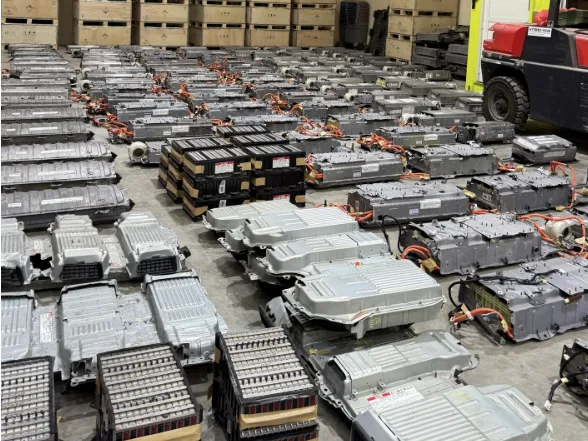
For workshops, parts distributors, importers, resellers, and fleet maintenance teams, the cost of hybrid battery inventory is rarely determined by the product alone. Order quantity, freight planning, handling requirements, model mix, testing standards, and delivery timelines all affect the final landed cost. Understanding these variables helps commercial buyers compare quotations accurately and avoid procurement decisions that appear economical at first but become expensive after logistics are added.
This is particularly important in the used hybrid battery market, where availability can vary by vehicle model and generation. A well-planned bulk order can reduce per-unit procurement and transportation costs, while a poorly structured order may create unnecessary freight charges, compatibility problems, or slow-moving stock. The goal is therefore not simply to find the lowest quoted price. It is to secure dependable, tested inventory at a sustainable total cost.
Why Order Volume Influences Unit Cost
Wholesale pricing generally improves as order size increases because several fixed costs can be spread across more units. Supplier administration, inspection, warehouse handling, export preparation, documentation, and freight booking may require similar effort whether an order contains ten units or one hundred. As volume rises, the share of those expenses assigned to each battery can decline.
Commercial buyers evaluating batteries should nevertheless look beyond headline volume discounts. Larger orders make financial sense only when the inventory matches genuine demand. A workshop may benefit from concentrating on the models it services most often, whereas a regional distributor might require a broader mix for its reseller network.
Before increasing an order merely to reach a lower unit rate, buyers should assess:
- Average monthly demand by vehicle model and generation
- Available warehouse capacity and appropriate storage practices
- Expected inventory turnover
- Cash tied up in slow-moving units
- Seasonal or regional changes in replacement demand
- The supplier’s ability to support repeat orders
A smaller but carefully selected order can produce a better commercial result than a large shipment filled with low-demand stock. The most useful supplier is one that helps buyers balance price breaks with realistic inventory needs.
Freight Efficiency Can Change the Calculation
Logistics often represents a meaningful portion of landed cost, especially for international orders. Freight is influenced by shipment dimensions, total weight, origin and destination, transport mode, documentation, cargo handling, and the use of pallets or other protective preparation. Partially filled cargo capacity can make each unit more expensive, while efficiently consolidated shipments may lower the transport cost per battery.
This does not mean that the largest possible shipment is automatically best. Buyers must compare freight savings against storage costs, working-capital exposure, and the risk of holding the wrong model mix. A practical approach is to request quotations at several quantity levels, such as a trial order, a standard replenishment order, and a larger consolidated shipment. That comparison reveals where meaningful economies of scale begin.
Warehouse Pickup Versus International Shipment
Local and regional buyers able to arrange warehouse pickup may have greater control over transportation schedules and costs. International buyers, however, need clarity about shipment preparation, documentation responsibilities, payment confirmation, and dispatch timing. Comparing prices without establishing the same delivery basis can be misleading. One quotation may cover only warehouse collection, while another may include export-related handling.
Ask every supplier to state exactly what is included. A transparent quotation should identify the products, quantities, model details, commercial terms, and any logistics services being provided. This allows purchasing teams to calculate landed cost rather than comparing figures that represent different scopes.
Model Mix Matters as Much as Quantity
Demand for used hybrid components is not evenly distributed. Toyota Prius, Toyota Aqua or Yaris, Toyota Camry, and Lexus RX Hybrid applications are often important to professional buyers, but the right inventory mix depends on the vehicles operating in each market. Model generation and voltage requirements also matter; two units described under a broad vehicle name may not be interchangeable.
A bulk order containing a consistent, high-demand specification can be easier to source, process, store, and resell. A mixed order may provide better market coverage, but it can require more detailed sorting and preparation. Buyers should submit the vehicle model, generation, required quantity, and voltage requirement at the beginning of the inquiry. Better information reduces quotation delays and lowers the risk of costly ordering errors.
Testing and Condition Affect Real Value
Used inventory should not be assessed on acquisition cost alone. An unusually low price may offer little value if condition is inconsistent or testing information is unclear. Returns, repeat labor, customer dissatisfaction, vehicle downtime, and emergency replacement purchases can quickly erase an apparent saving.
Voltage testing and condition checks are therefore commercially relevant, not merely technical details. Buyers should ask where stock was sourced, whether units were inspected before being offered, and whether they can be checked at the warehouse when applicable. Consistent processes are especially valuable for distributors and workshops whose reputations depend on the products they supply or install.
When comparing the hybrid battery price across suppliers, procurement teams should consider the complete package: sourcing transparency, testing, condition, stock availability, order accuracy, communication, and fulfillment capability. A dependable unit with a clear supply history may deliver a lower operational cost than a cheaper but uncertain alternative.
Lead Time Has a Financial Impact
Availability affects price in ways that are easy to overlook. If a workshop has no replacement inventory when a vehicle arrives, it may lose the job or pay a premium for urgent procurement. Fleet teams can face longer downtime, while distributors may disappoint regular customers. Maintaining an appropriate stock level is therefore part of cost control.
Reliable availability confirmation also helps buyers plan freight more effectively. Instead of arranging several urgent, undersized shipments, a business can consolidate replenishment around predictable demand. Suppliers with substantial inventory and repeat-order capability can support this approach by reducing uncertainty between purchasing cycles.
A Better Way to Compare Wholesale Quotations
Procurement teams can make supplier comparisons more objective by using a landed-cost worksheet. For each quotation, record:
- Unit purchase cost by model and specification
- Inspection and testing status
- Packing, handling, and documentation charges
- Freight and local transportation expenses
- Import-related costs where applicable
- Estimated storage and financing costs
- Expected sell-through or installation rate
- Potential cost of defects, delays, or incompatibility
This method prevents a low initial quote from overshadowing operational risks. It also gives buyers stronger information for negotiating quantities, delivery schedules, and future replenishment arrangements.
How a UAE-Based Supply Partner Supports Better Planning
Hybrid Hive is a Sharjah-based wholesale supplier serving commercial buyers rather than casual retail customers. Its inventory focus includes popular Toyota and Lexus hybrid applications, with availability for other models subject to stock. Batteries are sourced through trusted partners in Japan, brought into the UAE supply network, inspected and voltage-tested, and prepared for warehouse pickup or international shipment.
The company reports more than 20,000 units supplied or processed and presents a 4.9 positive review signal. More importantly for procurement teams, its process is structured around practical ordering information. A buyer submits the model, generation, quantity, and voltage requirement; stock is checked, availability is confirmed, and a quotation is prepared. If the requested option is unavailable, alternatives may be suggested before collection or shipment is arranged following payment confirmation.
That process helps distributors, workshops, importers, resellers, and fleet teams plan purchases around verified requirements rather than assumptions. It also supports second-life use of automotive components, allowing sustainability and commercial performance to work together.
Plan for Total Cost, Not Just Purchase Price
Bulk purchasing delivers the strongest results when quantity, product mix, testing, inventory turnover, and logistics are considered together. Buyers should resist both extremes: ordering too little and absorbing high per-unit freight costs, or ordering too much and tying capital to slow-moving stock.
For an upcoming requirement, prepare a concise list of models, generations, voltage needs, quantities, destination, and preferred delivery timing. Then ask Hybrid Hive for availability and a transparent quotation that can be evaluated on a landed-cost basis. A disciplined request makes it easier to identify the order size and logistics plan that protect margins while keeping essential hybrid inventory available.