How Businesses Use Data Insights to Reduce Marketing Waste and Improve ROI
As digital marketing budgets continue to grow, businesses across industries are under increasing pressure to prove the value of every pound spent. Gone are the days when marketing success could be measured purely by visibility or engagement. Today, performance, efficiency and return on investment (ROI) are the metrics that matter most. At the centre of this shift is a stronger focus on data insights.
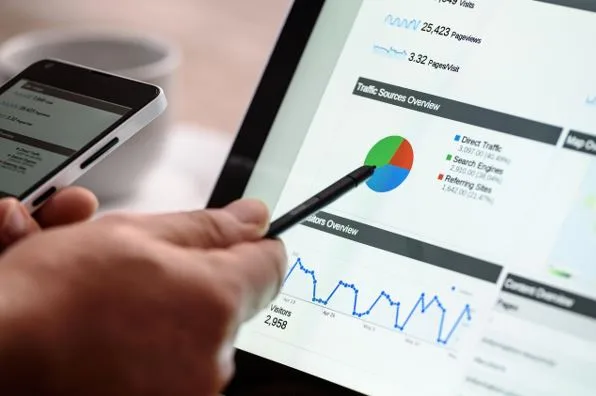
Modern digital marketing generates vast amounts of information, from audience behaviour to campaign performance across multiple channels. To manage this complexity, many organisations now rely on structured reporting systems, often supported by a marketing agency reporting tool that consolidates data into clear, decision-ready insights. These tools are helping businesses move away from guesswork and towards smarter, more accountable marketing strategies.
Understanding Where Marketing Waste Comes From
Marketing waste often occurs when businesses invest in campaigns without fully understanding what works and what does not. This can include overspending on underperforming channels, targeting the wrong audiences or continuing campaigns long after results begin to decline.
Historically, limited visibility made it difficult to identify inefficiencies. Reports were often delayed, fragmented or focused on surface-level metrics. As a result, decision-makers lacked timely insight into where budgets were being misallocated. In many cases, marketing spend continued out of habit rather than evidence.
Data insights change this dynamic by providing a clearer view of performance across channels and campaigns. By tracking results consistently and in near real time, businesses can identify early signs of inefficiency. For example, rising acquisition costs or declining engagement may signal that a campaign needs adjustment or replacement.
Another common source of waste is duplicated effort. When teams work in silos, data may be analysed separately, leading to inconsistent conclusions. Centralised reporting helps eliminate this issue by creating a single source of truth. When everyone works from the same data, decisions become faster, clearer and more aligned with business goals.
Ultimately, understanding where waste occurs is the first step towards reducing it. Data insights provide the evidence businesses need to question assumptions and make informed changes.
Turning Data Insights into Smarter Marketing Decisions
Once waste is identified, the real value of data insights lies in how businesses act on them. Data-driven decision-making enables marketing teams to focus resources on strategies that deliver measurable results.
One of the most immediate benefits is improved budget allocation. By analysing past performance, businesses can identify which channels consistently generate strong returns and which fail to meet expectations. This allows budgets to be reallocated towards higher-performing activities, improving overall ROI without increasing spend.
Audience targeting also benefits from deeper insight. Data analysis reveals which segments are most responsive to specific messages, formats or platforms. Instead of broad targeting, businesses can tailor campaigns to audiences with the highest likelihood of conversion. This precision reduces wasted impressions and improves campaign efficiency.
Timing and frequency are further areas where data insights add value. Understanding when audiences are most engaged helps businesses avoid oversaturation while maximising visibility. Campaigns become more relevant and less intrusive, improving both performance and brand perception.
Importantly, data insights support continuous improvement rather than one-off optimisation. Marketing performance is monitored over time, allowing teams to test, learn and refine strategies based on evidence. This iterative approach reduces reliance on assumptions and encourages sustainable growth.
From a leadership perspective, data-driven marketing also improves confidence in decision-making. Senior leaders are increasingly expecting clearer evidence of performance before committing resources. This shift towards transparency and accountability mirrors wider business trends, where data is now shaping decisions at every level of the organisation.
Building a Culture of Efficiency and Accountability
Reducing marketing waste is not solely a technical challenge; it is also a cultural one. Businesses that succeed in improving ROI tend to embed data insights into everyday decision-making rather than treating reporting as an afterthought.
This begins with setting clear objectives. When success is defined in advance, data becomes a tool for evaluation rather than justification. Marketing teams can focus on outcomes that matter, such as customer acquisition costs, lifetime value or revenue contribution.
Education plays an important role as well. Teams need to understand not only what the data shows, but how to interpret it responsibly. Simple, accessible reporting encourages wider adoption and reduces reliance on specialist analysts. When insights are easy to understand, they are more likely to be used.
Transparency is another key factor. Open reporting builds trust across departments and encourages accountability. When results are visible, teams are more motivated to improve performance and address inefficiencies proactively.
Technology continues to make this process more accessible. Automated reporting, predictive analytics and integrated dashboards are helping businesses respond faster to change. However, technology alone is not enough. Success depends on how insights are applied and how decisions are made.
As competition intensifies and budgets face greater scrutiny, the ability to reduce waste and improve ROI will remain a priority for businesses worldwide. Data insights offer a practical, evidence-based approach to achieving this goal.
The shift towards data-driven marketing is no longer optional. Businesses that use insights effectively gain greater control over performance, reduce unnecessary spend and build more resilient strategies. By focusing on clarity, accountability and continuous improvement, organisations can transform marketing from a cost centre into a reliable driver of growth.