How Companies Are Learning to Read Market Mood in Real Time
When a product fails in public, the first sign almost never shows up in a quarterly report. It shows up on X, formerly Twitter, within minutes, in the replies and quote posts of customers annoyed enough to type. The same holds in reverse. A surprise hit, a competitor stumble, a shift in how people feel about a category, all of it surfaces there before it reaches a dashboard or a news desk.
For years, only the largest firms could act on that. Hedge funds paid for expensive feeds to read sentiment ahead of the market. Enterprise brand teams bought six-figure monitoring suites. Everyone else watched the conversation by hand, refreshing a few accounts and hoping they caught the moments that mattered. That gap is closing, and the reason is mostly about cost: a newer class of tools, including a real-time Twitter API that bills by usage instead of by contract, has cut the price of listening at scale to almost nothing.
What businesses actually watch for
Real-time social data is not one use case. It is several, and most companies care about a handful at once.
The first is brand monitoring. Who is talking about the company, in what tone, and whether the volume is rising or falling. A spike in negative mentions at 2 in the afternoon is a problem worth knowing about at 2:05, not the next morning.
The second is competitive intelligence. When a rival launches, raises money, or fumbles a release, the public reaction is a free read on whether the market cares. Tracking a competitor’s mentions over time says more about their momentum than their press releases do.
The third, and the one growing fastest, is feeding software. Analytics tools, market dashboards, and the new wave of AI systems all want a live stream of what people are saying, so they can summarize it, score it, or act on it automatically.
The cost barrier that used to keep this exclusive
The barrier was price.
When X overhauled its data access in 2023, the official tiers moved sharply upmarket. The entry paid tier runs 100 dollars a month for a capped allowance. The next tier up jumps to 5,000 dollars a month. For a brand team that wants to track a few thousand mentions a day across several search terms, the official pricing turns a simple monitoring job into a real budget line.
Enterprise monitoring suites solved the access problem but added their own. They bundled the data into five-figure annual contracts loaded with features a smaller team would never touch. Large firms paid up. Everyone else made do with manual checking.
What changed
A layer of independent data providers grew up to serve the middle. They handle the connection to X, manage the rate limits, and bill per call rather than per month. The pricing difference is large enough to change who can play.
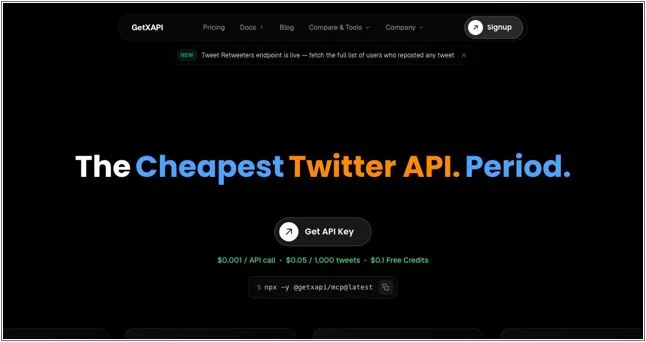
One option built for exactly this kind of monitoring charges around five cents per thousand posts, with no monthly subscription and credits that start at 10 dollars and do not expire. For a company tracking 100,000 mentions in a busy month, that is a five dollar bill rather than a five thousand dollar contract. The data comes back as clean structured records, so a small team can wire it into a spreadsheet, a dashboard, or an internal alert without hiring a data engineer.
The point is not the specific provider. It is that the economics flipped. Watching the live conversation at scale used to be a capability you bought once a year for a lot of money. Now it is closer to a utility you pay for by usage, which means a 20-person company can run the same monitoring a Fortune 500 brand team does.
How a mid-size company would actually use it
The practical setup is simple. Pick the terms that matter: the company name, the main products, the closest competitors, a few category keywords. Pull mentions on a schedule, score them for tone, and set an alert for any sharp change in volume or sentiment.
That alone replaces a job that used to eat hours of someone’s week and still missed the important moments.
The caveats worth naming
None of this is magic, and a few cautions keep it honest.
Social data is noisy. A single viral post can swamp the signal, and bots inflate volume on hot topics. Any serious use needs a spam filter and a way to weight accounts by credibility, or the numbers mislead. Sentiment scoring is approximate too. Sarcasm, slang, and context break automated tone detection more often than vendors admit. Treat the score as a directional signal, not a verdict, and pair the fast public read with slower, deeper sources.
The shift underneath
This is a quiet democratization. The ability to read public mood in real time, once a luxury reserved for funds and large brands, is becoming a standard tool any operator can afford. The companies that benefit treat it as plumbing, wire it in early, and check the live signal before they make a call.
The conversation about your market is happening right now, in public, whether you are listening or not. All that has changed is the cost of hearing it.