How Companies Harden Plants for Extreme Weather
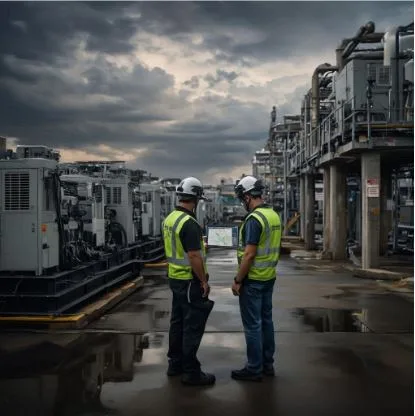
In 2025 alone, wildfires in the Los Angeles area caused an estimated $40 billion in insured losses, according to the World Economic Forum. When events reach that scale, industrial facilities are not dealing with bad weather. They are managing business interruption, asset damage, and workforce risk at the same time.
Operators know conditions are becoming less predictable. The question is how to harden plants in a disciplined, practical way.
Why Extreme Weather Is Now An Operational Risk
Recent wildfire events highlight the rising economic toll of climate-driven disasters. For plant managers, that means downtime, supply chain disruption, and insurance pressure.
The Center for Climate and Energy Solutions has documented cases where flooding at a single supplier facility led to months of production delays across multiple product lines. Even if your site stays dry, your network might not.
This is enterprise risk management.
Step One: Risk Mapping And Hazard Identification
Resilience starts with understanding site-specific hazards. Floodplain exposure, wildfire interface zones, extreme heat projections, and storm surge maps should inform your baseline risk profile.
Structure matters. Many operators benefit from process safety management risk consulting because it creates a formal process to identify, rank, and mitigate weather-related hazards before they escalate. Instead of reacting to the last storm, teams build a forward-looking risk register tied to operating scenarios.
Weather becomes another credible initiating event within the plant’s risk framework.
Step Two: Engineering And Infrastructure Upgrades
Once hazards are defined, engineering controls follow. These improvements are practical and effective.
Common plant-level actions include:
- Elevating critical electrical equipment above projected flood levels
- Installing perimeter drainage and backflow-prevention systems
- Hardening structures with fire-resistant materials and defensible space
Heat resilience may require upgraded cooling capacity or insulation for sensitive instrumentation. Flood mitigation may involve regrading, improved containment, or reinforced access roads. Each project should connect to a documented risk scenario.
Step Three: Backup Power And Redundancy Planning
Extreme heat and storms strain regional grids. In 2024, intense heatwaves pushed electricity demand to emergency levels in several regions.
For plant operators, that means planning for power instability. On-site generation, fuel security planning, and tested load-shedding protocols are critical in high-risk areas.
Redundancy should extend to suppliers. Dual sourcing and geographic diversification reduce the chance that one flooded facility will stop production.
Step Four: Emergency Response And Drills
Written plans alone do not protect assets. Practiced plans do.
Facilities that integrate weather scenarios into emergency drills respond faster and with fewer injuries. Tabletop exercises for wildfire evacuation, flood isolation, and heat-related workforce protection close the gap between policy and performance.
These drills expose weaknesses in communication and decision-making before a real event does.
Building A Practical Extreme Weather Resilience Strategy
Hardening plants for extreme weather is less about forecasting the next storm and more about designing systems that expect disruption and plan for it every single year ahead. Resilience is strongest when built into capital planning, engineering standards, and daily operations, helping organizations shift from reactive repairs to disciplined, structured risk reduction across the entire enterprise organization.