How Crypto Lending Works and Where the Interest Comes From
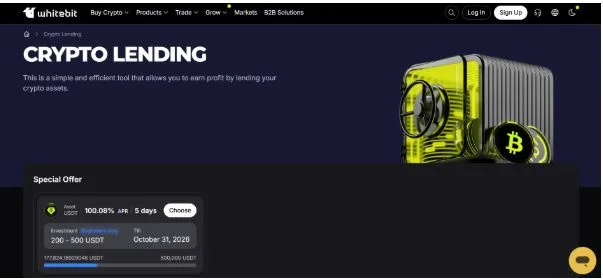
Holding crypto is only one way digital assets are used. Some services also allow assets to be lent for a set period, with interest accrued during that time. This is generally known as crypto lending.
The idea is not unique to crypto. Lending exists throughout traditional finance too: one party provides assets or capital, while another pays for access to them. With crypto, the process takes place through a platform or blockchain-based protocol and involves digital assets instead of conventional currencies.
The WhiteBIT crypto lending program belongs to this part of the crypto market. Other services use their own models, so lending periods, available currencies, rates, and the way interest is calculated are not the same everywhere.
What happens to crypto in a lending product?
When users lend crypto, their assets are placed into a product with specific terms. These terms determine how long the arrangement lasts, what rate applies, and when interest is credited.
What happens next depends on the service. Centralized platforms manage lending through their own systems. Decentralized protocols handle it differently: smart contracts connect the different sides of the transaction and enforce the rules written into the protocol.
This is why cryptocurrency lending is a broad term rather than one specific type of product. Two services can both be described as lending while working quite differently in practice.
Where does the interest come from?
The interest associated with lending is not created simply because crypto has been deposited somewhere. There needs to be an economic activity behind it.
Borrowing is one possible source. A borrower receives access to assets and pays interest for using them. Part of the resulting revenue can then be connected to the interest paid on the lending side. The exact arrangement depends on the provider and its business model.
The phrase earn interest on crypto is often used to describe this outcome, although the rate is not necessarily permanent. Different currencies can have different rates, and those rates may change as demand and market conditions change.
Duration matters as well. A product that holds assets for a fixed period can have different terms from one where there is no predetermined end date.
Why do lending products have different terms?
There is no industry-wide lending rate for Bitcoin, stablecoins, or other cryptocurrencies. Each crypto lending platform sets or calculates rates according to its own model.
The same applies to timeframes. Some products run for a specified number of days. Others are flexible and do not require the assets to remain allocated for one fixed period.
The list of supported currencies varies too. A platform may offer lending for a small selection of assets or for a much broader range. These differences come from the way each service is structured rather than from a rule built into the cryptocurrencies themselves.
What about staking?
Lending and staking are often mentioned in the same context because both can involve allocating crypto for a period of time. Technically, though, they are separate processes.
Staking belongs to Proof-of-Stake networks. Tokens are involved in the mechanism that helps the blockchain validate transactions and maintain its security. Rewards are generated according to the network’s protocol.
With lending, the asset is not being used for blockchain validation. It is part of a lending arrangement instead. A token can therefore appear in a lending product regardless of whether its native blockchain supports staking.
That distinction is useful for understanding how the wider crypto market has developed. Lending, staking, trading, and transfers may all involve the same digital assets, but they serve different purposes and rely on different mechanics.
This content is provided for informational purposes only and shall not be construed as financial, investment, trading, or any other form of professional advice. Nothing herein constitutes a recommendation or solicitation to engage in any transaction or investment activity.