How Different Forklift Configurations Suit Different Industries
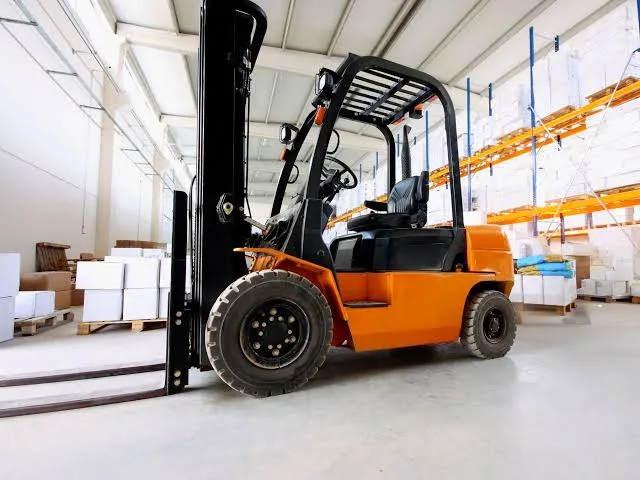
A forklift may look like a straightforward piece of warehouse equipment, but its configuration has a direct impact on safety, productivity and operating costs. Choosing the right machine is not simply a matter of comparing lifting capacities. The working environment, floor conditions, load type, storage layout and frequency of use all influence which forklift will perform best.
A compact electric truck might be ideal for a food distribution centre, while a rough-terrain forklift is better suited to a construction site. Understanding these differences helps businesses avoid a common mistake: selecting a machine based on price or headline capacity alone.
Start with the working environment
The first question should be where the forklift will operate. Indoor warehouses typically have smooth, level floors, restricted turning space and strict requirements around noise and emissions. Outdoor sites present a different set of challenges, including uneven ground, changing weather and longer travel distances.
Electric counterbalance forklifts are widely used indoors because they produce no exhaust emissions and generally operate more quietly than internal combustion models. This makes them suitable for warehouses, retail distribution centres and manufacturing facilities where staff work in close proximity to vehicles. Advances in battery technology have also made electric forklifts increasingly practical for longer shifts, although charging infrastructure and duty cycles still need careful planning.
Diesel and LPG forklifts remain valuable where high power, extended operating periods or outdoor flexibility are priorities. LPG models can be used in some indoor environments with appropriate ventilation, while diesel trucks are more commonly associated with yards, heavy industry and demanding outdoor applications.
Match the configuration to the load
Capacity is important, but it is only one part of the decision. A forklift rated to lift 3,000 kilograms may not be suitable for every 3,000-kilogram load. The load centre, dimensions, height and stability all affect the truck’s real-world performance.
Counterbalance forklifts
The counterbalance forklift is the most recognisable configuration and one of the most versatile. Its counterweight at the rear balances the load carried on the forks, eliminating the need for front stabilising legs. As a result, it can approach pallets directly and work effectively around loading bays, production lines and general warehouse areas.
These trucks are often used in manufacturing, logistics and wholesale operations because they can handle a broad range of pallets and attachments. However, their turning radius can be relatively large, so they are not always the best option for narrow aisles.
Reach trucks
Reach trucks are designed for high-density warehouse storage. Their mast can extend forwards to retrieve pallets from racking, then retract to improve stability while travelling. With a tighter turning circle and strong lift heights, they make efficient use of vertical space.
They are particularly well suited to distribution centres and modern warehouses where aisle width is limited and storage capacity is a major concern. Reach trucks are generally intended for smooth indoor floors and should not be treated as a substitute for outdoor-capable equipment.
Pallet trucks and stackers
For lower-level movement, a full-sized forklift may be unnecessary. Powered pallet trucks are useful for transferring goods over short distances, especially in supermarkets, parcel hubs and loading areas. Walkie stackers and pedestrian stackers add the ability to place pallets at modest heights without requiring the space or cost of a counterbalance truck.
These configurations suit businesses with lighter-duty requirements, although operators still need appropriate training. A smaller machine is not automatically a risk-free machine.
Consider specialist sectors and site conditions
Different industries place distinctive demands on forklift design. In construction and agriculture, for example, the ground may be compacted earth, gravel or uneven concrete. Rough-terrain forklifts use larger pneumatic tyres, increased ground clearance and robust chassis designs to maintain traction in conditions that would challenge a standard warehouse truck.
Telescopic handlers are another option for construction, farming and facilities work. Their extending boom allows operators to place materials at height or reach across obstacles. With the right attachment, they can handle tasks beyond conventional pallet movement, though this versatility requires rigorous assessment of attachments, load charts and operator competence.
In ports, recycling facilities and steel processing plants, forklifts may need specialised protection against dust, heat, corrosive materials or unusually heavy loads. Sideshifting carriages, rotating forks, clamps and drum handlers can improve efficiency, but attachments change the truck’s capacity and load centre. They must be approved for the specific forklift and used in line with updated operating information.
For businesses comparing quality material handling equipment, it is worth looking beyond the basic specification sheet. Ask whether the truck is designed for the site’s surfaces, aisle dimensions, shift pattern and typical load profile. A configuration that appears economical may become expensive if it causes excessive tyre wear, battery downtime or restricted productivity.
Safety and ergonomics matter across every industry
Configuration should also be judged by how well it supports safe, consistent operation. Visibility is a key consideration, particularly when loads obscure the forward view. Mast design, camera systems, mirrors and lighting can all help, but they do not replace sensible travel routes and pedestrian controls.
Ergonomics deserve equal attention. Adjustable seating, intuitive controls, low-vibration operation and easy access can reduce fatigue during long shifts. This is especially relevant in busy logistics environments where operators may perform hundreds of movements each day.
Businesses should also consider the interaction between forklifts and people. Segregated walkways, speed controls, warning systems and clear site rules often make a greater safety difference than equipment upgrades alone. The best configuration is one that works naturally within the site’s traffic management plan.
Choose for the whole operating cycle
The right forklift is determined by more than its purchase price. Total operating cost includes energy or fuel use, servicing, tyres, batteries, attachments, operator training and potential downtime. A machine that costs more initially may deliver better value if it lasts longer, uses less energy or handles the required work more efficiently.
Before making a decision, observe the operation over a typical shift. Measure aisle widths, note the heaviest and most awkward loads, assess floor conditions and identify peak periods. It can also be useful to trial a shortlisted machine under realistic conditions rather than relying solely on demonstrations in an empty yard.
Ultimately, forklift configuration should follow the work, not the other way around. By matching the truck’s power source, dimensions, lifting mechanism and attachments to the industry’s genuine demands, businesses can improve handling efficiency while creating a safer and more reliable workplace.