How Digital Construction Planning Is Transforming Modern Project Delivery
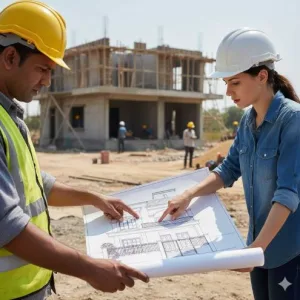
The landscape of modern construction is shifting beneath our feet. As projects become more complex and timelines tighten, construction companies are moving away from traditional pen-and-paper techniques and closer to a digitally integrated approach. This shift isn’t just about buying new software; it’s about developing a continuous thread of facts that links the main conceptual sketch to the very last brick laid on the website. Using advanced modeling and precision design systems, groups can now anticipate bottlenecks before they occur, ensuring that every hour spent on the round is focused on development rather than problem-solving.
The Strategic Role of the Building Assessment Society in Modern Planning
The foundation of any successful campaign is built long before the front shovel hits the dirt. In a generation where clothing costs fluctuate weekly, and lack of effort is an international truth, the monetary roadmap for production must be hermetic. Relying on a professional Construction Estimating Company provides the financial literacy needed to navigate these risky markets. These companies do more than just subject content; they provide a comprehensive risk assessment that takes into account local market trends, logistics, and potential on-site constraints.
Modern speculation has moved from simple spreadsheets to dynamic economic fads. When handling the preconstruction phase, specialist companies use pristine records and predictive analytics to ensure bids are aggressive and profitable. This level of precision is critical for smart contractors who want to maintain thin margins while delivering super effects. By identifying capabilities and cost overruns within the design block, teams can pivot their approach, choosing alternative materials or strategies that align with the client’s cost range without compromising structural integrity.
Navigating Cost Variables
| Factor | Impact on Budget | Mitigation Strategy |
| Material Volatility | High risk of price spikes | Real-time market tracking & early procurement |
| Labor Availability | Variable productivity rates | Detailed man-hour analysis & scheduling |
| Site Logistics | Unexpected transport costs | Geographic site audits & local sourcing |
Technical Accuracy Through Professional CAD Services
Once the monetary framework is established, the focus shifts to technical visualization. The transition from 2D blueprints to multi-dimensional models has revolutionized the way designers and developers talk. Implementing professional CAD Drafting Services allows for a level of detail that was previously impossible. These digital drawings serve as a “single source of reality” for the entire work crew, reducing the paradox that often leads to high-value field errors.
Computer-aided design is no longer just about drawing tension; it’s about embedding facts into every element of the build. For example, the state-of-the-art CAD version includes information about the material composition of the wall, thermal accommodations, and cost. This intelligence enables automated “clash detection,” where the software identifies whether a pipeline is about to run through a structural beam before creation even begins. These disputes cost cents in a digital environment, while resolving them on the field can cost thousands of dollars and days of procrastination.
Great advantages of digital drawing
- Increased collaboration: Engineers, architects, and MEP (mechanical, electrical, and plumbing) professionals can work simultaneously on the same model.
- Rapid prototyping: Designers can explore more than one “what-if” scenario to find the most green layout.
- Accurate Manufacturing: CAD documents can be immediately sent offline to the manufacturing shop for site manufacturing, ensuring that elements fit flawlessly on the website.
Scaling businesses of top building estimating firms
As companies evolve, the breadth of offerings needed to keep the pipeline full can be overwhelming. This is where the scalability provided by the Construction Estimating Companies will be a game-changer. Rather than leveraging a large housing pool, which sometimes, in the slow months, becomes an overhead burden, savvy construction managers engage with outside experts to address the heavy lifting of economies of scale and bid learning.
These organizations offer a variety of different expertise in different fields—be it residential, commercial, or heavy civil engineering. Because they work in many positions, they typically possess a broader view of industry parameters and “broad” pricing than an unmarried permanent appraiser would likely do. This external process acts as a major control measure, catching omissions within bid documents that will conflict later in the project’s internal permitting process, to show an estimate of time for completion.

Comparison of In-house Planning vs. Outsourced Planning
- Speed: Outside professionals often use committed software packages (like Bluebeam or Planswift) that enhance flight mode.
- Accuracy: Third-birthday celebration estimates offer an independent survey challenge, free from “optimism bias” that can affect internal teams from time to time.
- Resource Management: Your core group can verify information about family and user members of interrupt monitoring while technical information is processed in the background.
Final Thoughts
The integration of superior proposal and financial design plans is not an optional luxury—it is a basic necessity for survival within the modern AEC industry. By reconciling the technical accuracy of digital fashion with the financial accuracy of expert forecasts, production teams can circulate from reactive “repair it” thinking to a proactive “build it” approach to infrastructures. Enhances the company’s reputation as a technologically advanced partner.
Frequently Asked Questions
1. How does virtual drawing enhance the online security of the network?
By enhancing the deep digital version, teams can simulate the creation sequence. This will allow conservationists to identify high-threat maneuvers or tight spaces that heavy equipment may struggle with and allow them to design safe routes and techniques before work begins.
2. Do small firms benefit from external speculation proposals?
Definitely. For smaller companies, the fees for full-time, senior-level appraisers can be prohibitive. Outsourcing allows smaller contractors to access knowledge of “big companies” in line with the task-based approach and helps them win large contracts at lower costs.
3. What is the difference between 2D CAD and BIM?
While 2D CAD has the geometric drawing of the building (tracks and circles), BIM (building information modeling) includes 3D geometry as well as rich facts and topics, agendas, and fees associated with almost every component.
4. How accurate are modern building estimates?
When experts deal with the use of modern software programs, estimates are extremely accurate. However, they are constantly dependent on adequate early drawings. That’s why integrated CAD and workflow assessment is so powerful.