How Do Solar Powered Batteries Work? A Comprehensive Guide
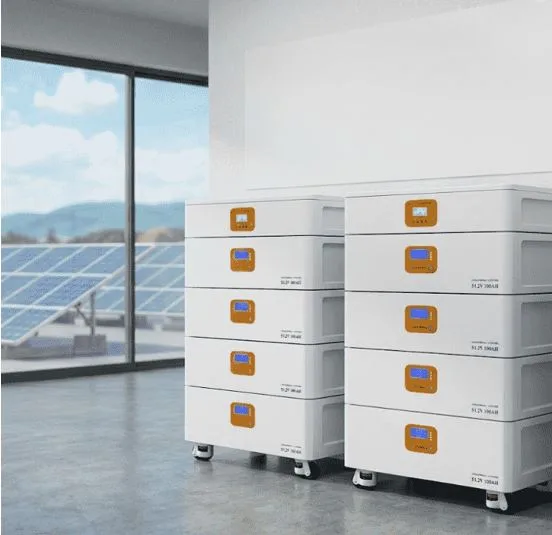
Picture this: it’s a beautiful sunny day, and your solar panels are hard at work powering your home. Then night falls, the grid goes down without warning, and everything plunges into darkness—yet your neighbor’s lights are still on. What gives? The difference isn’t the solar panels themselves; it’s the energy storage system behind them. Many people only realize in that moment of blackout that solar panels alone solve only half the energy equation. True energy independence requires battery storage. Let’s take a closer look at how raw sunlight gets captured, stored, and ultimately converted into the electricity that keeps our daily lives running.
About Solar Batteries
Here are a few things worth knowing about solar batteries.
What are Solar Batteries?
A solar battery is a storage device designed to hold the excess electricity generated by solar panels. Unlike regular batteries—disposable products built for everyday gadgets with short lifespans and limited capacity—solar batteries are purpose-built for solar systems. They’re engineered for long-term, repeated charge-and-discharge cycles, soaking up energy during the day and releasing it in the evening when demand peaks.
What are Solar Batteries Made of? (The Chemistry Inside)
There are many types of batteries out there, but regardless of the chemistry involved, most share the same basic components:
Cathode: During discharge, the cathode undergoes a reduction reaction, accepting electrons from the external circuit. To maintain charge balance, lithium ions or hydrogen ions migrate toward the cathode and are stored there. Common cathode materials include lithium iron phosphate (LiFePO₄) and nickel manganese cobalt (NMC)—currently the dominant cathode chemistries in electric vehicles and energy storage—as well as lead dioxide, the standard cathode material in traditional lead-acid starter batteries.
Anode: During discharge, the anode undergoes an oxidation reaction, releasing electrons that flow through the external circuit to the cathode, generating current. Common anode materials include graphite, metallic lithium, lead, and lithium titanate.
Electrolyte: This serves as the medium for ion transport inside the battery, keeping the internal circuit connected. It must conduct ions freely while completely blocking electrons to prevent internal short circuits.
Separator: Its primary job is to physically keep the cathode and anode apart to prevent short circuits, while its microporous structure still allows ions to pass through. Polyethylene and polypropylene are the most common separator materials.
Types of Solar Batteries
Solar batteries can be classified by various criteria, but the most common approach is by chemistry.
1.Lithium-ion batteries: These are the most popular batteries on the market today, including LFP and NMC variants. Thanks to their high energy density and long lifespan, they’re the go-to choice for residential, commercial, and industrial energy storage.
2.Lead-acid batteries: This is the oldest battery technology around. They’re cheap and well-proven, but their cycle life and energy density fall far short of lithium-ion. They’re still used in remote areas, backup power for telecom towers, and budget-sensitive low-end systems.
3.Flow batteries: Their standout feature is that capacity and power can be scaled independently, and they’re extremely safe—making them ideal for large-scale power stations that need 4–12 hours of long-duration storage.
4.Sodium-sulfur batteries: These are high-energy batteries that operate at elevated temperatures. They’re mainly used for grid-scale storage, particularly excelling at peak shaving and frequency regulation.
5.Nickel-based batteries: Nickel-cadmium batteries contain toxic cadmium and suffer from memory effect, so they’ve largely disappeared from the market, replaced by more environmentally friendly alternatives. However, their exceptional longevity and ruggedness keep them alive in certain niche storage applications and a handful of legacy industrial facilities.
How Do Solar Powered Batteries Work?
The way solar batteries work isn’t just a simple internal energy conversion—there’s a complete process behind it. Solar power systems also come in two flavors: off-grid and grid-tied.
Off-Grid Solar Batteries
- Solar panel absorption
When the sun is shining, solar panels absorb as much energy as they can, converting light into DC electricity.
- Solar charge controller
The energy harvested by solar panels isn’t steady, so before the DC power reaches the battery, it must pass through a charge controller. This regulates voltage and current, ensuring that unstable highs or lows don’t damage the battery.
- Energy storage
After regulation by the charge controller, DC electricity enters the battery and is stored through chemical reactions.
- Energy conversion
Both the electricity generated by the panels and the energy stored in the battery are DC. But DC isn’t the type of power you can pull straight from a wall outlet—it needs to be converted to AC before it can run most household appliances. That’s where the inverter comes in, converting the power into a usable form.
Grid-Tied Solar Batteries
- Solar panel generation
Same as off-grid—it all starts with the solar panels producing electricity.
- Grid-tied inverter
The DC electricity from solar panels can’t be fed directly into the grid or used by standard appliances. It must go through a grid-tied inverter, which converts it into AC that matches the public grid’s specifications.
- Powering your devices
The AC output from the inverter is used first to power whatever’ s connected in your home.
- Smart power routing and seamless switching
When solar production exceeds your household consumption, the surplus automatically flows back to the utility grid through a bidirectional meter—essentially selling it to the power company.
When solar generation can’t keep up with your connected loads, or when the sun goes down, the inverter seamlessly switches over, pulling electricity from the grid to make up the difference.
Best Solar Battery Backup Systems for Your Home
Now that you understand how it all works, you might be wondering: which setup is actually best? Personally, I believe a system with battery backup is the way to go. Think back to the scenario I opened with—night falls, solar generation stops, and the grid is down. Without stored energy, you’re completely out of luck. According to the U.S. Energy Information Administration, the average American household’s peak electricity demand falls between 4 PM and 9 PM—while solar generation peaks around midday.
With battery storage, you can bank electricity during the day and discharge it at night—so even an unexpected outage won’t catch you off guard.
FAQ
What are the disadvantages of solar batteries?
Everything has its trade-offs. The downsides of solar batteries include high upfront costs, significant space requirements, considerable weight, and limited storage capacity.
What is the 33% rule in solar panels?
This actually refers to three completely different concepts, all related to solar energy:
- Rooftop fire code rule
This rule governs how much of a roof’s area can be covered by solar panels. If coverage is below 33%, panels must maintain at least an 18-inch setback from the roof’s horizontal ridgeline and edges to provide clear access for firefighters. If coverage exceeds 33%, fire codes typically require increasing ridge setbacks and pathways to 36 inches to allow for emergency roof ventilation.
- Inverter overclocking rule
In system design, the 33% rule generally allows you to install about 33% more DC solar panel capacity than the inverter’s rated AC output.
- Self-consumption rate rule
For a typical home without battery storage, the household actually uses only about 33% of the total electricity its solar system generates.
How long does a solar battery pay for itself?
There’s no fixed answer—it typically takes 7 to 12 years. Adding battery storage increases upfront costs, which pushes the payback period further out.
What happens to solar power when the battery is fully charged?
It depends on the setup. When a solar battery hits 100% capacity, the charge controller or inverter stops sending excess power to the battery to prevent overcharging. In a grid-tied system, the surplus is automatically exported to the public grid, and the utility compensates you through feed-in tariffs or net metering credits. In an off-grid system, if the battery is full and no appliances are drawing power, the excess energy has nowhere to go—so the charge controller adjusts circuit resistance to force the solar panels to stop generating.