How Does Aerogel Compare to Traditional Insulation Materials?
Aerogel is widely recognized as the most efficient thermal insulation material available today. Its insulating performance is 2 to 8 times better than conventional materials—delivering significant energy savings and extending service life.
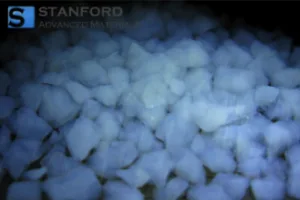
Aerogel Particle from Stanford Advanced Materials
How Aerogel Works and Why It’s Superior
Aerogel is a nanoporous solid material with a porosity of up to 99.8%. The air inside its tiny pores is effectively trapped and unable to circulate, which brings thermal conduction down to nearly zero. This unique structure allows aerogel to outperform traditional insulation like EPS or XPS foam boards by a wide margin. Its thermal conductivity ranges from just 0.015 to 0.025 W/(m·K).
Compared to conventional materials, aerogel achieves the same level of insulation with far less material. It also has a replacement cycle of around 20 years, which lowers overall lifecycle costs. On top of that, aerogel offers excellent water resistance and fire resistance, making it suitable for a variety of demanding environments.
Real-World Performance
In both building construction and temporary structures, aerogel-based insulation coatings and panels have shown impressive results. For instance, a system combining a 2 mm aerogel mid-coat with a 0.2 mm reflective insulation topcoat can lower indoor temperatures by an average of 11°C and cut cooling energy consumption by 35%—improving comfort while saving energy.
In the industrial sector, aerogel is widely used in petrochemical pipelines, high-temperature reactors, lithium-ion battery thermal barriers, and spacecraft shells. It effectively prevents heat loss and protects equipment from overheating. In buildings, aerogel felt applied to walls or roofs can reduce HVAC energy use by more than 30%, delivering noticeable year-round comfort—cooler in summer, warmer in winter.
Market Trends and Outlook
As technology improves and production costs continue to drop, aerogel’s cost-effectiveness in petrochemical, battery, and building insulation applications is steadily increasing. Market demand is growing rapidly. High-performance insulation materials like aerogel will continue to see broader adoption in energy-efficient buildings and industrial thermal management.
When choosing aerogel products, it’s important to work with established manufacturers who have solid quality control and technical expertise. This helps ensure proper installation and long-term insulating performance.
The Bottom Line
With its ultra-low thermal conductivity, nanoporous structure, long service life, and fire- and water-resistant properties, aerogel outperforms traditional insulation by a significant margin. It’s a strong fit for building, industrial, and high-tech applications—and an ideal choice for cutting energy use, reducing emissions, and improving comfort.