How Does Agriculture App Development Support Smart Farming?
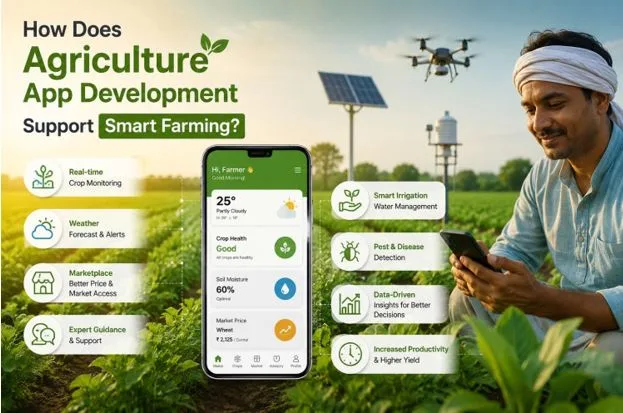
Agriculture is no longer limited to traditional farming methods. With the rise of modern technologies, farmers are now using smart solutions to improve productivity, reduce costs, and make better decisions.
One of the biggest drivers of this transformation is agriculture app development. These mobile applications help farmers monitor crops, track weather conditions, manage irrigation systems, analyze soil health, and even control farm equipment from their smartphones.
Smart farming is becoming essential as the agricultural industry faces challenges such as climate change, labor shortages, and increasing food demand. Agriculture apps provide real-time insights and data-driven recommendations that help farmers optimize resources and maximize yields.
From small-scale farms to large agricultural enterprises, these digital tools are changing the way farming operations are managed. In this guide, we will explore how agriculture app development supports smart farming and why it is becoming a game-changer for the future of agriculture.
Key Reasons to Consider an Agriculture App
Modern farming requires efficiency, accuracy, and real-time decision-making. An agriculture app helps farmers and agribusinesses manage operations more effectively while improving productivity and profitability.
Partnering with an experienced agriculture app development company can help build solutions tailored to the unique needs of modern farming. Here are some key reasons why investing in an agriculture app is a smart decision.
1. Real-Time Crop Monitoring
Agriculture apps allow farmers to monitor crop conditions in real time through sensors, satellite data, and field reports. They can track plant health, identify growth patterns, and detect potential issues before they become serious problems.
This continuous visibility helps farmers make timely decisions that improve crop quality and reduce losses. Real-time monitoring also minimizes the need for frequent manual inspections, saving both time and labor while ensuring healthier and more productive fields.
2. Better Weather Forecasting
Weather plays a critical role in farming success. Agriculture apps provide accurate weather forecasts, alerts, and updates that help farmers plan their activities effectively. Farmers can schedule irrigation, planting, harvesting, and pesticide application based on upcoming weather conditions.
Businesses evaluating the cost to build an agriculture app often prioritize advanced weather forecasting features because of their direct impact on farm productivity and risk management. Early warnings about storms, droughts, or temperature fluctuations help prevent crop damage and reduce risks.
3. Efficient Irrigation Management
Water management is essential for sustainable farming. Agriculture apps help farmers monitor soil moisture levels and control irrigation systems more efficiently. By providing real-time data and automated recommendations, these apps ensure crops receive the right amount of water at the right time.
This prevents overwatering and underwatering while reducing water waste. Efficient irrigation management not only lowers operational costs but also supports healthier crop growth and contributes to environmental sustainability.
4. Improved Pest and Disease Detection
Early detection of pests and diseases can save crops from significant damage. Agriculture apps use data analytics, image recognition, and AI-powered tools to identify potential threats quickly. Farmers can receive alerts and treatment recommendations before infestations spread across fields.
Faster detection reduces crop losses, minimizes pesticide usage, and improves overall farm productivity. By taking preventive action at the right time, farmers can protect their investments and maintain higher crop yields throughout the season.
5. Data-Driven Decision Making
Agriculture apps collect and analyze large amounts of farming data, including crop performance, soil conditions, weather patterns, and resource usage. This information helps farmers make informed decisions based on actual insights rather than assumptions.
Data-driven farming improves operational efficiency, increases productivity, and reduces unnecessary expenses. With access to accurate reports and analytics, farmers can identify opportunities for improvement and develop long-term strategies that support sustainable agricultural growth and profitability.
6. Enhanced Farm Equipment Management
Managing agricultural machinery can be challenging, especially on large farms. Agriculture apps help track equipment usage, maintenance schedules, fuel consumption, and performance metrics. Farmers can receive reminders for servicing and identify equipment issues before they cause costly breakdowns.
Proper equipment management extends machinery lifespan, reduces downtime, and improves operational efficiency. By ensuring that farm equipment remains in optimal condition, agriculture apps contribute to smoother and more productive farming operations.
7. Simplified Inventory Management
Agriculture apps make it easier to manage inventory, including seeds, fertilizers, pesticides, and harvested produce. Farmers can monitor stock levels, track usage, and receive alerts when supplies are running low.
Effective inventory management prevents shortages, reduces waste, and ensures that necessary resources are always available when needed. Having complete visibility into inventory also helps farmers control costs and maintain efficient farm operations throughout the production cycle.
8. Increased Productivity and Yield
One of the primary benefits of agriculture apps is their ability to improve overall farm productivity. By providing actionable insights, automating routine tasks, and optimizing resource allocation, these apps help farmers maximize crop yields.
Better planning and management lead to healthier crops and more efficient use of land, water, and labor. Increased productivity directly impacts profitability, making agriculture apps a valuable investment for farms of all sizes.
9. Better Market Access
Agriculture apps can connect farmers directly with buyers, distributors, and marketplaces. This reduces dependency on intermediaries and helps farmers secure better prices for their products. Real-time market information allows farmers to make smarter selling decisions based on demand and pricing trends.
Improved market access increases revenue opportunities and strengthens business growth. By creating direct communication channels, agriculture apps support a more transparent and efficient agricultural supply chain.
10. Sustainable Farming Practices
Sustainability has become a major focus in modern agriculture. Agriculture apps help farmers adopt environmentally responsible practices by optimizing resource usage and reducing waste. Features such as precision farming, smart irrigation, and soil health monitoring contribute to lower environmental impact.
These tools help farmers balance productivity with conservation efforts while meeting sustainability goals. As agriculture continues to evolve, digital solutions play a vital role in promoting long-term environmental and economic sustainability.
Final Words
Agriculture app development is transforming the way farmers and agribusinesses manage daily operations and long-term growth. From real-time crop monitoring and weather forecasting to smart irrigation, inventory management, and market access, these digital solutions help improve efficiency, productivity, and sustainability.
As farming challenges continue to grow due to changing climate conditions, rising food demand, and resource limitations, technology-driven tools are becoming increasingly important for making informed decisions and maximizing yields.
Agriculture apps not only simplify farm management but also enable farmers to use resources more effectively while reducing operational costs. Whether for small farms or large agricultural enterprises, investing in smart farming technology can deliver significant benefits and create new growth opportunities.
As the agricultural industry embraces digital transformation, agriculture apps will continue to play a crucial role in building a more productive, profitable, and sustainable future for farming worldwide.