How Does Flap Disc Grit Selection Impact Surface Finish and Material Removal Speed?
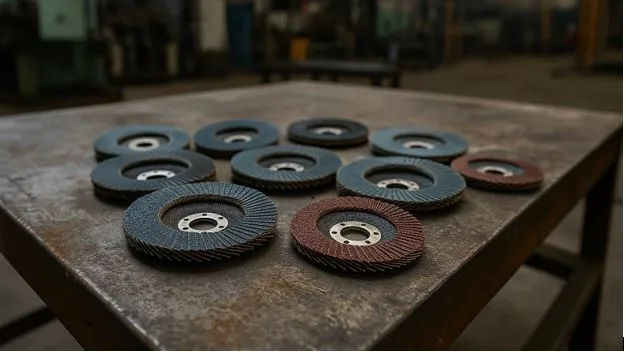
Selecting the correct abrasive grit is a routine requirement across production sectors such as industrial equipment manufacturing, architectural metalwork and automotive fabrication. Selecting the right flap disc grit directly controls how fast your grinder removes material and the final smoothness of your workpiece. The different grit sizes behave differently under pressure, respond differently to thermal buildup and react differently to varying metal densities. When these differences are fully addressed during surface preparation, the workpiece remains free from deep scratches or surface distortion.
The Core Mechanics of Grit Selection
A flap disc consists of overlapping abrasive flaps adhered to a central backing plate. As the disc wears down, new abrasive grains expose themselves to provide a continuous and efficient cut. The size of these grains determines how the disc behaves on your workpiece.
Understanding the configuration of these flaps is fundamental to optimising your material processing workflow. The overlapping design provides a distinct advantage over traditional rigid grinding discs because it offers a built-in cushioning effect. This structural feature allows the abrasive to absorb operator downward pressure more evenly across the surface area.
Consequently, the rate of wear remains uniform, preventing individual abrasive grains from fracturing prematurely or building up excessive frictional heat on the metal.
Coarse Grits for Speed
Coarse grits usually fall between 24 and 40. These discs feature large, heavy abrasive grains designed for heavy-duty material removal. Operators choose these for heavy stock removal, beveling weld edges and thick scale removal. They prioritise high material removal rates while leaving a rougher surface profile for subsequent processing stages.
Medium Grits for Blending
Grits ranging from 60 to 80 serve as the sweet spot for many engineering shops. They offer a balanced performance that supports both moderate material removal and surface smoothing. Operators select these for blending welds and cleaning up surface imperfections. They remove material at a steady pace while saving significant time during the final finishing stages.
Fine Grits for Precision
Fine grits start at 120 and go upwards. These discs use tiny abrasive grains that shave off minuscule amounts of metal. Operators utilise fine choices for light deburring, cleaning and preparing surfaces for painting or polishing. They provide an exceptionally smooth finish on thin sheets and visible structural joints.
Striking the Perfect Balance
Choosing the right grit is about optimising total processing time. Using a 36-grit disc to remove a weld quickly creates deep scratches that require extensive rectification work later.
Starting with an 80-grit disc on a massive weld bead, the abrasive grains are glued together and production timelines are extended. A two-step approach represents the most efficient route for professional metalworking. Operators start coarse to shift the bulk material, then switch to a finer disc to blend the surface seamlessly.
This multi-stage methodology preserves the structural integrity of your workpiece while maximising the working life of your consumables. When you force a fine disc to perform heavy stock removal, the friction causes the grains to dull rapidly, leading to glazing and thermal discolouration on the metal surface. Conversely, forcing a coarse disc to perform fine blending tasks simply introduces unnecessary rework costs that degrade your workshop profit margins.
Why Consumable Quality Matters?
The science of grit selection succeeds when your abrasives perform predictably. Uniform grit sizes on a single disc ensure a consistent finish and protect the surface from random deep scratches.
Opting for manufacturers like Superon Technik, which offers consistent product quality, supports stress-free usage for all your manufacturing needs. Finding a dependable grinding disc supplier makes a massive difference to your daily operations and long-term project costs.
- Consistent Price is maintained through the 1 country 1 price promise, which ensures all distributors receive equal and fair market rates.
- Easy Availability across India means customers have multiple options to buy products from local inventory easily.
- One Stop Shop capabilities allow a single provider of all stainless steel fabrication consumables to act as your sole partner.
- Flexible Ordering lets businesses streamline inventory without committing to multiple dealerships or minimum order quantities.
Sourcing your consumables from a single reliable partner stabilises your supply chain and improves workshop efficiency.
Conclusion
Matching the right grit size with high-quality manufacturing ensures your project finishes on time, within budget and to professional standards. Understanding the balance between coarse stock removal and fine surface finishing eliminates the common guesswork from metalworking. Investing in reliable abrasives that deliver predictable wear rates protects your workpieces from damage while significantly lowering your long-term operational costs.
Adopting standard grit protocols transforms unpredictable manual grinding into a controlled, repeatable industrial process that consistently meets strict engineering specifications.