How does Mobile Billboard Advertising work in Las Vegas?
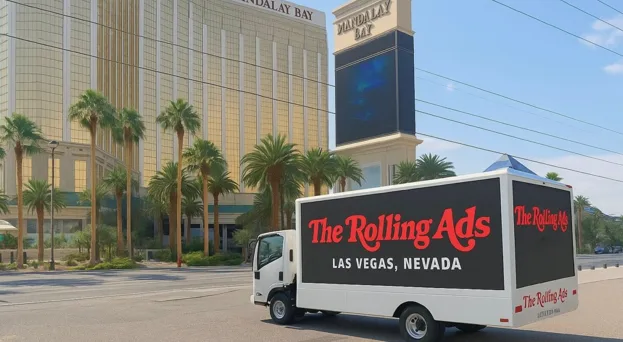
Las Vegas is one of the most concentrated advertising markets in the country. Tens of millions of visitors pass through a relatively small stretch of the city every year, and much of that traffic is compressed into a handful of walkable, high-density corridors. That combination — huge audience, small footprint — makes mobile billboard advertising an especially good fit for the city.
Mobile Billboard Advertising Las Vegas uses trucks equipped with large LED or static screens that drive planned routes through high-traffic areas. Rather than waiting in one fixed spot for people to pass by, the ad travels through the places where visitors and locals already are — the Strip, Fremont Street, convention venues, and major event sites.
Why Las Vegas Works Well for This Format?
Las Vegas draws an enormous, constantly rotating audience within a compact area. The Strip alone carries pedestrian volumes comparable to Times Square. Much like the high-density environment that makes mobile billboard advertising New York City campaigns so iconic, the Las Vegas Strip packs millions of eyes into just a few miles of road. Meanwhile, the city’s convention business adds a steady stream of business travelers on top of tourist traffic. Because the city runs late into the night, mobile billboards here are also effective well beyond typical daytime advertising hours.
How Mobile Billboard Campaigns Work?
A mobile billboard campaign pairs a truck-mounted screen with a planned route. Digital LED trucks can rotate between several ads, run video, and often include audio, which lets messaging change throughout the day or in response to a specific event without swapping out physical signage.
Typical routes across Las Vegas include:
- The Strip (Las Vegas Boulevard) — the busiest corridor in the city, with heavy vehicle and pedestrian traffic from late morning into the early hours
- Fremont Street / Downtown — the city’s other major tourist hub, drawing a somewhat younger crowd
- Convention corridor (Paradise Road / Las Vegas Convention Center) — reaches trade show and conference attendees during major events
- Allegiant Stadium and T-Mobile Arena areas — active specifically on event and game days
Because Las Vegas hosts a heavy calendar of large conventions and events, trucks are frequently timed to specific dates rather than run on a fixed daily route. Examples include CES in January, which draws around 140,000 technology industry attendees; the Las Vegas Grand Prix in November; the Electric Daisy Carnival in May, with roughly half a million attendances across three nights; the National Finals Rodeo in December; and major fights and residency events that draw a distinct audience for a single weekend.
What Makes Mobile Billboards Effective Here?
Static ads and digital banners are easy to overlook, especially in a city already saturated with visual stimulation. A large, moving screen — particularly one with audio — is harder to tune out simply because it isn’t part of the fixed background. The ability to change content quickly also matters in a market like Las Vegas, where the audience can shift completely from one event weekend to the next.
The Broader Trend
As Las Vegas continues to grow its convention business alongside its tourism numbers, and as LED screen technology keeps improving, mobile billboards have become a common part of local advertising strategy — particularly for time-sensitive promotions, event-based marketing, and campaigns aimed at reaching a specific, temporary audience like convention attendees or festival crowds.