
How Dogecoin Turned an Internet Joke into a Community
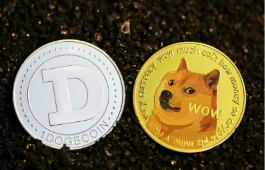
Bitcoin tends to take the stage whenever cryptocurrency comes up. Imagine Michael Jackson, the Beatles and Elvis sharing one spotlight, and you get an idea of how difficult it is for the rest of the market to attract the same attention. Yet those other projects have stories of their own. Dogecoin’s is particularly hard to overlook: a coin built around an internet joke became a community that people are still curious enough to join.
The rallies that rewarded some early holders can make Dogecoin look like a project designed for ambitious investors from the beginning. But if you’re researching how to buy dogecoin, here’s the surprising part: its creators were poking fun at that very seriousness. They weren’t planning a market giant. The people who adopted the coin gave it a purpose through tips, donations and payments, turning something shared for a laugh into a currency with a community behind it.
How a made-up coin became a real project
The project that launched on December 6, 2013 began with Jackson Palmer’s idea for a currency based on the Doge meme. He created the website around that joke, using the familiar Shiba Inu face and its unusual captions to introduce it. Billy Markus then took on the software, so the invented coin became something people could send to one another. Their collaboration joined an internet personality to a functioning cryptocurrency, with far more interest to come than either had initially expected.
They didn’t have to invent a blockchain from scratch. Dogecoin’s original code came through Luckycoin and Litecoin, whose own ancestry led back to Bitcoin. Changing existing open-source software let Markus give the currency its own rules, while the Doge image and Comic Sans styling supplied a personality that elaborate technical branding couldn’t have produced. It was a playful launch with modest expectations, rather than an attempt to sell the next grand financial revolution.
That small launch eventually reached people far outside its original internet audience. Musk’s public support made Dogecoin much more visible during the excitement of 2021, and businesses began offering ways to spend it. The Dallas Mavericks announced payment for tickets and merchandise in March of that year, Tesla opened eligible shop purchases to DOGE, and AMC later added it to its crypto payment options. A coin that people had first shared as a joke was finding a place in commercial transactions, within the particular payment arrangements each company offered.
The community gave the joke a purpose
Sending a Jamaican bobsled team toward the Winter Olympics probably wasn’t what you’d expect from an internet dog coin. In 2014, however, supporters raised about 26.5 million DOGE to help the team reach Sochi. Decrypt’s account of Dogecoin’s sporting connections looks back at that effort and the enthusiasm around it. Another campaign that year collected more than 40 million DOGE for clean-water wells in Kenya, showing that a group brought together by a meme could organize around a practical need.
For someone new to cryptocurrency, a community that laughs, tips and raises money together can be easier to approach than a discussion dominated by trading jargon. You can recognize what a small donation or a tip does without first mastering every technical term. That is part of why Dogecoin’s charitable campaigns mattered: they made participation visible and gave the currency a social use. The low unit price wasn’t protection against losing money, but the friendly atmosphere helped people feel welcome to learn and take part.
The Dogecoin manifesto describes the project through four values: being personable, useful, welcoming and reliable. Its emphasis is on people working together and on a currency that they can actually use, with room for fun along the way. Supporters see that as a challenge to the idea that digital finance must revolve around exclusivity or profit. DOGE’s continuing issuance also distinguishes it from a scarcity story: new coins keep entering circulation, without a final supply ceiling, to reward the miners who secure its network.
A dog meme opened the door to other coins
Dogecoin’s popularity encouraged developers to build other currencies around internet culture, eventually creating a recognizable meme-coin category. Shiba Inu is a familiar example, borrowing a dog-themed identity while operating as a token on Ethereum rather than on Dogecoin’s blockchain. Sharing a theme doesn’t give the two assets the same mechanics, but it shows how a recognizable image can gather people around a new crypto project.
Solana-based meme coins drew attention in 2023, followed by a much larger expansion during the 2024 cycle. Celebrity, political and AI-linked tokens gathered their own audiences in that period, with AI and politics remaining prominent themes in 2025. The waves overlapped as people brought different interests into the market. What began with a dog image had become a category able to build a token around the personalities, ideas and jokes already circulating online.
Projects looking beyond a joke-based identity have tried adding practical features, including locked trading liquidity and applications for decentralized-finance staking. A community can attract people in the first place, while those features give them another reason to take an interest in a particular project. They belong to the individual coin or application, so don’t assume every meme coin offers the same things. The category can keep evolving through that mixture of shared culture and experiments with usefulness.
Why the original story still matters
A playful experiment became a way for people to reward an interesting post, send a small payment or contribute to someone else’s cause. That is what makes Dogecoin’s history more than the story of a price going up: people found a social, generous use for something they initially shared as a joke. If being part of that kind of community appeals to you, DOGE is worth watching as a currency whose character comes from what its users do with it.