How FUT Hair Transplants Help Reduce Scars Effectively
Understanding Hair Transplant for Scars
Hair transplant for scars has become a reliable option for people who want to improve the appearance of areas marked by previous injuries, surgeries, or burns. Scarring on the scalp can interrupt hair growth because damaged skin does not support follicles as effectively as healthy tissue. This often leaves visible patches that affect confidence and make styling difficult. A targeted procedure such as a hair transplant allows new follicles to be placed into the scarred area, giving the site a chance to support natural growth again. At the centre of this approach is the FUT technique, which can be especially effective for suitable candidates. Many people choose to undergo an FUT hair transplant in Melbourne at Atlantis Medical Clinic because the method offers a balance between consistent results and long-term improvement.
What FUT Hair Transplant Involves
FUT stands for Follicular Unit Transplantation, a method that removes a thin strip of skin from the donor area, usually the back of the scalp. Technicians then prepare the strip under magnification to create small follicular units. These units are then implanted into the recipient area, including scarred sections. FUT is frequently chosen for scar repair because it provides a large number of grafts in a single session. This is important when covering noticeable scars, as achieving adequate density is key for the area to blend with surrounding hair. Unlike procedures that harvest follicles one by one, FUT’s strip technique allows clinicians to access more grafts at once. For many patients, this leads to a fuller and more even outcome, particularly in areas where scarring is firm or wide.
Why Scars Benefit From FUT
Scar tissue behaves differently from normal skin. Its structure is thicker, less flexible, and has limited blood supply. These qualities make graft survival more challenging. FUT helps address this by enabling surgeons to use high-quality follicular units with strong roots. When inserted carefully, these robust grafts have better chances of adapting to the scarred site. Another advantage is that FUT can produce enough grafts to allow for strategic placement. A higher number of follicles means a greater opportunity to create natural coverage over a rigid scar. This density is important because a scar will not shrink or fade simply because hair is placed over it; the hair must effectively mask the area through precise positioning.
Preparing the Scarred Area
Assessing Scar Type
Before the procedure, a proper evaluation of the scar is essential. Scars may be flat, raised, sunken, soft, or firm, and each type requires a slightly different approach. For example, raised or hypertrophic scars may need pre-treatment to soften the tissue. Sunken scars might require minor adjustments to ensure the surface is even enough for graft placement.
Enhancing Blood Supply
A scalp with improved circulation tends to support graft survival more effectively. Some clinicians use methods such as microneedling or topical care in the weeks before the transplant to prepare the area. These steps help encourage better healing once grafts have been placed.
Planning Hair Direction
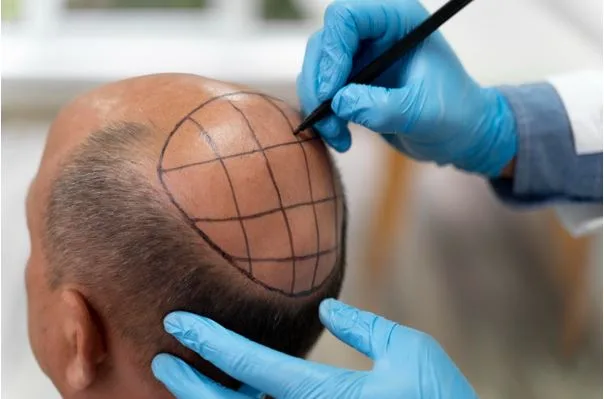
Scar tissue does not naturally follow the same hair pattern as the surrounding scalp. Planning the angle and direction of each follicular unit is essential for achieving a seamless appearance. FUT grafts are well suited to this because they are prepared in natural groupings, making it easier to mimic existing patterns.
The FUT Hair Transplant Procedure
Donor Strip Removal
The surgeon removes a small strip of skin from the donor area. The incision is closed using precise stitching that usually leaves only a narrow line. For most people, surrounding hair covers this line easily once healed.
Preparing Grafts
Technicians carefully divide the strip into individual follicular units. Each unit contains one to four hairs. These units are kept in controlled conditions to maintain freshness throughout the procedure.
Implanting Into the Scar
Tiny openings are made in the scarred area to receive the grafts. Because scar tissue can be tough, the surgeon takes extra care to create channels that support healthy healing. The grafts are placed at angles that match the natural direction of the patient’s hair.
Healing After FUT
Immediate Recovery
Patients typically experience mild swelling or tightness in the donor area, which settles gradually. The scarred area where grafts were implanted may appear slightly raised or red for a short period.
Graft Shedding
It is normal for the transplanted hairs to shed within the first few weeks. This is part of the cycle. New growth begins gradually after this shedding stage.
Long-Term Growth
Over the next several months, new hairs start to grow through the scar. Because FUT provides strong follicular units, many patients achieve consistent results. The goal is not only to cover the scar but also to create a natural texture that blends with the surrounding scalp.
Benefits of FUT When Treating Scars
Strong Graft Quality
FUT often yields grafts with intact roots and supportive tissue, which is important when treating areas with limited blood supply.
Higher Volume of Grafts
The method allows for a larger number of grafts in one session, helping the clinician build better density over the scar.
Natural Appearance
Follicular units are placed with careful attention to direction, angle, and density, helping the treated area look natural even at close range.
Long-Term Results
With proper care, the transplanted hair continues to grow for many years. This can significantly reduce the visibility of scars over time.
Is FUT Suitable for All Scar Types?
Not all scars respond the same way. Some may need additional preparation, while others may benefit from combining FUT with other methods. A clinician assesses factors such as size, colour, texture, and location. In many cases, FUT is a strong choice, especially for larger scars or those located on the scalp where density matters. However, individuals with very tight or raised scars may require additional steps before proceeding.
What Patients Can Expect
People who choose an FUT hair transplant in Melbourne at Atlantis Medical Clinic generally aim for noticeable improvement rather than complete erasure of the scar. The procedure helps blend the area more effectively with the surrounding scalp and encourages natural-looking growth. Many patients find that once the hair begins to grow through the scar, it becomes far less noticeable in everyday situations. Expectation management is an important part of planning. A clinician discusses likely outcomes, the number of grafts needed, and whether one or more sessions may be required.
Conclusion
FUT hair transplants offer an effective way to reduce the visibility of scars by placing healthy follicles directly into scar tissue. The method provides strong grafts, reliable density, and a long-term improvement in appearance. For individuals seeking meaningful enhancement, especially those considering a hair transplant for scars, this approach remains a trusted option.