
How Futures Proprietary Trading Firms Are Reshaping Market Access for Independent Traders
The futures market has always attracted traders who thrive on structure and leverage. Contracts tied to commodities, indices and interest rates offer opportunities that differ fundamentally from equity trading.
Yet for decades, meaningful participation in futures markets required substantial personal capital. That barrier kept skilled traders on the sidelines while institutional desks dominated volume and liquidity.
A shift has been underway for several years now. Proprietary trading firms focused specifically on futures markets have created pathways that allow independent traders to access significant capital without risking their own savings.
Understanding how these firms operate and why they have gained traction reveals something important about the evolving structure of modern financial markets.
What Futures Proprietary Trading Actually Involves
Proprietary trading occurs when a firm deploys its own capital in financial markets rather than executing trades on behalf of clients. The firm profits directly from market activity rather than earning commissions or management fees.
In traditional proprietary trading, firms hired traders as employees. These traders sat on institutional desks and operated under strict risk parameters set by the firm. Compensation typically included a base salary plus a percentage of generated profits.
The modern evolution of this model extends the concept to independent traders who operate remotely. Firms provide capital allocation and traders retain a negotiated share of profits while the firm absorbs the downside risk beyond defined limits.
Futures markets are particularly well suited to this arrangement. Standardised contracts, centralised clearing and transparent pricing create an environment where risk can be measured and managed with precision.
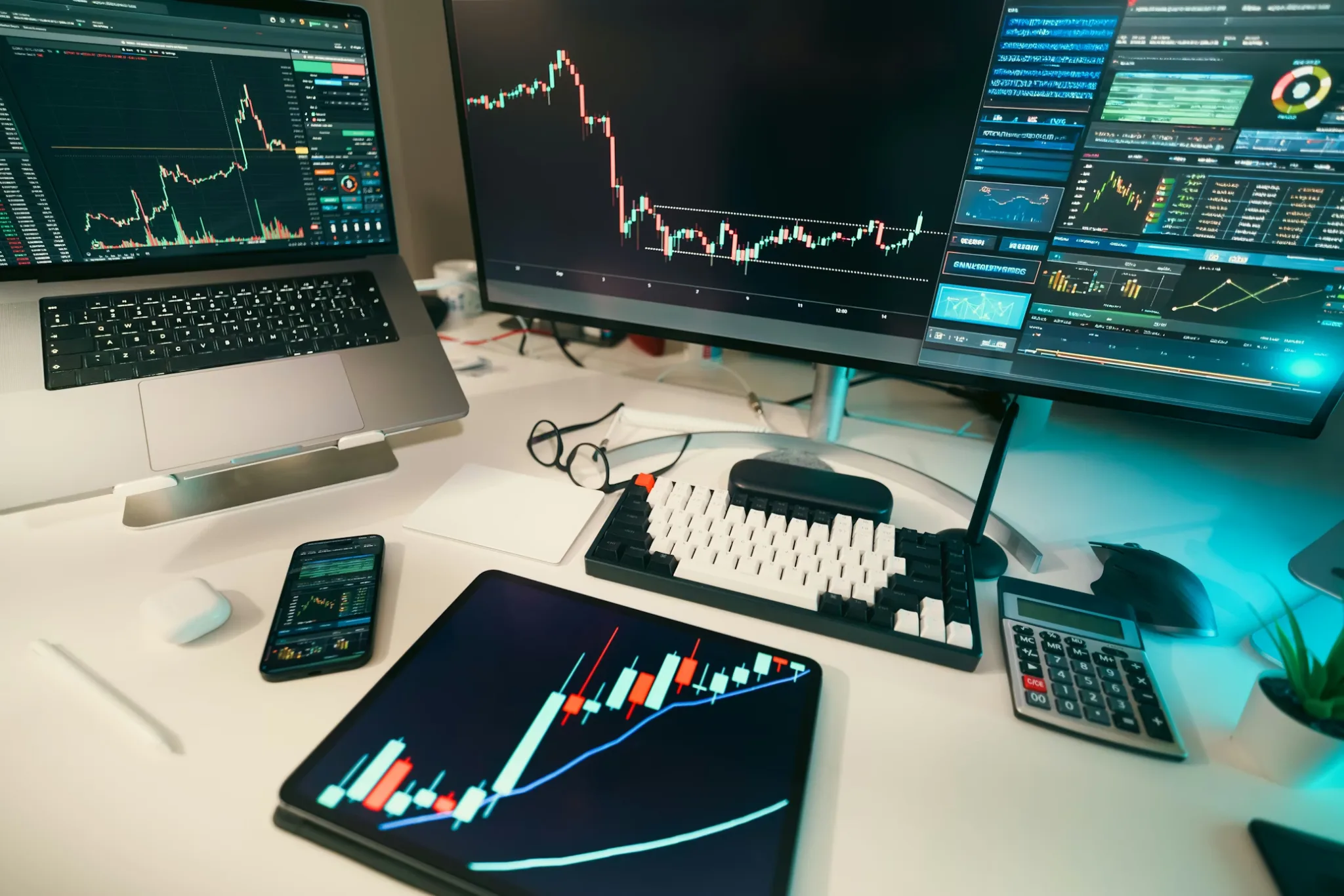
Why Futures Markets Attract Proprietary Capital
Futures contracts carry characteristics that make them natural instruments for proprietary trading operations.
Leverage is built into the product structure. Margin requirements typically represent a small fraction of the notional contract value. This allows traders to control significant positions with relatively modest capital commitments.
Liquidity in major futures markets remains deep throughout trading sessions. Contracts on the S&P 500, crude oil, gold and Treasury bonds generate consistent volume that supports rapid execution without excessive slippage.
The diversity of available contracts allows traders to specialise. Some focus exclusively on equity index futures. Others trade energy or agricultural commodities. This specialisation enables traders to develop deep expertise in specific markets rather than spreading attention across too many instruments.
Futures markets also operate on extended schedules. Many key contracts trade nearly around the clock during weekdays. This extended access allows traders across different time zones to participate during their preferred hours.
How Modern Futures Prop Firms Operate
The operational model of contemporary futures proprietary trading firms follows a structure that balances opportunity with risk management.
Traders typically begin with an evaluation phase. This process assesses trading ability over a defined period using simulated or live market conditions. Evaluation criteria generally include profit targets, maximum drawdown limits and consistency requirements.
Traders who demonstrate competence during evaluation receive funded accounts. The firm allocates capital according to the trader’s demonstrated skill level and the risk parameters both parties agree to.
Profit sharing arrangements vary across firms but generally favour the trader. Splits ranging from 70 to 90 percent in the trader’s favour are common. The firm retains its share as compensation for providing capital and absorbing risk.
Risk controls operate continuously. Daily loss limits prevent catastrophic drawdowns. Position size restrictions ensure that no single trade can threaten the broader portfolio. These controls protect both the firm’s capital and the trader’s continued access to funding.
The Economics Behind the Model
Understanding why this model works requires examining the economics from both perspectives.
For traders, the proposition is straightforward. Access to meaningful capital without personal financial risk removes the primary barrier to professional-level market participation. A trader with genuine skill but limited savings can operate at a scale that would otherwise require years of capital accumulation.
For firms, the model generates returns through diversification across many traders with different strategies and market focuses. While individual traders may experience losses, the aggregate portfolio benefits from the statistical distribution of outcomes across uncorrelated approaches.
The evaluation process serves as a filter. It ensures that capital reaches traders who have demonstrated discipline and competence rather than those simply willing to take large risks with someone else’s money.
This filtering mechanism is essential to the model’s sustainability. Without it, firms would face adverse selection that could quickly erode their capital base.
What Traders Should Consider Before Choosing a Firm
Selecting the right proprietary trading firm requires careful evaluation of several factors that directly affect trading outcomes.
Fee structures deserve close scrutiny. Some firms charge evaluation fees, monthly platform costs or data fees that accumulate regardless of trading performance. Understanding the total cost structure before committing prevents unwelcome surprises.
Profit withdrawal policies vary significantly. Some firms process withdrawals quickly and without restrictions. Others impose minimum thresholds, waiting periods or conditions that complicate access to earned profits. These policies matter because they determine when trading success actually translates into personal income.

The trading platform and infrastructure provided by the firm affect execution quality. Reliable connectivity, competitive data feeds and stable software are not optional features. They are fundamental requirements for consistent performance.
Contract availability matters for traders with specific market preferences. A firm that restricts trading to limited contract types may not suit traders whose strategies require access to particular commodity or financial futures.
Firms like HolaPrime’s Futures Prop Firm programme demonstrate what serious traders should expect when evaluating their options. Transparent evaluation criteria, competitive profit splits and reliable trading infrastructure represent the baseline standard. The quality of a firm’s operational framework directly influences the trader’s probability of sustained success.
Risk Management as the Foundation
Effective risk management distinguishes sustainable proprietary trading operations from speculative ventures.
Professional futures prop firms implement multi-layered risk controls. Individual trader limits prevent single-account blowouts. Portfolio-level monitoring identifies correlated exposures across multiple traders. Automated systems enforce rules consistently without relying on human oversight during volatile conditions.
Traders benefit from these external constraints even when they feel restrictive. Drawdown limits force discipline that many independent traders struggle to maintain when trading personal capital. The structure imposed by the firm often improves trader performance by preventing the impulsive decisions that destroy accounts.
This structured environment mirrors institutional trading operations. Banks and hedge funds impose similar controls on their proprietary desks. The funded trader model adapts these institutional practices for independent participants.
The Regulatory Landscape
Futures markets operate under regulatory frameworks designed to protect market integrity and participant interests.
In the United States, the Commodity Futures Trading Commission oversees futures markets. Exchanges like the CME Group maintain their own compliance standards. These regulatory structures provide transparency and accountability that benefit all market participants.
Proprietary trading firms operate within this regulated ecosystem. While the firms themselves may not always require the same licensing as broker-dealers, the markets they access maintain consistent standards regardless of who initiates the trade.
Traders should verify that any firm they consider operates within appropriate regulatory boundaries. Legitimate firms welcome these inquiries because regulatory compliance supports their credibility.
How Technology Has Enabled This Evolution
The growth of futures proprietary trading firms would not have been possible without technological advances that reduced barriers across multiple dimensions.
Cloud computing allows firms to provide trading infrastructure without requiring physical office presence. Traders connect from anywhere with reliable internet access. Risk monitoring systems operate continuously across distributed networks.
Evaluation platforms can simulate real market conditions with sufficient fidelity to assess genuine trading ability. This technology enables firms to evaluate thousands of prospective traders simultaneously without proportional increases in operational cost.
Communication tools facilitate the community and mentorship aspects that many firms offer. Traders share insights, discuss market conditions and learn from peers through platforms that were unavailable a decade ago.
Looking Ahead
Futures proprietary trading firms occupy an increasingly significant position within the broader market structure.
As technology continues reducing operational costs, the capital available to skilled independent traders will likely increase. Evaluation processes will become more sophisticated, potentially incorporating longer track records and more nuanced performance metrics.
The model benefits futures markets themselves. More participants with diverse strategies contribute to liquidity and price discovery. This creates positive feedback loops that strengthen market quality for all participants.
For individual traders, the opportunity is tangible but not automatic. Success still requires genuine skill, disciplined risk management and the patience to develop expertise over time.
The firms that facilitate this process provide valuable infrastructure. But the responsibility for developing and maintaining trading competence remains with the individual. No amount of capital allocation substitutes for the knowledge and discipline required to extract consistent returns from futures markets.
Those who approach the opportunity with realistic expectations and commitment to continuous improvement position themselves for outcomes that were simply inaccessible to independent traders a generation ago.