How Laser Marking Is Supporting Traceability in Modern Manufacturing
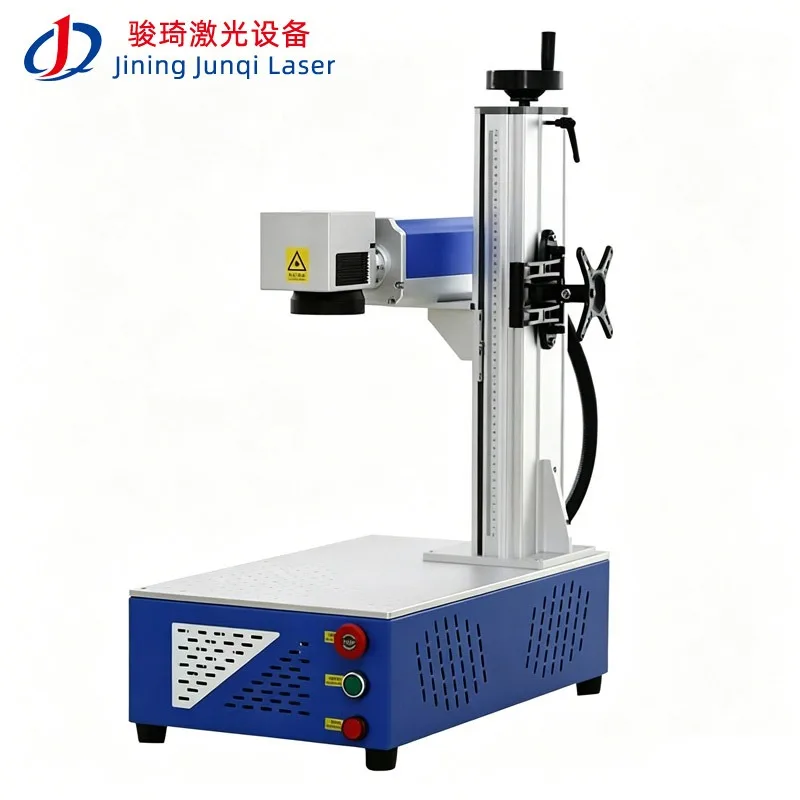
Manufacturing is becoming increasingly connected, but one of the simplest technologies on the factory floor is playing an important role in that transformation: laser marking.
For many manufacturers, laser marking is no longer limited to putting a logo or product number on a component. Permanent identification can connect a physical product with production records, inspection information, batch data and downstream service information.
As factories adopt more automation, machine vision and digital production systems, the role of product identification is becoming increasingly important.
Why Product Identification Has Become a Manufacturing Issue
A modern product can pass through several stages before reaching its final customer. A component may be manufactured by one supplier, assembled by another company, shipped to a different country and eventually serviced years later.
Without reliable identification, tracing the history of an individual component can become difficult.
This is particularly relevant in industries such as automotive manufacturing, electronics, machinery, industrial tools and other sectors where components may require long-term identification.
Manufacturers may need to mark:
- Serial numbers
- Part numbers
- Batch codes
- QR codes
- Data Matrix codes
- Production dates
- Product specifications
- Company logos
- Traceability codes
Laser marking provides a way to place this information directly onto the product rather than relying exclusively on labels or printed packaging.
From a Laser Mark to a Digital Product Identity
The real value of a laser-marked code is often not the code itself.
The code can act as a physical identifier that connects a product to information stored elsewhere.
For example, an automotive component could receive a unique Data Matrix code during production. That code could then be associated with information such as the production batch, manufacturing date, production line and inspection records.
The laser does not need to store this information on the component. Instead, it provides an identifier that other systems can recognize.
This creates a simple connection:
Physical Product → Identification Code → Digital Record
When this process is integrated with manufacturing software and inspection systems, laser marking becomes part of a broader traceability workflow.
Why Permanent Marking Matters
Traditional identification methods such as labels and ink printing remain useful for many applications. However, some industrial components face conditions that make temporary identification difficult.
Parts may experience handling, abrasion, cleaning processes, oils, chemicals, heat or long-term outdoor exposure.
In these situations, manufacturers may require identification that is directly integrated into the surface of the component.
Laser marking can create different types of marks depending on the material and process. These can include surface color changes, annealing effects, coating removal and controlled material removal.
The appropriate method depends on the material and the required performance of the finished mark.
Fiber Lasers for Metal Components
Fiber laser systems operating around the 1064 nm wavelength are widely used for marking many industrial metals.
Common applications include:
- Stainless steel components
- Aluminum parts
- Carbon steel
- Brass and copper components
- Industrial tools
- Automotive parts
- Machine components
- Electrical hardware
Depending on the application, a manufacturer may require a simple identification mark or a more demanding process such as high-contrast marking or deeper engraving.
This is why laser power alone is not enough to determine whether a system is suitable.
Laser Power Is Only One Part of the Process
Industrial buyers often compare laser marking systems according to power ratings such as 20W, 30W, 50W or 100W.
Power is an important specification, but the final marking result also depends on many other factors.
- Laser source characteristics
- Pulse duration
- Pulse frequency
- Galvanometer scanner
- Focusing lens
- Marking field size
- Material properties
- Marking content
- Number of passes
- Focus position
- Hatch settings
Two machines with similar laser power can therefore produce different results on the same material.
For manufacturers, the more useful question is not simply “How many watts does the machine have?” but rather “Can the complete system produce the required mark consistently at the required production rate?”
Different Materials Require Different Laser Technologies
Material compatibility is another important consideration.
A fiber laser may be highly suitable for many metal applications, while a UV laser may be more appropriate for certain plastics, electronics or other heat-sensitive materials. CO₂ lasers are commonly used for applications involving materials such as wood, acrylic, paper and leather.
| Laser Type | Typical Wavelength | Common Applications |
| Fiber Laser | 1064 nm | Many metals and industrial components |
| UV Laser | 355 nm | Plastics, electronics, PCB, glass and selected sensitive materials |
| CO₂ Laser | Approximately 10.6 μm | Wood, acrylic, paper, leather and many non-metallic materials |
These categories are general rather than absolute. Actual results depend on the specific material, surface condition and marking objective.
Manufacturers looking for a practical solution for industrial metal identification can Find more info about fiber laser marking systems and how they are configured for different production requirements.
Manufacturers evaluating several materials can Find more info about laser compatibility and the differences between fiber, UV and CO₂ marking technologies.
Automotive Manufacturing Is a Good Example
The automotive industry demonstrates why permanent identification can be important.
Modern vehicles contain thousands of components, and many parts need to remain identifiable during assembly, distribution and service.
Laser marking can be used for part numbers, production codes, serial numbers, Data Matrix codes and other identification information.
The application is not limited to vehicle identification numbers. Individual components can also require their own traceability information.
This allows manufacturers to connect physical components with production and quality records.
Electronics and Smaller Components
Electronics manufacturing presents a different challenge because many components are relatively small and some are sensitive to heat.
The objective may be to create a small, high-contrast identification mark without damaging the surrounding material.
UV and MOPA laser technologies can be considered for certain plastic and electronic applications, while fiber lasers remain widely used for appropriate metal components.
Again, the correct technology depends on the actual material and marking requirements rather than simply the name of the industry.
Laser Marking and Machine Vision
Laser marking can also be combined with machine vision.
A production cell may first create an identification code and then use a camera system to check the finished mark.
A simplified workflow can look like this:
- The production system generates identification information.
- The marking system receives the information.
- The laser creates the mark.
- A camera captures the finished code.
- Vision software checks readability and position.
- The result is stored with the production record.
This approach turns marking from a standalone production operation into part of a quality-control and traceability system.
Why Cycle Time Matters More Than Maximum Scanning Speed
Another common misunderstanding concerns laser scanning speed.
A machine may have a high maximum scanning speed, but that does not mean every production job will run at that speed.
A simple line of text may require relatively little processing time. A dense Data Matrix code, filled logo or multi-pass engraving process may require considerably more time.
Manufacturers should therefore measure the actual production cycle:
Loading → Positioning → Marking → Inspection → Unloading
This provides a more useful measurement when calculating production capacity.
Testing the Actual Production Material
A specification sheet can describe the equipment, but it cannot fully predict the result on every production material.
Before purchasing a laser marking system, manufacturers should ideally test samples using the same material and marking content that will be used in production.
Important test criteria can include:
- Marking contrast
- Code readability
- Marking depth
- Surface damage
- Heat-affected area
- Cycle time
- Repeatability
- Long-term durability requirements
Testing multiple samples is also more useful than evaluating only one perfect demonstration sample.
The Role of Laser Marking in Smart Manufacturing
Smart manufacturing is often associated with artificial intelligence, robotics, industrial IoT and cloud computing.
However, digital manufacturing also depends on reliable identification.
A factory cannot effectively track an individual physical component if that component cannot be identified.
This makes laser marking a small but potentially important part of the digital manufacturing infrastructure.
It creates the physical identifier that can connect a component with databases, manufacturing execution systems, inspection records and service information.
As more factories move toward automated production and real-time data collection, this connection between physical products and digital information is likely to remain important.
What Manufacturers Should Consider
Companies evaluating laser marking equipment should begin with the application rather than the equipment price.
Several questions should be answered before selecting a system:
- What material needs to be marked?
- What information needs to be marked?
- Does every component require a unique code?
- How large is the marking area?
- Is surface marking sufficient?
- Is deeper engraving required?
- What cycle time is required?
- Will machine vision be used?
- Does the marking system need to communicate with other production software?
- Will the process be manual or automated?
Once these requirements are understood, manufacturers can make more meaningful comparisons between laser sources, power levels, scanners, lenses, software and automation options.
Conclusion
Laser marking may look like a simple manufacturing operation, but its role can extend far beyond putting text or a logo on a product.
A permanent identification mark can connect a physical component with digital production information and support traceability throughout the manufacturing process.
Fiber lasers are widely used for industrial metal applications, while UV and CO₂ technologies can provide alternatives for different materials and production requirements.
The most important consideration is not necessarily the highest laser power or the fastest advertised scanning speed. It is whether the complete marking system can produce a reliable, readable and repeatable result on the actual production material while meeting the required cycle time.
As manufacturing becomes more connected, technologies that link physical products with digital information will continue to play an important role on the factory floor.