How Managed IT Providers Are Adapting to Multi-Cloud Environments
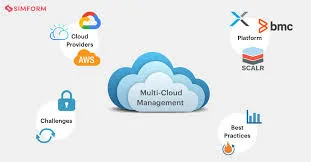
The Shift to Multi-Cloud: A New Reality for Businesses
In recent years, the adoption of multi-cloud environments has accelerated rapidly as organizations seek to leverage the benefits of flexibility, scalability, and resilience across multiple cloud service providers. According to a 2023 Flexera report, 92% of enterprises have a multi-cloud strategy, with 82% utilizing two or more public clouds simultaneously. This widespread adoption reflects a significant shift in how businesses architect their IT infrastructures to avoid vendor lock-in, improve disaster recovery capabilities, and optimize costs.
However, this shift also presents both opportunities and challenges for managed IT service providers tasked with ensuring seamless cloud integration, security, and performance. Managing workloads across diverse platforms requires not only technical expertise but also strategic insight to align cloud resources with business goals.
For instance, firms like ISM Grid in Toronto, known for their IT support expertise in Toronto, have been pioneering innovative approaches to multi-cloud management. These providers blend local responsiveness with global cloud capabilities, enabling businesses to benefit from tailored support and advanced cloud technologies simultaneously. Their approach often includes integrating cloud-native tools with traditional IT infrastructure, facilitating smoother transitions and ongoing management in hybrid environments.
Key Challenges in Managing Multi-Cloud Environments
The complexity of managing multiple cloud platforms introduces significant challenges for both enterprises and their managed service partners. One primary obstacle is interoperability. Different cloud providers use varied APIs, management consoles, and service models, which can make integrating and migrating workloads complicated. Inconsistent security protocols across platforms also pose risks, as a vulnerability in one cloud environment can potentially affect the entire multi-cloud architecture.
Moreover, fragmented monitoring systems often hinder the ability to maintain comprehensive visibility into performance and security. Data sovereignty and compliance requirements further complicate management, especially for multinational organizations. Regulations such as GDPR, HIPAA, and regional data residency laws require nuanced strategies to ensure that sensitive information is stored and processed in accordance with relevant policies.
Cost control is another critical concern. Gartner predicts that by 2025, 70% of organizations will overshoot their cloud budgets due to poor visibility and governance. This statistic highlights the urgency for managed IT providers to implement robust cost management tools and provide advisory services that help clients optimize their cloud spending without compromising performance or security.
Providers like TISDCS in Fairfield have tailored their offerings specifically to address these challenges. By integrating advanced automation and AI-driven analytics, they optimize cloud usage and enhance security posture for their clients. Their services often include proactive threat detection, automated compliance reporting, and predictive analytics to forecast resource needs and prevent budget overruns.
Strategies for Effective Multi-Cloud Management
To thrive in the multi-cloud era, managed IT providers are adopting several key strategies, each designed to tackle the inherent complexities of managing diverse cloud environments:
- Unified Cloud Management Platforms: Providers are employing centralized dashboards and management tools that offer a single pane of glass visibility across all cloud services. These platforms reduce complexity by consolidating monitoring, configuration, and billing information, enabling IT teams to manage resources more efficiently.
- Enhanced Security Frameworks: With security as a paramount concern, many providers implement zero-trust architectures that verify every access request regardless of origin. Continuous compliance monitoring ensures that data protection policies are adhered to across heterogeneous infrastructures, minimizing risks associated with misconfigurations or insider threats.
- Automation and AI: Automation helps reduce manual errors and accelerates deployment processes, vital in environments where speed and accuracy are critical. AI-driven insights improve predictive maintenance, resource allocation, and anomaly detection, enabling providers to proactively address issues before they escalate.
- Customized Client Solutions: Recognizing that each client has unique business needs, managed IT providers tailor cloud strategies to maximize return on investment and minimize risk. This often involves hybrid cloud designs, workload-specific optimizations, and flexible service-level agreements that align with client priorities.
Organizations embracing these approaches report tangible benefits. A recent IDC survey found that enterprises using managed services for multi-cloud environments experienced a 30% reduction in downtime and a 25% increase in IT staff productivity. These improvements not only enhance operational efficiency but also free up internal resources to focus on strategic initiatives rather than routine maintenance.
The Role of Local Expertise in a Global Cloud Landscape
While cloud services are inherently global, local expertise remains invaluable in navigating the nuanced regulatory and business landscapes that vary by region. Managed IT providers with strong regional roots combine intimate knowledge of local regulatory frameworks, compliance requirements, and business cultures with advanced cloud capabilities to deliver superior support.
This hybrid approach enables faster incident response times, personalized service, and more effective communication. For example, understanding local data residency laws helps providers design architectures that comply with jurisdiction-specific requirements, reducing legal risks and ensuring smoother audits.
Additionally, local presence fosters stronger partnerships with clients, facilitating collaborative problem-solving and ongoing optimization. Providers can tailor training programs, workshops, and support services to meet the specific needs of local teams, enhancing adoption rates and user satisfaction.
Emerging Trends Shaping the Future of Managed IT in Multi-Cloud Environments
The evolution of multi-cloud environments is ongoing, and managed IT providers must stay ahead of emerging trends to maintain relevance and deliver value. One such trend is the rise of edge computing, which involves processing data closer to the source to reduce latency and bandwidth usage. Integrating edge solutions with multi-cloud architectures allows organizations to enhance performance for latency-sensitive applications such as IoT, real-time analytics, and augmented reality.
Another significant trend is the increased adoption of containerization and microservices architectures. These technologies enable greater agility and scalability by breaking applications into modular components that can be deployed and managed independently across clouds. Managed IT providers are investing in expertise around Kubernetes and other orchestration tools to help clients capitalize on these benefits.
Furthermore, the shift toward remote and hybrid workforces is driving demand for improved collaboration tools and secure access solutions. Managed providers are incorporating identity and access management (IAM) systems, virtual desktop infrastructure (VDI), and secure VPNs into their service portfolios to support distributed teams effectively.
To keep pace with these developments, providers are prioritizing continuous learning, forging strategic partnerships with cloud vendors, and investing in innovative technologies. This proactive approach helps transform multi-cloud complexity from a challenge into a competitive advantage for their clients.
Conclusion
Adapting to multi-cloud environments requires a sophisticated blend of technical expertise, strategic vision, and localized service delivery. Managed IT providers that master this balance are well-positioned to lead the next wave of digital transformation. By leveraging unified management platforms, robust security frameworks, automation, and tailored client solutions, these providers help businesses maximize the benefits of multi-cloud while mitigating risks.
Local expertise remains a critical differentiator, enabling providers like and to deliver personalized, compliant, and responsive services. Looking ahead, embracing emerging trends such as edge computing, containerization, and workforce enablement will be essential for sustained success.
Ultimately, managed IT providers that can navigate the complexities of multi-cloud environments and align their offerings with evolving business needs will empower organizations to innovate faster, operate more efficiently, and compete effectively in a digital-first world.