
How Much Does a Luxury Kilimanjaro Climb Cost?
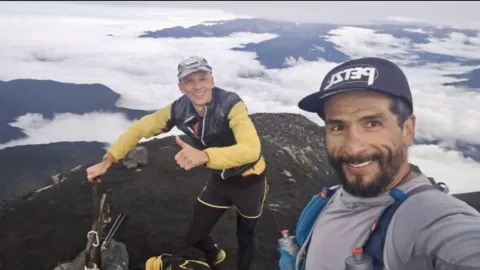
Climbing Mount Kilimanjaro can cost anywhere from $3,000 to more than $15,000 per person. All climbers are heading for the same summit, Uhuru Peak at 5,895 metres, but the experience of getting there can differ enormously depending on the company and the package.
At the lower end of the market, operators provide the essential guiding, camping, food and portering arrangements. At the highest end, the climb will include one of Tanzania’s finest hotels, mountain camps with extensive facilities, a dedicated doctor, potentially internationally recognised mountain guides or even elite performers, and helicopter transfers – typically on the descent, but sometimes to the gate as well.
The difference in price reflects the higher value of the overnight accommodation and the considerable logistics involved in delivering such services on Africa’s highest mountain.
For travellers considering luxury climbing on Mount Kilimanjaro, understanding the amenities and services is the best way to compare what different operators actually offer.
What is the first thing you should know?
There are very few, if any, international operators on Kilimanjaro. All operations are run by local companies who are then contracted by the big international companies to deliver their trips. What this means in practice is that they have no idea who is delivering your trip or what their experience is. They are far from the operations. Luxury travel company True Summit Adventures is changing this. They have their own operation in Arusha with their own full-time team and equipment. Guests are told in advance who their team will be and what their experience is. There is even the chance to speak to guides beforehand. It’s all about accountability and personal relationships.
How Much Should You Expect to Pay?
There is no formal definition of luxury on Kilimanjaro. Some operators use the term for relatively modest improvements to a fairly standard camp, while others provide the type of elaborate camp and services more typically associated with high-end safaris.
As a general indication, prices fall into four broad categories:
| Type of climb | Approximate price per person ($) |
| Budget climb – caveat emptor | Sub-3,000 |
| Standard group climb | 3,000–5,000 |
| Premium private climb | 5,000–8,000 |
| High-end luxury climb | 8,000–15,000+ |
These are indicative ranges, with some variation between operators.
True Summit Adventures, for example, offers three Kilimanjaro experiences priced at $8,000, $10,000 and $15,000 per person. Each typically follows the seven-day Machame itinerary (all routes are available), but the accommodation, mountain facilities and additional services differ depending on the package.
The principal factors determining the cost are outlined below.
1. Hotel Before and After the Climb
The accommodation included on either side of the mountain can account for a substantial difference in price.
Arusha offers everything from four-star airport hotels to one of East Africa’s best hotels.
At the top end is Legendary Lodge, set among coffee plantations outside Arusha, with private cottages, beautiful gardens and excellent dining. Gran Meliá Arusha provides another high-quality option, with contemporary, ‘city-style’, five-star accommodation and views towards Mount Meru.
For comparison, True Summit Adventures uses Airport Planet Lodge for its Essential Kilimanjaro experience, Gran Meliá Arusha for Classic and Legendary Lodge for Incomparable.
The difference between these properties is reflected in the overall price, particularly when multiple nights are included.
Some guests head straight to the mountain, but time before the climb also allows guests to recover from international travel, take a walking safari or waterfall trek and adjust to the new time zone – particularly if coming from the US.
2. The Standard of the Mountain Camp
This is one of the biggest factors separating a conventional Kilimanjaro climb from a genuinely luxurious one.
On standard climbs, accommodation usually consists of relatively small sleeping tents, foam mattresses, shared dining facilities and basic toilet arrangements.
At the upper end of the market, climbers can expect spacious standing-height tents, camp beds with sleeping mattresses, hot water bottles, private toilets and showers, heated dining tents, portered water and a lodge-level chef.
True Summit Adventures’ Incomparable Kilimanjaro experience includes huge Big Agnes tents, 6,000m sleeping bags, private toilets and showers, heated dining facilities and lodge-level cuisine.
But the facilities themselves tell only part of the story.
Every tent, bed, table, chair, shower and piece of kitchen equipment must be carried up the mountain, assembled at camp, dismantled the following morning and transported to the next location. Unlike in Nepal, where porters are paid per kg, in Tanzania they are paid per day, with a strict limit of 20kg per porter.
A larger and more comfortable camp therefore requires considerably more equipment, more porters and a larger support operation.
This is one of the fundamental reasons why luxury Kilimanjaro climbs cost substantially more than standard departures.
3. The Size and Quality of the Mountain Team
Each Kilimanjaro climb relies on a substantial local team.
Guides lead the ascent and manage the trek, while porters transport equipment and supplies. Chefs prepare meals, and additional staff maintain the camps.
The more elaborate the camp, the larger the team required to operate it.
A luxury climb may involve considerably more porters than a standard ascent, together with a larger kitchen team, additional guides, camp managers and front-of-house personnel.
There is also an important distinction between operators that assemble teams for individual departures and those that employ experienced personnel on a permanent basis.
True Summit Adventures works with a full-time, salaried local guiding team, led by John Bosco, who has completed more than 200 Kilimanjaro ascents.
Maintaining an established team represents an ongoing investment, but it provides continuity, familiarity with operating procedures and consistent standards of service.
Responsible employment practices also matter on Kilimanjaro. Good wages, suitable equipment, adequate food and shelter for porters should be fundamental to every professionally operated climb. Opportunities for ladies to work on Kilimanjaro are also imperative.
4. Doctors, Western Guides and Elite Mountaineers
Specialist personnel can add considerably to the cost of a private climb.
A doctor provides medical oversight throughout the ascent, monitoring how climbers are responding to altitude and supporting them if they need medical assistance.
True Summit Adventures’ Incomparable Kilimanjaro experience includes Dr Emmanuel Tesha, an experienced mountain doctor who accompanies guests throughout – even to the summit. It’s a climb he has done 30 times so far.
Some private clients also choose to climb with an international mountain guide or a recognised elite mountaineer.
A Western guide may provide an additional level of oversight and communication, particularly for groups accustomed to travelling with an international expedition leader.
An elite mountaineer brings something different: the opportunity to spend a week climbing alongside someone with exceptional experience on the world’s great mountains. And, of course, with a long inventory of stories.
But such arrangements require additional professional fees, travel, accommodation and logistical support. They are among the more distinctive options available at the highest end of the Kilimanjaro market.
No level of medical or guiding support, however, entirely removes the risks associated with high-altitude trekking. An appropriate itinerary for good acclimatisation and deliberately slow pacing on the trek itself remain key to a successful ascent.
5. Helicopter Transfers and Descent
Helicopters now play a significant role in the logistics of a luxury Kilimanjaro climb.
Helicopter transfers may be arranged to the gate (especially useful for Rongai or Lemosho, which are further from Arusha), reducing road travel and providing an exhilarating start to the trek.
More importantly, at the end of the climb, a helicopter descent offers a ‘quick release’ from the mountain and an alternative to the tiring descent and extra night on the mountain.
True Summit Adventures includes a helicopter descent with its partner Tropic Air in its Incomparable Kilimanjaro experience.
Helicopter services are expensive to operate and require specialist coordination. It should be noted that flights still depend on good weather conditions and cannot be guaranteed.
For clients seeking the ultimate Kilimanjaro itinerary, these transfers are a significant addition to the overall cost.
6. Experiences Before the Climb
A Kilimanjaro itinerary need not begin at the mountain gate.
The area around Arusha offers excellent opportunities for adventure before setting off on the climb, and these experiences form an important part of a luxury itinerary.
For a simple one-day extension, the best option is a walking safari in Arusha National Park. Accompanied by an armed park ranger and guide, visitors can explore the park on foot, with opportunities to encounter giraffes, buffalo and other wildlife against the backdrop of Mount Meru.
Other possibilities include trips to other parks in East Africa, including visits to see the gorillas in Rwanda. Closer to Arusha, the Materuni Waterfall trek is also popular and includes lunch and a coffee experience in Materuni village.
True Summit Adventures includes a walking safari in Arusha National Park with its Classic and Incomparable Kilimanjaro experiences. Its Essential itinerary includes a visit to Materuni Waterfall and a coffee experience.
Private guiding, transport, park fees and additional accommodation all contribute to the overall price.
For some travellers, the climb is also combined with a safari in the Serengeti or Ngorongoro Conservation Area, extending the experience beyond Kilimanjaro itself.
7. Airport Assistance, Visas and Private Transfers
The standard of service provided on arrival in Tanzania is another consideration.
High-end itineraries should include VIP assistance at Kilimanjaro International Airport, with airside meet-and-greet services, assistance with immigration and baggage handling, and private transfers.
VIP departure assistance can also be arranged for the return journey.
These services are particularly valuable for international travellers looking for privacy and a seamless entry into Tanzania.
True Summit Adventures arranges VIP arrival and departure assistance at Kilimanjaro International Airport, along with visa services.
Although individually less expensive than mountain camps or helicopter services, these details contribute to the overall cost and distinguish a fully managed private itinerary from a conventional trekking package.
8. Route Choice and Time on the Mountain
The number of days spent climbing also influences the price.
Kilimanjaro National Park charges conservation, camping and other applicable fees, while each additional day requires food, fuel, equipment and staff wages.
The principal routes offer different approaches to the summit.
Machame follows the mountain’s southern circuit, passing Shira Cave Camp, Lava Tower and Barranco Camp before reaching Barafu or Kosovo Camp, from where the summit push begins.
Lemosho approaches from the west, crossing the Shira Plateau before joining the Machame Route just before Lava Tower.
The Northern Circuit takes a longer route around the mountain’s northern slopes, usually requiring eight or nine days or more. This route requires a long drive from Arusha and an overnight stay.
Marangu is the only route offering permanent mountain huts rather than camping.
Longer itineraries can allow more time for acclimatisation, although the route’s elevation profile and the individual climber’s response to altitude remain important.
True Summit Adventures uses a seven-day Machame itinerary for all three of its principal Kilimanjaro experiences, with the Classic and Incomparable climbs using Kosovo High Camp at approximately 4,900 metres.
Comparing Three Levels of Luxury Kilimanjaro Climbing
The clearest way to understand the difference in cost is to compare three itineraries operated by the same company.
True Summit Adventures offers the following Kilimanjaro experiences:
| Essential | Classic | Incomparable | |
| Price per person | $8,000 | $10,000 | $15,000 |
| Hotel | Airport Planet Lodge | Gran Meliá Arusha | Legendary Lodge |
| Pre-climb experience | Materuni Waterfall and coffee | Arusha National Park walking safari | Arusha National Park walking safari |
| Climbing route | Seven-day Machame | Seven-day Machame | Seven-day Machame |
| Mountain camp | Luxury camp with cot beds and bathrooms | Enhanced luxury camp | Extensive luxury camp with heated dining tent and other amenities |
| Medical support | Experienced guiding team | Experienced guiding team | Dedicated doctor |
| Descent | On foot | On foot | Helicopter, conditions permitting |
All three climbs benefit from the company’s in-house team with named guides, but the level of accommodation, camp infrastructure and specialist services increases between the different options.
The $7,000 difference between Essential and Incomparable is therefore not simply a premium for more comfortable accommodation. It reflects a significantly more elaborate operation, from the hotel in Arusha to the final descent from the mountain.
What Additional Costs Should Be Considered?
When comparing luxury Kilimanjaro tours, it is important to establish precisely what is included in the quoted price.
International flights, visas, personal trekking equipment, travel insurance and gratuities are normally not included.
Travel insurance should specifically cover trekking to Kilimanjaro’s summit altitude of 5,895 metres and Africa as a region. Ask for ‘medical with rescue’ insurance.
Gratuities for the high mountain team are customary, although the recommended amount varies according to the size of the group and the number of people employed.
Some operators also charge separately for sleeping bags, equipment hire, airport transfers and accommodation before or after the mountain.
A detailed itinerary and clear schedule of inclusions are therefore essential when making comparisons.
Is a Luxury Kilimanjaro Climb Worth the Cost?
Kilimanjaro can be climbed safely with relatively simple camping arrangements, provided the ascent is properly organised and led by experienced guides.
Luxury facilities are not essential to reaching the summit. They do, however, make a substantial difference to the experience of spending a week on the mountain.
A comfortable camp bed, a proper 6,000m sleeping bag, a private toilet, showers, excellent food and warm dining facilities become increasingly attractive after consecutive days on the mountain.
For clients seeking the highest standards, the opportunity to climb with an elite mountaineer, receive dedicated medical support or descend by helicopter adds another dimension.
The important question is not simply how luxurious the camp appears, but what the operator has invested in the people, equipment and logistics required to deliver it.
That is where the real cost of a high-end Kilimanjaro climb lies.
Choosing a Luxury Kilimanjaro Operator
Before booking, it is worth looking beyond the photographs of sleeping tents and dining arrangements.
Ask who operates the climb, who leads it, what their experience is, how the mountain team is employed, what medical support is provided and how altitude-related problems are managed. Establish exactly what the camp includes, which hotel options they have and whether helicopter services can be included in the itinerary.
An experienced operator should be able to explain these details clearly.
True Summit Adventures specialises in private, high-end Kilimanjaro climbs, with its own in-house team, three levels of hotel accommodation, its own proprietary camp and options for specialist guides, medical support and helicopter transfers.
For those considering luxury climbing on Mount Kilimanjaro, understanding these different options is essential to choosing the right experience and paying the right price.
Discover the Kilimanjaro climbs offered by True Summit Adventures.
Frequently Asked Questions
How much does a luxury Kilimanjaro climb cost?
Luxury Kilimanjaro climbs generally start at several thousand dollars per person, with the most elaborate private experiences exceeding $15,000. True Summit Adventures offers three levels of service priced at $8,000, $10,000 and $15,000 per person.
Why are luxury Kilimanjaro tours so expensive?
The principal costs are accommodation before and after the climb, extensive mountain camp facilities, the large support teams required to transport and operate them, specialist guides and medical personnel, and additional services such as helicopter transfers and private excursions to wildlife parks.
Can you have a private shower on Kilimanjaro?
Yes. Most high-end operators will provide private shower facilities in their mountain camps. These require additional water, equipment and staff, increasing the complexity and cost of the operation.
Can you take a helicopter down from Kilimanjaro?
Helicopter descents can be arranged from Barafu Camp. Helicopter departures from Kosovo are no longer permitted. The helicopter can take three people and their luggage or four people without it. True Summit Adventures includes a helicopter descent in its Incomparable Kilimanjaro experience.
Do luxury Kilimanjaro climbs include a doctor?
Some do, although it is not standard across the industry. True Summit Adventures’ Incomparable Kilimanjaro experience includes its Chief Medical Officer for Tanzania, Dr Emmanuel Tesha. Dr Tesha has completed 30 ascents of Kilimanjaro and also works for the park service in search and rescue.
Can you climb Kilimanjaro with an elite mountaineer?
Yes. Specialist operators can arrange private climbs accompanied by superstar mountaineers or experienced Western guides, or both.
What is the best time of year to climb Kilimanjaro?
December to early March and June to September are generally the principal climbing periods. Conditions are often more favourable than during the rainy seasons, although cold conditions, snow and poor visibility remain possible throughout the year.