How Much Does Bunion Surgery in Turkey Cost?
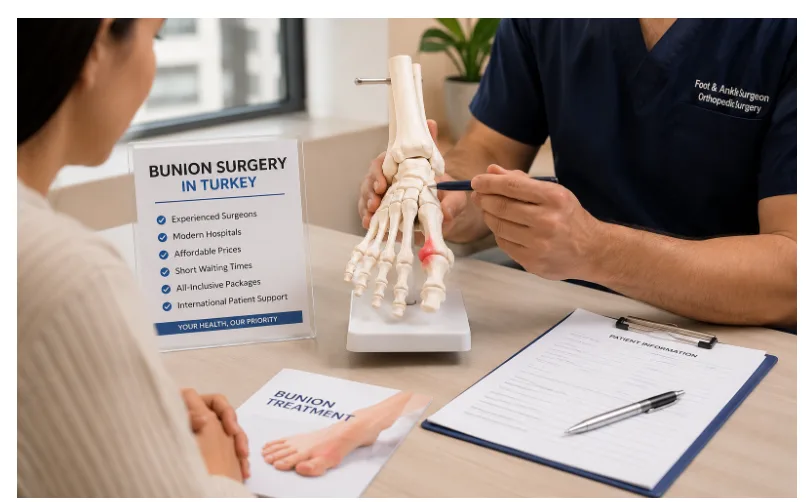
If you are weighing up treatment for a painful bunion, one of your first questions is probably how much it will cost. It is a fair thing to ask — but the honest answer is that the price depends on several moving parts rather than a single fixed number. Understanding what shapes the bunion surgery cost helps you compare your options with confidence and avoid surprises. This guide walks you through the main factors so you can plan realistically and know what to look for in a quote.
What Goes Into the Cost of Bunion Surgery
Two people with bunions can end up with very different bills, and that is because the price reflects the specifics of each case. The severity of your deformity is a major factor: a mild bunion often needs a simpler correction, while a severe or recurrent one may require a more involved procedure and a longer operating time.
Other elements include the surgeon’s experience, the type of anesthesia, the imaging and lab tests you need beforehand, whether you are treating one foot or both, and the level of post-operative care provided. Each of these adds to or subtracts from the total, which is why a personalized assessment gives you a far more accurate figure than any general estimate.
It also helps to remember that the cheapest option is not always the best value. A price that looks low may leave out important elements such as follow-up appointments, physiotherapy, or the supportive footwear you will need afterward. When you weigh up your choices, think in terms of the complete journey — from your first consultation to your final check-up — rather than a single procedure fee in isolation.
How the Surgical Technique Affects Price
The specific technique your surgeon recommends has a direct effect on cost. A straightforward osteotomy, in which the bone is cut and realigned, tends to sit at the more accessible end of the scale. Fusion procedures such as arthrodesis or the Lapidus technique are more complex, often use additional hardware, and may involve a longer recovery — all of which can raise the overall price.
Minimally invasive approaches can also influence the figure, sometimes because they rely on specialized equipment and imaging during surgery. The key point is that the “right” technique is chosen for your foot, not for the price tag. A well-matched procedure that lasts is almost always better value than a cheaper option that risks the bunion returning.
Why Turkey Attracts International Patients
Turkey has become a popular destination for orthopedic and foot surgery, and cost is a significant part of the appeal. Lower operating expenses and a competitive private healthcare market mean that treatment is often more affordable than in many Western countries, without the long waiting times some patients face at home.
Beyond price, patients are drawn by modern private hospitals, experienced surgeons, and the convenience of combining treatment with travel. Many clinics are used to welcoming international visitors and offer support in English along the way. As with any medical decision, it is wise to look at credentials, accreditation, and patient outcomes alongside the numbers.
What’s Usually Included in a Treatment Package
International patients are frequently offered a package rather than a line-by-line bill, and knowing what a package covers is essential to comparing quotes fairly. A comprehensive package may include the surgeon’s fee, hospital and facility charges, anesthesia, pre-operative tests, and follow-up consultations.
Some packages go further and add airport transfers, accommodation, translation services, and post-operative aids. Others are more streamlined. Before you commit, ask for a clear written breakdown of what is and is not included, so you can judge the true value of each offer rather than only the headline figure.
A few questions can quickly reveal how complete a package really is. Does the price cover both the surgeon’s fee and the hospital charges? Are pre-operative tests included, or billed on the day? How many follow-up consultations come as standard, and what happens if you need an extra one? Are any implants, dressings, or medications part of the quote? Getting straight answers to these points makes it far easier to compare two offers side by side and understand exactly what you are paying for.
Planning Your Budget Beyond the Procedure
The procedure itself is only one part of your total spend. If you are travelling, you will also want to budget for flights, accommodation for your recovery period, meals, local transport, and any companion who travels with you. It is sensible to allow a little extra for a longer-than-expected stay, just in case.
You may also need supportive footwear, mobility aids, or medication during your recovery at home. Thinking about these practical extras in advance keeps your planning realistic and helps you avoid last-minute financial stress while you focus on healing.
If you are travelling from abroad, it is also worth checking the small print of your travel and medical insurance, and confirming whether it covers planned procedures or only emergencies. Building a modest contingency into your budget is sensible too, since recovery timelines vary from person to person and an extra night’s stay is occasionally needed. A little breathing room in your plan means an unexpected detail does not become a source of worry.
How to Get an Accurate Quote
Because so many variables are involved, the most reliable way to understand your bunion surgery cost is to request a personalized quote based on your own X-rays and medical history. A tailored assessment reflects your specific deformity, the recommended technique, and the care you will need — details that no online estimate can capture.
When you compare quotes, look past the number and check what each one includes, the surgeon’s qualifications, the hospital’s accreditation, and the aftercare on offer. For current, personalized pricing and to speak with the team about your situation, visit the live treatment page linked above.
This article is for general information only and is not a substitute for professional medical advice. Always consult a licensed foot and ankle specialist to discuss your individual condition and the treatment options that are right for you.