How Murray Hill Studios Handles Multi-Camera Production for High-Stakes Events in NYC
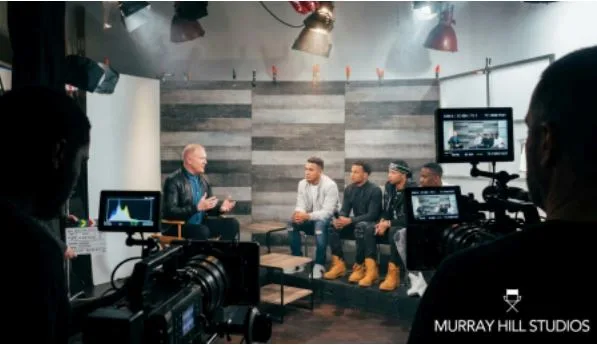
The common advice for corporate events is to simply “go live,” but that guidance ignores a major risk: what happens when something goes wrong? For high-stakes events, a single technical issue can unravel months of planning and affect how a brand is perceived. And getting it right has measurable impact.
Wordstream reports that businesses using video marketing grow revenue 49% faster than those that do not. In a media-driven market like New York City, where expectations are high, professional execution is not optional.
For over 30 years, Murray Hill Studios has provided the technical infrastructure and expertise for multi-camera production, serving a client roster that includes IBM, NBC, and Oprah Winfrey/HARPO Productions.
Understanding Multi-Camera Production for High-Stakes Events
Multi-camera production uses multiple cameras simultaneously to capture an event from different angles, with a technical director switching between feeds in real time. The result is a dynamic, broadcast-style output that maintains viewer engagement and allows for seamless transitions during live or recorded productions.
For high-stakes events such as product launches, corporate town halls, and major conferences, this approach is critical because there are no second takes. A report from Firework notes that 73% of consumers prefer to learn about a product or service through video.
A single static camera often feels limited, while a multi-camera setup captures wide shots, speaker close-ups, and audience reactions in a way that feels complete and intentional.
An experienced crew, like the one at Murray Hill Studios, manages this process to deliver a polished production that supports both engagement and brand credibility.
Ensuring Technical Redundancy in Live Productions
In live production, failure is not hypothetical. Power interruptions, internet instability, or equipment issues can happen without warning. The difference is whether the production team has planned for them.
Professional studios build redundancy into every layer of the setup, including backup power sources, duplicate internet connections, and secondary encoding systems. A team like Murray Hill Studios approaches production with contingency planning in mind, ensuring that if one component fails, another is ready to take over without interrupting the broadcast.
Defining Clear Crew Roles in Complex Productions
A professional production is not managed by a single operator. It requires a coordinated team, where each role supports a specific function during the event.
Key roles typically include a technical director managing live switching, an audio engineer (A1) ensuring sound quality, and a producer overseeing timing and coordination. This division of responsibility allows the production to run smoothly under pressure.
Murray Hill Studios provides a full technical crew, which becomes especially important in high-stakes environments where timing, communication, and execution must align in real time.
Using Professional Equipment for Consistent Production Quality
The quality of the final output depends heavily on the equipment used during production. Professional-grade cameras, broadcast switchers, and calibrated audio systems contribute to consistency and reliability across the entire event.
Studios with established infrastructure also offer access to fully equipped sound stages, allowing for controlled environments when needed. Murray Hill Studios combines in-studio capabilities with on-location setups, giving clients flexibility without compromising production standards.
Planning Pre-Production for Reliable Execution
Most production challenges are resolved before the cameras start rolling. A structured pre-production process ensures that every element of the event is mapped out in advance.
This typically includes site visits, technical assessments, run-of-show documents, and coordination with all stakeholders. Murray Hill Studios follows a detailed planning approach that anticipates potential issues early, reducing the likelihood of disruptions during the live event.
Managing New York City Production Logistics
Producing events in New York City comes with unique logistical considerations. Union regulations, building access restrictions, limited loading zones, and tight schedules all affect how a production is planned and executed.
Studios familiar with the NYC environment can navigate these constraints more efficiently. Murray Hill Studios’ long-standing presence in Manhattan allows the team to manage these variables with fewer delays, which is critical when working with executives, talent, or live audiences on strict timelines.
Understanding the Cost of Multi-Camera Production in NYC
The cost of multi-camera production in NYC varies depending on the scope and complexity of the event. Rather than a fixed rate, pricing reflects the specific requirements of each project.
Key factors include:
- Crew size and specialization
- Camera and equipment package
- Event duration, including setup and teardown
- Streaming complexity, including graphics and multi-platform distribution Industry trends reflect growing demand for high-quality production. Grand View Research projects the U.S. video production market will grow at a compound annual rate of 23% from 2024 to 2030. A studio like Murray Hill Studios provides detailed estimates that align technical requirements with budget considerations.
Comparing Professional Production to DIY Setups
A basic live stream setup may seem convenient, but it introduces significant risk for organizations that rely on professional presentation.
Pre-production planning in a DIY setup is often limited, while Murray Hill Studios conducts technical scouting, builds detailed run-of-show plans, and coordinates all participants in advance. During execution, a single-operator setup creates a point of failure, whereas a full production team distributes responsibility across multiple specialists.
Audio quality also differs significantly. Basic setups often rely on a single microphone, while professional productions use multiple audio sources, mixing
systems, and dedicated engineers to ensure clarity. Visually, multi-camera production provides varied angles, graphics integration, and a more engaging viewing experience compared to a static, single-camera feed.
Evaluating the New York City Live Production Market
The U.S. video production market generated $21.2 billion in 2023, according to Grand View Research, with New York City serving as one of its most competitive hubs. The market includes a wide range of providers, from smaller crews to large-scale production companies.
In this environment, experience and consistency become key differentiators. With over three decades in the industry, Murray Hill Studios has established a reputation for delivering high-quality productions across corporate, broadcast, and live event formats. Its client portfolio includes major corporations and media organizations such as IBM, Yahoo!, ABC, and WNET, reflecting a consistent ability to meet professional production standards.
Identifying Who Should Hire a Professional Production Team
Organizations that prioritize brand image, message clarity, and audience engagement benefit most from professional production support. While smaller internal meetings may not require complex setups, high-visibility events demand a higher level of execution.
Professional production services are particularly relevant for:
- Corporations hosting town halls, product launches, or investor communications • Marketing and PR agencies managing brand activations or media tours • Non-profit organizations running virtual fundraisers
- Event planners coordinating conferences with hybrid or remote audiences
Planning Your Next Steps for a Successful Production
Moving from a single-camera setup to a professional multi-camera production is a strategic decision that protects both presentation quality and brand perception.
To move forward:
- Assess the stakes of your event and the potential impact of technical issues. • Define what success looks like, from engagement metrics to overall presentation quality.
- Evaluate production partners based on experience, planning process, and technical capabilities.
- Schedule a consultation with an established studio such as Murray Hill Studios to align your production needs with a clear execution plan.