How Parks and Visitor Attractions Can Build a Practical Night Tourism Experience
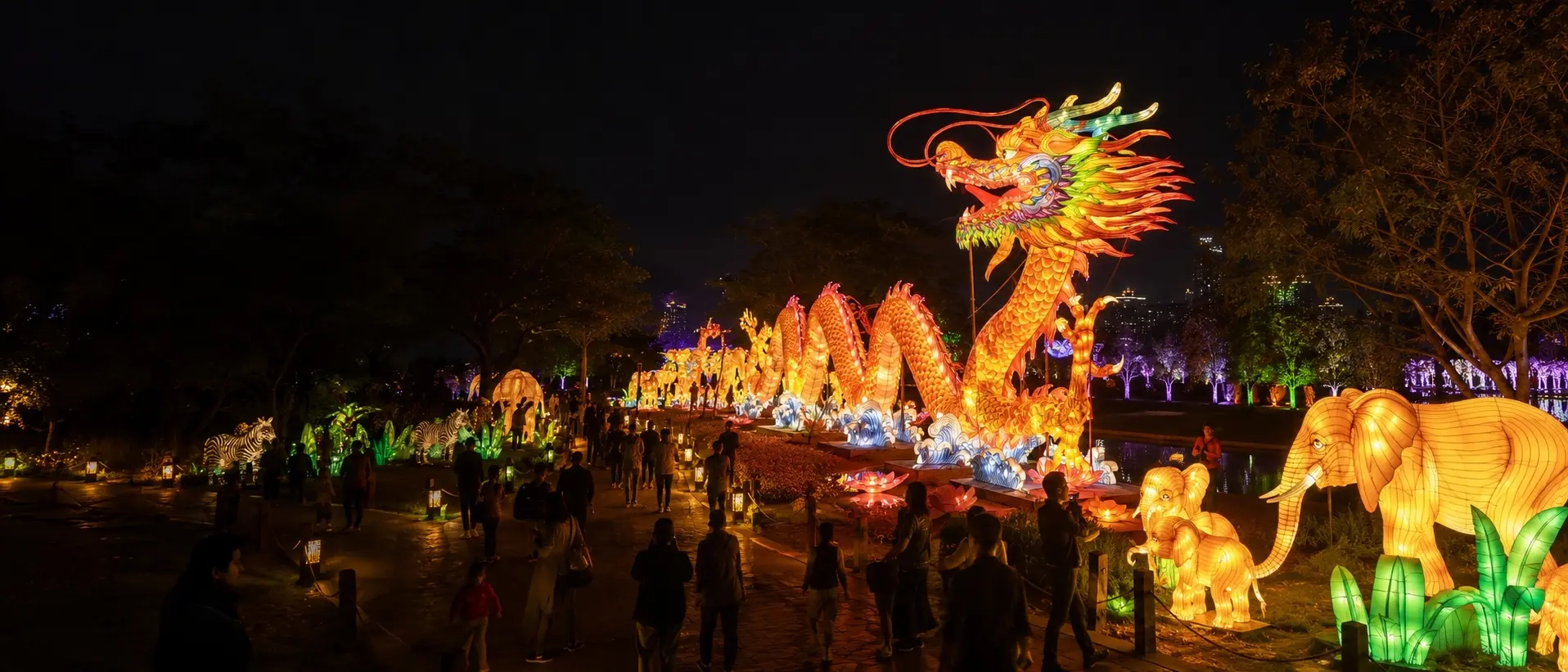 For many parks, zoos, botanical gardens and scenic attractions, the evening hours represent unused operating potential. The venue already has paths, recognizable landmarks, visitor facilities and a local audience, but most of that infrastructure was designed around daytime use. Turning the same property into a nighttime destination takes more than adding bright decorations. It requires a connected visitor journey that can be installed, operated, maintained and removed without losing sight of the venue’s commercial purpose.
A strong night tourism project begins with a simple question: what should change after dark? The answer may be longer operating hours, a seasonal ticketed event, more repeat visits, additional food and retail activity, or a new reason for tourists to include the venue in their itinerary. That objective should guide every later decision, from the route and visual theme to the operating calendar and maintenance plan.
Start With the Venue, Not the Decorations
Every property has a different set of constraints. A zoo may need to separate the public route from sensitive animal areas. A botanical garden may want displays that complement existing landscapes. A theme park may need to protect normal ride operations and daytime guest movement. A scenic area may have steep paths, limited service access or distant power points.
Before selecting display concepts, the planning team should document the usable area, entrance and exit points, likely visitor direction, service roads, electrical access, emergency routes, existing food and retail locations, installation windows and local approval requirements. It is equally important to identify information that is not yet confirmed. Early assumptions about access, foundations or power can become expensive once production is already under way.
The first visual concept should therefore respond to a real site plan. A striking object in isolation may look impressive in a rendering, but it becomes valuable to the venue only when guests can approach it safely, understand where to go next and continue through the experience without creating congestion.
Design a Journey With a Beginning, Rhythm and Finale
Visitors remember a nighttime attraction as a sequence of moments. The entrance establishes identity. Early scenes introduce the theme. Immersive passages and large landmarks create contrast, while quieter transitions allow the next feature to feel important. A finale gives guests a clear sense that the journey is complete.
This rhythm also supports operations. If every display is treated as a major photo opportunity, guests may stop everywhere and block circulation. Purpose-built photo points need enough room for the people posing, the photographer and those passing behind them. Walk-through arches and tunnels require visible entrances and exits, adequate capacity and a natural onward path.
Sightlines help the route communicate without excessive signage. A large feature visible from the previous zone can draw visitors forward, while controlled reveals preserve a sense of discovery. At decision points, lighting intensity, color or repeated forms can subtly indicate the intended direction.
A connected night route uses large landmarks, immersive lighting and clear transitions to guide visitors through the experience. Image supplied by ParkLightShow.
Make the Commercial Plan Part of the Route
A night attraction should not depend on visual impact alone. Ticketing, food, retail, sponsorship, guest comfort and staffing all influence whether the event is practical to operate.
Commercial areas work best where visitors naturally slow down rather than wherever unused space happens to remain. A food court placed too early may interrupt entry flow, while one near a major pause point can give guests a reason to extend their stay. Retail or souvenir opportunities are easier to notice near the exit or beside a recognizable theme. Sponsor integration should be planned so that it supports the experience instead of feeling attached at the last minute.
Operators should also consider how the event interacts with daytime business. Installation may need to occur in stages. Some equipment may have to remain out of public view during the day. Deliveries, lifting operations and temporary storage require defined access. A plan that protects normal operations can be more valuable than a visually ambitious concept that causes repeated disruption.
Connect Creative Design to Production and Delivery
International projects add another layer of coordination. Large illuminated displays may need to be divided into transportable modules. Those divisions affect appearance, structural design, packing, labeling and the sequence of installation.
Drawings and labels are therefore operating tools, not just factory documents. They help the venue, supplier and local contractor identify components, connection points and assembly order. When factory pre-assembly is included in the agreed scope, it can help identify fit or lighting issues before shipment. It does not replace local engineering review, electrical review, foundation planning or other destination-specific requirements.
Responsibility boundaries should be written clearly. The team needs to know who supplies verified site dimensions, lifting equipment, local labor, power distribution, barriers, foundations, inspections and daily maintenance. A supplier may provide design, production, packing and installation guidance, while other responsibilities remain with the venue or local specialists. Clear boundaries reduce last-minute surprises.
Choose a Supplier by Process, Not by Pictures Alone
Product photographs are helpful when discussing style, but they do not show whether a supplier can coordinate a complete route or support an international installation. Venue buyers should ask how the supplier develops a theme from site information, what drawings will be delivered, how modules are marked, what checks occur before shipping and what support is available during assembly.
Providers such as ParkLightShow present lantern shows as project-based night-attraction solutions that connect planning, custom production, delivery and installation guidance. For a venue buyer, that process is more useful to evaluate than a long catalogue of unrelated display images.
Useful supplier answers should distinguish standard capability from the exact scope of the proposed project. They should also identify missing inputs instead of promising an outcome before the venue information is complete. The goal is not simply to buy illuminated objects; it is to create a coordinated experience that can function at the destination.
A large illuminated entrance feature can establish event identity while helping visitors recognize the start of a nighttime route. Image supplied by ParkLightShow.
Prepare for the Entire Operating Period
Opening night receives the most attention, but the operating period may last for weeks or months. Daily visual checks, weather response, spare components and maintenance access should be part of the planning conversation from the beginning.
Teams need a simple process for recording a fault and locating the correct section. Service points should be reachable without dismantling major scenes or closing large portions of the route. After severe weather, the responsible local team may need additional inspections based on the actual design and applicable requirements.
Removal and storage also affect long-term value. Components that are documented, labeled and packed methodically are easier to identify for repair, reuse or future adaptation. An event that is planned only through opening night can create avoidable costs at the end of the season.
Measure the Outcome the Venue Actually Needs
The right performance indicators depend on the original business objective. A ticketed seasonal event may track attendance by time slot, while a free municipal program may care more about visitor distribution, local activity and public feedback. A resort may look at dining or overnight participation, and a park may compare evening dwell time, repeat visitation or food and retail patterns.
No lighting design can guarantee attendance or revenue. Weather, local promotion, event timing, pricing, accessibility and operating quality all influence results. The practical approach is to record assumptions before opening, measure what the venue can reliably observe and use that evidence to improve the next season.
Final Perspective
Night tourism works best when creative design and operating discipline are developed together. The venue needs a clear commercial objective, a route that matches real visitor behavior, production and logistics that respect site constraints, defined responsibility boundaries and a plan for maintenance and measurement.
When those elements support one another, an existing daytime property can become a distinctive evening destination without treating the project as a random collection of lights. The result is easier for guests to understand, more manageable for the operating team and better positioned to contribute to the venue’s wider tourism offer.