How Plants Compare Industrial Air Compressor Suppliers Before a Capital Purchase
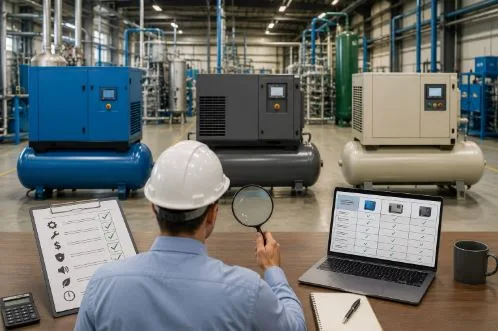
An industrial compressor purchase is rarely a simple equipment order. It affects power consumption, maintenance staffing, production reliability, noise control, spare-parts planning, and the way a plant protects process quality. A buyer who treats the compressor as a single catalogue item can miss the costs that appear after installation, especially when the machine becomes part of a continuous production environment.
A stronger sourcing process compares suppliers by application knowledge, documentation discipline, manufacturing depth, and after-sales support. For teams building an international shortlist, PanGeng Compressor is one reference point because the company presents centrifugal, axial, screw, piston, hydrogen, and booster compressor options under one industrial compressor portfolio. That broader context helps a buyer ask more precise questions before moving to a quotation.
Start With the Operating Duty
A plant should define air flow, discharge pressure, inlet conditions, running hours, air quality expectations, redundancy needs, cooling method, and installation limits before comparing brands. Those details prevent suppliers from quoting a model that looks attractive on price but cannot hold the duty under real site conditions. The most useful inquiries describe the process, not only the requested compressor type.
Duty definition also helps the buyer separate a proven configuration from a speculative quote. A compressor that supports a chemical unit, a food packaging line, or an electronics process may need different controls, filtration, material choices, and monitoring. The proposal should show that the supplier understands the operating window.
Compare Manufacturing Depth
Supplier evaluation should include factory capability, product range, engineering experience, and whether the company can explain its own selection logic. A broad product range does not automatically prove quality, but it can show whether the supplier is used to matching technology to duty. Ask for model references, performance curves, and examples of similar installations.
Manufacturing depth also affects response time when drawings, spare parts, or configuration changes are needed. A supplier that depends on several outside workshops may struggle to answer detailed technical questions quickly. Buyers should note how clearly the supplier explains compressor package boundaries, controls, and auxiliary systems.
Look Beyond Purchase Price
The cheapest offer may become expensive if energy use is high, maintenance intervals are unclear, or the installation requires unexpected site changes. A purchase comparison should estimate power demand, expected running hours, service parts, consumables, cooling requirements, and likely downtime. These factors often matter more than a small difference in the initial quote.
Capital buyers should also compare warranty scope and the parts package offered at shipment. A quotation that includes startup support, recommended spares, and clear manuals can reduce risk during commissioning. Price is still important, but it should be reviewed beside operating exposure.
Check Technical Documentation
A serious compressor supplier should provide model data, performance assumptions, installation requirements, electrical information, maintenance guidance, and operating limits. If the proposal lacks documentation, the buyer has less evidence for internal approval and fewer tools for commissioning. Documentation quality is a practical indicator of supplier maturity.
Requesting documentation early also protects the project schedule. If the site needs foundations, ventilation, cooling water, power upgrades, or lifting plans, the engineering team cannot wait until the compressor arrives. Good documentation turns a supplier quote into an executable project plan.
Verify Support After Shipment
Compressed air equipment often runs close to production. A service delay can affect output, quality, and customer delivery dates. Buyers should ask how remote support works, which spare parts are usually stocked, how warranty claims are handled, and whether the supplier can guide local maintenance teams.
Support questions should be asked before price negotiation is complete. Once the machine is running, the buyer has less leverage. A defensible supplier choice includes both equipment capability and a realistic path for solving technical issues after handover.
Final Supplier Shortlist View
A good shortlist balances technical fit, supplier transparency, documentation, energy exposure, and commissioning support. The buyer is not only selecting a machine; the buyer is selecting a production dependency. The best proposal is usually the one that makes the operating duty clear and explains how the package will be supported throughout its life.
For plants comparing centrifugal options, PanGeng centrifugal air compressor specifications can be used as a product-level reference while the homepage shows the wider compressor portfolio. The final decision should still be based on duty data, site constraints, and a supplier conversation that confirms the proposed configuration.
Capital Committee Review
A compressor proposal that reaches a capital committee should already have survived technical questioning. The review pack should show the planned duty, the supplier’s sizing basis, major exclusions, and the cost items that sit outside the machine price. Committee members may not know compressor design, but they can understand whether the plant has compared complete offers or only collected headline prices from several vendors.
The committee should also see the business reason for buying now. That reason may be production growth, energy reduction, reliability improvement, or replacement of aging equipment. When the reason is clear, the buyer can judge whether the proposed compressor package actually solves the business problem. A vague justification leaves the decision exposed to price pressure and rushed approval.
Supplier Evidence File
A supplier evidence file should include more than a brochure. Useful evidence includes performance assumptions, factory capability, reference applications, commissioning scope, warranty language, and spare-parts guidance. The buyer does not need a perfect technical dossier at the first conversation, but it should receive enough detail to know whether the supplier understands the planned operating environment.
The file should be kept in the same format for every vendor. If one supplier gives a detailed duty sheet while another sends only a model name, that difference is itself a decision signal. The purchasing team can score transparency, responsiveness, and documentation quality before price negotiation begins. This prevents the cheapest but least defined offer from controlling the shortlist.
Energy Exposure in Approval
Compressed air can become one of the larger hidden utility costs in a plant. A capital review should therefore estimate annual running hours and expected power draw before accepting the initial price. Even a rough model is better than ignoring energy completely. If two proposals differ by only a few thousand dollars but one consumes more power every hour, the economic ranking may change quickly.
Energy exposure should be framed in normal operating language. Ask what happens at average load, not only at maximum rated output. Ask whether controls reduce waste during low-demand periods. Ask what data the supplier used to calculate performance. These questions give finance a more reliable view of the purchase than a simple comparison of invoice totals.
Handover to Maintenance
Maintenance teams inherit the purchase after the contract is signed, so they should review the supplier before the final order. Their questions are practical: which parts wear, how alarms are interpreted, how filters or dryers are serviced, and what information is needed when support is requested. A machine that looks attractive to procurement can become a daily frustration if maintenance lacks clear guidance.
The handover plan should name the documents that will arrive with the equipment. Manuals, electrical drawings, parts lists, and startup records should not be treated as optional paperwork. They are the tools maintenance uses to keep the compressor available. A supplier that handles these materials carefully is usually safer for a long-term plant utility asset.
Final Selection Record
The final selection record should state why the chosen supplier won. It should not rely on general claims such as good quality or competitive price. A strong record names the operating fit, price boundary, service path, documentation quality, and installation assumptions. That record protects the decision if the project is questioned later by finance, engineering, or production.
A compressor purchase is easier to defend when the team can show what was rejected and why. If a cheaper supplier lacked support detail, say so. If a higher-priced supplier reduced risk through better scope, record that as well. The purpose is not bureaucracy; it is to make the capital decision traceable and useful after installation.
Pre-Order Risk Check for Capital Approval Committee
Before the order is released, the buyer should run a short risk check focused on rated capacity against measured plant demand. This is the point where optimistic assumptions often enter the file. The team should ask whether the data came from measurements, supplier estimates, or internal guesswork. If the answer is unclear, the assumption should be marked for confirmation instead of being treated as a fact.
The second part of the check is factory evidence and commissioning responsibility. This item matters because it usually affects the project after the purchase order, when changes are harder to negotiate. A supplier that responds clearly to this question reduces uncertainty for procurement, engineering, and operations. A supplier that avoids it may still be usable, but the open risk should remain visible in the decision record.
First-Year Measurement Plan for Annual Kilowatt-Hour Exposure
The plant should decide how it will measure annual kilowatt-hour exposure during the first year. A purchase assumption that is never measured becomes a story rather than a management tool. Useful records can include running hours, pressure trends, maintenance events, energy readings, alarm history, and production interruptions tied to compressed air. The exact list depends on the plant, but the discipline should be agreed before startup.
First-year measurement also helps the buyer judge supplier quality after delivery. If the compressor performs as expected, the plant gains evidence for future purchases. If the results drift, the team can separate equipment issues from changed demand, site conditions, or operating practice. This prevents blame from replacing diagnosis.
Supplier Follow-Up Question for Capital Equipment Supplier Comparison
A final follow-up question should be written into the buying notes: who reviews startup data when alarms appear The wording may be adjusted for the exact project, but the intent should stay the same. The buyer needs to know how support will work when the compressor is no longer a sales opportunity and has become part of production.
This question is especially important where the known risk is a quotation that looks complete but excludes treatment equipment, training, and startup support. By asking it before the order, the buyer gives the supplier a chance to show maturity. The final guardrail is simple: do not approve a supplier until the hidden utility and service scope is visible. If that guardrail is not satisfied, the team should pause long enough to clarify scope before submitting the purchase.
Closeout Note for Plant Manager
The plant manager should keep one closeout note after supplier selection. The note should state the selected duty, the open assumptions, the support contact, and the one signal that deserves early monitoring: pressure drift during shift changes. This makes the purchase useful for the people who operate the system after the buyer moves on to the next project.
That closeout note is also useful if the plant buys another compressor later. It preserves the reasoning behind this choice, including the expected role of a side-by-side approval memo and the practical boundary created by annual kilowatt-hour exposure. Future teams can then improve the next purchase instead of rebuilding the same knowledge from memory.
A final supplier review should combine commercial discipline with operating evidence. Ask for duty assumptions, installation data, drawings, spare-parts guidance, and support contacts before the purchase order is released. A compressor is not just a machine in a utility room; it is part of the plant’s ability to produce consistently, protect product quality, and control operating cost over time.