How Proper Packaging Ensures Accurate Coffee Cupping Results
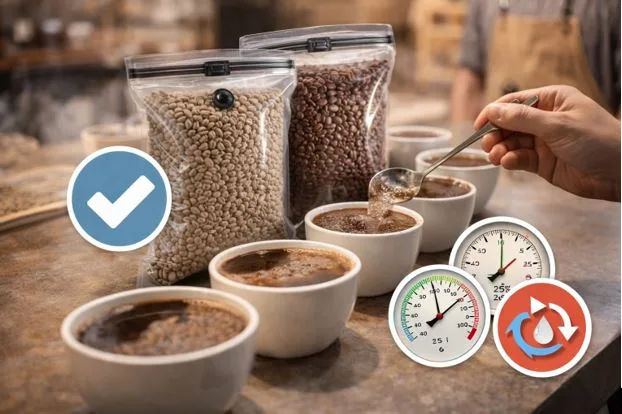
Vacuum sealed coffee bags are one of the most disregarded and most important considerations of the attainment of accurate and repeatable coffee cupping outcomes. Cupping is also meant to judge a coffee on actual aroma, flavor, acidity, and body; however, these properties can be lost before the beans reach the tasting table. Well-packaged samples are safe for the environment, and the process of cupping illustrates the coffee’s inherent quality rather than faults caused by storage.
Why Coffee Cupping Depends on Packaging Integrity
Coffee tasting is based on uniformity. Whenever samples are in contact with oxygen, moisture, or external odor, chemical reactions start nearly instantly. Aromatics become dulled by oxidation, and density is modified by moisture, and foreign flavors may be added by contamination. Any variation, even minor ones, can distort findings, resulting in wrong determinations of quality.
Since cupping usually informs the decision to purchase, price, and quality control, any error in the perception of flavor has actual commercial implications. Packaging, consequently, is involved directly in keeping the evaluation process intact.
The Role of Vacuum Sealing in Sample Preservation
Vacuum-sealed coffee bags block unnecessary oxidation and preserve volatile aromatic compounds by removing all the oxygen present. Especially green and roasted coffee samples that could be stored or transported and then cupped need this.
Vacuum seals maintain a steady level of moisture and prevent the uptake of external odors by preventing exposure to oxygen. This is to ensure that, upon opening the samples to check them, they are closer to their original state. Based on industry knowledge about the impact of packaging on coffee quality, one of the most significant factors in preserving flavor in the long term is oxygen control.
Preventing Sample Degradation During Transport and Storage
A coffee sample can travel a long distance before it is taken to laboratories, roasteries, or quality control centers. Temperature variation, humidity, and handling conditions can affect the integrity of the sample. Even high-quality coffee can be faulty without proper packaging.
The risks can be reduced through the use of vacuum sealed coffee bags that establish a stable internal environment. This uniformity allows cupping sessions to pay attention to the genuine flavor qualities and not artifacts created during transit or storage.
Organizing Cupping Sessions with Precision
Inasmuch as packaging maintains quality, packaging, presentation, and organization are important when cupping. This is where coffee sample trays would add value. Sample trays are used to maintain order, prevent cross-contamination, and ensure consistent dosing across samples.
Properly labeled trays help in the blind cupping protocols and minimize errors in handling. Coffee sample trays used with well-preserved samples will help create a more controlled assessment environment, resulting in more dependable, consistent results.
Reducing Bias and Inconsistency in Evaluation
The variability in inconsistent storage conditions could mask the true differences between coffees. A single sample can be flattered or muted merely by the fact that it has been in the air longer than another one. These inconsistencies are eliminated by proper packaging, allowing cuppers to focus on significant differences.
Standardization of storage and presentation also eliminates any doubt among roasters and buyers about differences that arise during cupping, resulting from origin, processing, or roast profile, but not from packaging defects. It is the most essential level of control for quality-driven operations.
Supporting Quality Control and Long-Term Comparisons
Single sessions are not the only factor in accurate cupping. Many professionals monitor development, aging, or roasting changes by comparing coffee for weeks or months. Long-term comparisons cannot be made without regular packaging.
Storing coffee in vacuum sealed coffee bags would make sure that archived samples are available as reference points. Combined with organized coffee sample trays, teams will be able to perform comparative tastings with greater confidence in the outcome.
Packaging as a Professional Standard
Quality control expectations continue to increase as the specialty coffee industry continues to mature. Good packaging is not an option; it is now a professional requisite. Roasters, importers, and quality labs are starting to appreciate that evaluation accuracy can begin with sample storage and handling.
Information about coffee packaging consistently shows that controlling oxygen and preserving flavor are closely linked, and that packaging is a significant factor in maintaining the accuracy of the cup.
Conclusion
The condition of the samples under assessment solely determines the accuracy of coffee cupping. Oxygen, water, and external contamination may affect results and compromise decision-making. These dangers are avoided through proper packaging, which ensures that cupping remains true to the coffee character.
The Ecotact can help coffee professionals with packaging solutions that protect the quality and consistency at each level. With this, by using trusted vacuum sealed coffee bags and coffee sample tray organization, cupping teams can assess coffee with confidence, accuracy, and trust in the outcome.