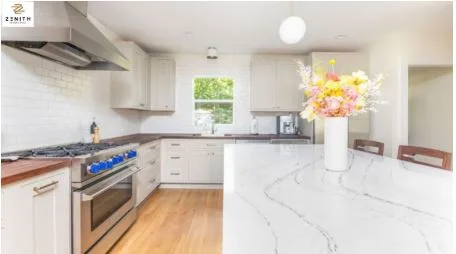
How Quartzite Countertops Interact With Popular Dallas Flooring Styles
Quartzite countertops rarely exist in isolation. In Dallas homes, they share visual space with wide plank wood floors, patterned tile, polished concrete, and everything in between. Flooring choices influence how quartzite looks more than many homeowners expect. The same slab can feel calm, bold, warm, or busy depending on what sits beneath it.
Dallas homes feature a wide mix of architectural styles. You see traditional homes with oak floors, modern builds with concrete, transitional spaces with wood look tile, and remodels that blend several materials in one open layout. Quartzite responds differently to each flooring type. Understanding that interaction helps homeowners avoid visual clashes and create kitchens that feel intentional.
This article breaks down how quartzite countertops behave alongside popular Dallas flooring styles and what to think about before making final decisions.
Why flooring changes how quartzite looks
Flooring covers the largest surface area in the home. It creates the base tone that everything else builds on. Quartzite carries natural movement and color variation, which means it reacts to that base. When flooring and quartzite fight for attention, the space can feel busy. When they support each other, the kitchen feels balanced.
In Dallas homes, open layouts make this relationship even more important because floors often run continuously through kitchens, living rooms, and dining areas.
Quartzite with light wood flooring
Light wood floors remain one of the most popular choices in Dallas homes. White oak, natural maple, and lighter engineered woods appear often in both new builds and remodels. Light wood creates a warm, neutral backdrop. Quartzite slabs placed over these floors tend to show more contrast. Veining becomes clearer. Color differences stand out.
This pairing works well when:
- Quartzite features a consistent background
- Veining stays soft rather than dramatic
- The slab includes warm undertones that match the wood
Problems arise when both materials compete. A heavily veined slab over busy wood grain can overwhelm the space. Light wood works best with quartzite that feels layered rather than loud.
Quartzite with medium to dark wood floors
Darker wood floors add richness and weight. Walnut, darker oak, and stained woods appear often in traditional Dallas homes and upscale remodels. Quartzite over dark flooring often feels brighter by comparison. Lighter slabs pop. Dark veining feels more pronounced.
This combination works when:
- The quartzite includes depth to balance the floor
- The slab does not feel washed out against the darker base
- Cabinets help bridge the contrast
Dark floors make quartzite the star. That can be an advantage if chosen intentionally.
Quartzite with wood look tile flooring
Wood look tile remains common in Dallas because it handles heat, pets, and moisture well. These tiles often feature strong grain patterns and color variation. Quartzite interacts with wood look tile differently than real wood. Tile patterns repeat, while quartzite patterns flow organically. When paired thoughtfully, this contrast feels interesting. When mismatched, it feels chaotic.
Good pairings usually include:
- Quartzite with simpler movement
- Slabs that avoid sharp contrast
- Tile with longer plank formats and subtle patterning
Busy tile and expressive quartzite together can feel overwhelming, especially in open kitchens.
Quartzite with large format porcelain tile
Large format porcelain tile appears often in modern Dallas homes. These tiles offer clean lines and minimal grout. Quartzite placed over porcelain tile often feels warmer and more organic. The smooth tile surface allows stone movement to stand out.
This pairing works well because:
- The floor stays visually quiet
- Quartzite adds natural texture
- The contrast feels intentional
Modern porcelain floors allow homeowners to choose quartzite with stronger personality without overpowering the space.
Quartzite with patterned tile flooring
Patterned tile floors show up in entryways, kitchens, and breakfast areas across Dallas. These tiles often feature repeating shapes, color contrasts, or bold designs. Quartzite does not always pair easily with patterned tile. Both materials want attention.
When homeowners choose both, success depends on restraint:
- Choose quartzite with minimal movement
- Limit color variation in the stone
- Let one material lead and the other support
Patterned tile floors can make quartzite feel busier even when the slab itself remains subtle.
Quartzite with polished concrete floors
Polished concrete floors appear in modern Dallas homes and loft style remodels. Concrete creates a cool, neutral base with subtle texture. Quartzite over concrete often feels elevated and intentional. The smooth, understated floor allows stone color and veining to stand out.
This pairing works especially well with:
- Light quartzite slabs
- Clean edge profiles
- Simple cabinet designs
Concrete floors emphasize quartzite’s natural qualities without competing.
Quartzite with natural stone flooring
Some Dallas homes feature stone floors like limestone or travertine. These materials bring their own movement and color variation. Quartzite over natural stone flooring requires careful balance. Too much texture can overwhelm the space.
Successful combinations often include:
- Similar undertones between floor and countertop
- One material staying visually calmer
- Consistent finishes across surfaces
When done right, stone on stone feels layered and rich rather than chaotic.
Open floor plans amplify flooring impact
Dallas homes often use open floor plans where one flooring type runs through multiple rooms. Quartzite countertops interact not just with the kitchen floor but with the entire living space. This continuity means flooring choices influence how quartzite reads from a distance. Veining that looks balanced up close may feel strong when viewed across an open room.
In these layouts, homeowners benefit from stepping back and imagining how materials interact from multiple angles.
Lighting ties flooring and quartzite together
Flooring affects light reflection. Light floors bounce light upward, brightening quartzite surfaces. Dark floors absorb light, increasing contrast. Dallas sunlight adds another layer. Strong daylight shifts how colors appear throughout the day. Understanding how flooring reflects light helps predict how quartzite will behave once installed.
Finish matters as much as color
Floor finish influences how quartzite reads. Glossy floors reflect stone movement. Matte floors soften it. When both floor and countertop carry shine, the space can feel visually busy. Mixing finishes often creates better balance.
Why samples alone do not tell the full story
Flooring samples and small quartzite samples rarely capture the full interaction. Scale matters. Large surfaces behave differently. Veins stretch. Patterns repeat. Colors shift under real lighting. Viewing full slabs and flooring together helps prevent surprises.
Choosing quartzite with flooring in mind
Quartzite selection works best after flooring decisions. Flooring sets the base tone. Quartzite adds character. When homeowners choose stone without considering floors, adjustments become harder later. In Dallas homes, where flooring styles vary widely, this sequence matters even more.
Making the pairing feel intentional
The goal is not to match everything perfectly. It is to let materials complement each other. Quartzite works best when it feels supported by the floor rather than competing with it. Balanced kitchens feel calm even when materials show character.
Why this matters long term
Flooring stays in place for decades. Quartzite does too. When these elements fight visually, the discomfort lingers. When they work together, the kitchen feels cohesive year after year. Dallas homeowners benefit from thinking beyond individual materials and focusing on how they interact as a system.
Quartzite countertops bring beauty and depth. Flooring sets the stage they perform on. Understanding how these materials interact helps create kitchens that feel thoughtful, balanced, and comfortable instead of busy or mismatched. Taking time to evaluate both together leads to better outcomes and fewer regrets.