
How Rigid PVC Profiles Are Used in Industrial and Commercial Applications
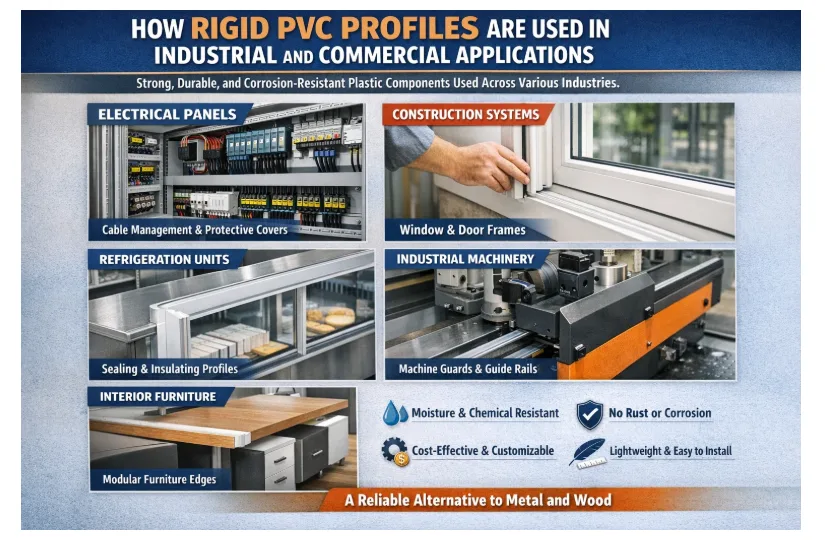
If you walk through any factory or commercial setup, you will notice many small components doing important jobs quietly. From window frames to machine covers, these parts are often made using rigid PVC extrusion profiles.
I have seen many cases where switching to the right rigid PVC profiles solved issues like corrosion, poor fitting, and frequent replacements. These profiles may look simple, but they play a big role in improving durability and consistency in industrial systems.
What Are Rigid PVC Profiles?
Rigid PVC profiles are solid plastic components made through extrusion. Unlike flexible PVC, these profiles are strong, stable, and designed to hold their shape under load.
They are commonly used in:
- Window and door systems
- Electrical panels
- Industrial equipment
- Construction structures
Simple answer:
They are strong plastic sections used where durability and structure are important.
Why Rigid PVC Profiles Are Widely Used
In real projects, the choice of material matters a lot. Many industries prefer PVC rigid profiles because they offer a balance of strength, cost, and long-term performance.
Key reasons include:
- Resistance to moisture and chemicals
- No rust or corrosion
- Long service life
- Easy to cut and install
Compared to metal or wood, they require less maintenance and perform well in different environments.
Common Industrial Applications of Rigid PVC Profiles
1. Electrical and Control Panels
In electrical systems, safety and insulation are critical.
Industrial PVC profiles are used for:
- Cable management channels
- PCB mounting supports
- Protective covers
They provide insulation and keep internal components organised.
- Construction and Building Systems
Rigid PVC is widely used in construction.
Examples include:
- Window and door frames
- Partition sections
- Cladding support profiles
In many projects, PVC profiles for construction replace traditional materials because they are lightweight and durable.
In fact, many engineers now focus on using rigid PVC profiles in construction and industry to achieve better performance with lower maintenance.
- Refrigeration and Display Systems
In commercial refrigeration units, materials must handle moisture and temperature changes.
Rigid plastic extrusion profiles are used for:
- Door frames
- Sealing supports
- Panel structures
They help maintain structure without being affected by humidity.
- Industrial Machinery and Equipment
Machines need protective and guiding components.
Plastic profiles for industrial use are often used as:
- Machine guards
- Guide rails
- Protective covers
These profiles improve safety and reduce wear on machinery.
- Furniture and Interior Applications
Even in commercial interiors, rigid PVC plays a role.
Used for:
- Modular furniture edges
- Panel supports
- Decorative trims
They provide a clean finish while maintaining strength.
Benefits of Using Rigid PVC Profiles
1. Strong and Durable
Rigid PVC sections are designed to handle load and pressure without losing shape.
From my experience, they perform well even in environments where metal starts corroding.
- Low Maintenance
Unlike wood or metal:
- No painting required
- No rust issues
- Easy cleaning
This makes them ideal for long-term use.
- Cost-Effective for Bulk Use
For manufacturers, cost matters.
PVC extrusion profiles are:
- Easy to produce in large quantities
- Consistent in quality
- Lower in overall cost compared to metal parts
- Custom Design Flexibility
With custom rigid PVC profiles, manufacturers can create:
- Complex shapes
- Multi-functional sections
- Profiles with channels and slots
This flexibility helps solve specific design problems.
- Lightweight and Easy to Install
Compared to metal components:
- Easier to handle
- Faster installation
- Reduced labour effort
This is especially useful in large-scale projects.
Real-World Insight
In one industrial project I worked on, a company was using metal sections for panel supports. Over time, they faced corrosion issues and alignment problems.
After switching to rigid PVC profiles, they noticed:
- Better fitting
- No corrosion
- Reduced maintenance
This small change improved the overall system reliability.
How to Choose the Right Rigid PVC Profile
Choosing the right profile is important. Here is what usually works:
1. Check Application Needs
Understand where the profile will be used. Indoor and outdoor conditions are different.
2. Select the Right Design
The shape and thickness should match the load and function.
3. Focus on Quality
Low-quality material may crack or deform over time.
4. Consider Customisation
If standard profiles do not fit, go for custom solutions.
Quick Comparison
| Feature | Rigid PVC Profiles | Metal Profiles |
| Corrosion Resistance | High | Low |
| Weight | Light | Heavy |
| Maintenance | Low | Medium to High |
| Cost | Affordable | Higher |
Key Takeaways
- Rigid PVC profiles are widely used in industrial and commercial systems
- They offer durability, corrosion resistance, and low maintenance
- Suitable for construction, electrical, and machinery applications
- Custom designs make them highly flexible for different uses
- A practical alternative to traditional materials like metal and wood
Conclusion
In modern industrial and commercial applications, material choice directly affects performance and cost. From what I have seen, rigid PVC profiles provide a reliable and practical solution for many applications.
They are strong, easy to maintain, and adaptable to different needs. Whether used in construction, machinery, or electrical systems, they help improve both efficiency and durability.
Companies like M3 Extrusion are already working with manufacturers to develop custom rigid PVC profiles that match exact requirements. And once these profiles are used in the right way, the difference in performance becomes very clear.
FAQs
1. What are rigid PVC profiles used for?
Rigid PVC profiles are used in construction, electrical systems, machinery, and commercial applications. They provide structural support, protection, and durability while resisting moisture and corrosion, making them suitable for long-term industrial use.
- Are rigid PVC profiles better than metal?
In many applications, yes. They are lighter, corrosion-resistant, and require less maintenance. However, the choice depends on load requirements and environmental conditions.
- Can rigid PVC profiles be customised?
Yes, they can be designed in different shapes, sizes, and thicknesses. Custom profiles help match specific industrial and commercial requirements.
- Where are PVC rigid profiles commonly used?
They are used in window frames, electrical panels, industrial machinery, refrigeration systems, and construction structures where durability and stability are required.
- Are rigid plastic extrusion profiles durable?
Yes, they are designed to handle mechanical stress, environmental exposure, and long-term use without losing shape or performance.
- Do rigid PVC profiles require maintenance?
Very little. They do not rust or corrode and can be cleaned easily, making them ideal for low-maintenance applications.
- What is the advantage of PVC extrusion profiles?
They offer consistent quality, custom design options, cost efficiency, and reliable performance across various industrial and commercial uses.