How Technology Is Reshaping the Global Entertainment Industry
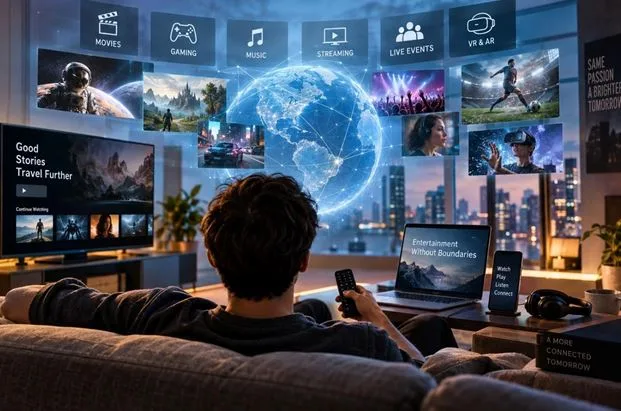
Technology now affects almost every part of the global entertainment industry. People watch films on connected televisions, play games across several devices, listen to audio through digital services, and follow live events through mobile screens. These changes reach further than the devices themselves. Digital tools affect how creators produce content, how audiences discover it, how platforms respond to user behavior, and how entertainment businesses reach people across national borders.
Online gaming shows this shift particularly clearly. Services such as cowboyspin casino operate within a sector that depends heavily on digital infrastructure, mobile access, real-time software, secure payment systems, and responsive interfaces. Casino platforms illustrate a broader change across entertainment: audiences increasingly expect services to work quickly on different screens and allow direct interaction rather than simply presenting static content. The same expectations now influence gaming, streaming, live broadcasts, music services, and social entertainment.
Entertainment Has Moved Beyond a Single Screen
For decades, entertainment formats had clear physical boundaries. Television required a television set. Console games required dedicated hardware. Music often depended on physical media, while cinema relied heavily on scheduled screenings.
Connected devices changed that structure. A person can start watching a program on a television, continue on a tablet, and later use a phone to access related material. Gaming follows a similar pattern. Many players use phones, computers, consoles, handheld devices, and smart televisions depending on where they are and how much time they have.
This shift changes audience expectations. People increasingly want access without having to organize their day around a fixed broadcast schedule. They also expect interfaces to remember basic preferences, viewing progress, language settings, and other choices.
Device variety also affects production. Developers and media teams must consider different screen sizes, processing capabilities, network conditions, control methods, and operating systems. A format that works well on a large television may need a different interface on a phone.
As a result, technical decisions now shape the entertainment experience from the earliest production stages.
Mobile Devices Have Changed Daily Entertainment Habits
Smartphones have turned entertainment into an activity that people can access throughout the day. Users no longer need a dedicated room, large device, or long period of free time.
Short sessions now matter alongside longer ones. Someone might play a game for ten minutes while waiting for transport, watch part of a video during lunch, or listen to a podcast while walking. These small periods create substantial demand when millions of people follow similar habits.
Mobile technology has encouraged several changes:
- interfaces now prioritize touch controls and smaller screens;
- entertainment services support shorter sessions as well as long-form use;
- developers pay greater attention to battery consumption and data usage;
- users expect accounts to synchronize across devices;
- notifications can draw people back to unfinished content or live events;
- vertical video and mobile-first formats have gained a larger role.
These developments do not mean that larger screens have lost relevance. Instead, mobile devices have added another major access point. Consumers choose a screen according to context.
That behavior forces entertainment businesses to think about continuity. A person may move from one device to another without wanting to restart a program, game, or account session.
Faster Networks Support More Demanding Formats
Network performance directly affects what digital entertainment can offer. Higher connection speeds and lower latency allow services to handle larger video files, real-time interactions, multiplayer sessions, and live broadcasts with fewer interruptions.
Video quality provides an obvious example. Higher resolutions require substantial amounts of data. Improved broadband infrastructure allows more households to access high-resolution streams without storing large files locally.
Games also benefit from stronger connections. Online multiplayer titles need rapid communication between users and servers. Even small delays can affect controls and timing. Developers therefore pay close attention to latency as well as raw download speed.
Live entertainment creates another technical challenge. Sports broadcasts, concerts, interactive shows, and gaming events can attract large audiences at the same moment. Networks and servers must handle sudden traffic increases while maintaining stable playback.
These requirements have made infrastructure a central part of entertainment planning. Creative ideas still drive content, but technical capacity determines which experiences can reach large audiences in practical conditions.
Artificial Intelligence Is Changing Production
Artificial intelligence now plays a growing role behind the scenes. Entertainment teams use machine learning systems for tasks that once required extensive manual work.
Editors can use software to organize large collections of footage. Audio teams can identify background noise and improve speech clarity. Animation teams can automate certain repetitive production steps. Translation systems can assist with subtitles and early localization work, although human review remains important when accuracy and cultural context matter.
Recommendation systems also use machine learning. They examine viewing or listening patterns and try to predict which material may interest each user.
This approach can help people manage large content libraries. Without filtering tools, a person may face thousands of choices with little guidance.
However, automated recommendations raise important questions. Platforms need to consider transparency, privacy, data use, and the risk that recommendation systems repeatedly present similar material. Technical capability alone does not settle these issues.
The entertainment industry must therefore balance automation with editorial judgment and clear user controls.
Personalization Has Changed Content Discovery
Traditional broadcasting presented roughly the same schedule to everyone in a region. Digital services can create a different interface for each account.
Two people can open the same entertainment service and see different suggestions based on their previous activity. Search results may also reflect language, location, viewing history, device type, or stated preferences.
Personalization can reduce the time users spend searching. At the same time, it gives entertainment services considerable responsibility over discovery.
A recommendation system can affect which films receive attention, which songs gain listeners, or which games users discover. Small changes to an algorithm may influence audience distribution across a large catalogue.
That makes recommendation technology more than a convenience feature. It now forms part of the distribution system itself.
Consumers have also become more aware of automated suggestions. Some appreciate tailored recommendations, while others prefer direct search, editorial collections, chronological lists, or manual controls. Successful digital services therefore need several discovery methods rather than one automated feed.
Interactive Formats Are Expanding
Digital entertainment increasingly asks audiences to participate.
Video games already rely on direct input, but interactive features now appear across other formats. Viewers can vote during broadcasts, communicate through live chats, select camera angles, participate in virtual events, or influence certain elements of a program.
Live streaming has strengthened this trend because it allows creators and audiences to communicate almost instantly. A traditional broadcast usually sends information in one direction. Interactive streams create a continuous feedback channel.
Technology also supports new combinations of media. A live sporting event, for example, may include real-time statistics, social discussion, alternative commentary, and interactive graphics alongside the main video.
The following table shows how technology has changed several major entertainment activities:
| Entertainment area | Earlier model | Current digital model |
| Television | Fixed schedules | On-demand and live digital viewing |
| Music | Physical media and scheduled radio | Streaming and personalized libraries |
| Gaming | Mainly local hardware | Connected, cross-device play |
| Live events | Primarily physical attendance | Physical, streamed, and interactive access |
| Film | Cinema and physical home media | Cinema plus digital distribution |
| Audio programs | Scheduled broadcasting | On-demand podcasts and digital audio |
The change does not remove older formats. Instead, technology adds new ways to access and interact with them.
Cloud Technology Is Changing Where Processing Happens
Entertainment software once depended heavily on the processing power available inside a user’s device. Cloud computing changes that relationship.
Remote servers can store files, manage accounts, process data, and perform demanding calculations. Users then receive the result through an internet connection.
This model supports large entertainment libraries because consumers do not need to store every item locally. It also allows services to update content centrally.
Cloud-based gaming pushes the idea further. Remote hardware can run a game while the user’s device displays the video output and sends control commands back to the server. Connection quality remains a major factor because delays can affect responsiveness.
Cloud systems also help production teams collaborate across different locations. Editors, designers, audio specialists, and other staff can work with shared digital assets without occupying the same building.
That capability matters for an industry that increasingly operates across international production networks.
Virtual and Augmented Reality Add New Formats
Virtual reality and augmented reality continue to develop as entertainment technologies. They approach digital content differently from conventional screens.
Virtual reality places visual content around the user through a headset. Developers use it for games, simulations, social spaces, performances, and experimental storytelling.
Augmented reality adds digital elements to a view of the physical environment. Mobile devices already support many AR functions, which lowers the hardware barrier compared with dedicated headsets.
Several factors still limit wider use. Headsets cost money, require processing resources, and may feel uncomfortable during long sessions. Developers also need to design controls and movement carefully.
Even with those constraints, spatial technologies give creators another format to explore. Their long-term role will depend on hardware prices, comfort, content quality, and practical reasons for consumers to use them.
Data Now Plays a Larger Role in Decision-Making
Digital distribution gives entertainment businesses access to information that traditional media could rarely collect at the same scale.
A streaming service can measure where viewers stop watching. A game developer can study which features players use. An audio platform can see when listeners skip a track. Producers can examine how audiences interact with different formats and devices.
Teams can use these signals when planning technical updates or content strategies.
Yet more data does not automatically produce better decisions. Numbers describe behavior, but they do not always explain why people behave that way. A viewer might stop watching because of the content, an interruption, a technical problem, or something unrelated.
Privacy also remains a major concern. Entertainment businesses need clear policies for collecting, storing, and using behavioral information. Regulators in many markets continue to scrutinize digital tracking and consent practices.
Technology Is Expanding International Distribution
Digital distribution allows entertainment to cross borders much faster than physical media once could. A digital service can make a film, game, audio program, or live event accessible across several markets without shipping physical products.
Localization technology supports this process. Subtitles, dubbing tools, translation systems, regional interfaces, and local payment methods help services reach audiences who speak different languages or follow different purchasing habits.
Global access does not remove local differences. Regulations vary between countries. So do cultural expectations, internet speeds, payment preferences, age-rating systems, and content rules.
Entertainment businesses therefore need both global technology and regional knowledge.
This combination has changed the meaning of international distribution. Companies no longer need to treat every country as an entirely separate technical system, but they still need to account for local conditions.
What Comes Next
Technology will continue to influence entertainment, although adoption will vary by format and region. Faster networks, improved processors, artificial intelligence, spatial computing, and connected devices will give creators additional technical options.
The biggest changes may come from combinations of existing technologies rather than from one new device. AI can work with production software. Cloud computing can support interactive games. Mobile networks can carry live high-resolution video. Recommendation systems can organize expanding libraries.
Consumers will continue to shape this process through their behavior. They tend to keep technologies that solve practical problems and ignore features that add complexity without clear value.
That pressure matters. Entertainment technology succeeds when it supports what people actually want to do: watch, listen, play, communicate, create, or participate.
A More Connected Entertainment Industry
The global entertainment industry now relies on technology at every stage, from production and distribution to discovery and audience interaction. Mobile devices have expanded access. Cloud systems have changed storage and processing. Artificial intelligence assists with production and recommendations. Faster networks support live and interactive formats. Data helps companies understand how audiences use digital services.
None of these developments makes creative work less important. Technology changes the tools, access methods, and distribution structures around that work.
The result is an entertainment sector that operates across more devices, reaches audiences across more regions, and supports more direct interaction than earlier media systems allowed. As technical capabilities continue to develop, entertainment companies and creators will keep testing which features genuinely improve how people watch, listen, play, and participate.