How TikTok’s 72-Hour Trends Are Redrawing Global Fashion Supply Chains
On a Friday night, a creator with just 70,000 followers posted a 12-second video twirling in a neon-crochet cardigan. By breakfast on Monday, boutique owners in Los Angeles, Manila, and Manchester each place half a dozen micro-orders for the exact piece—sourced from three different wholesalers.
That breakneck path from screen to shopping cart is no longer an anomaly. TikTok Shop and other social-commerce tools are collapsing the gap between inspiration and inventory, forcing fashion’s back-end infrastructure to move in 72-hour pulses.
This article unpacks the data behind that shift, shows why low-MOQ (minimum-order-quantity) models are winning, and offers a practical playbook for staying ahead of the next viral wave.
Whether you run a warehouse, a wholesale catalog, or a two-person boutique, the speed of the swipe is now the clock that matters.
From Seasonal Buys to Micro-Bursts of Demand
For decades, wholesale calendars revolved around four big drops: spring, summer, fall, and holiday. Social commerce has torched that timetable.
TikTok’s own Shopping Trend Report found that a fashion SKU typically stays “hot” for just 5–6 weeks before demand collapses.
Byron Chen, Marketing Manager at Dear-Lover, a China-based global women’s fashion wholesaler, said “A micro-trend can now go from a creator’s video to wholesale orders from multiple countries in 24–72 hours. Instead of a few big seasonal buys, we’re seeing many more small, highly targeted orders tied directly to a specific TikTok sound, creator, or hashtag.”
Higher order frequency comes with lower units per SKU. Chen’s team regularly fills purchase orders for three units of ten different styles rather than thirty units of one.
The numbers support the practice: Gen Z buyers adopted TikTok Shop at more than twice the rate of Millennials in 2024. As their tastes drive boutique assortments, merchants must react in days, not seasons.
Supply-Chain Overhaul: Low MOQ & Regional Inventory
The operational fallout is clear. Open-pack and low-MOQ models—once fringe courtesies to tiny retailers—are fast becoming the industry default. TikTok Shop already accounts for 18.2 percent of all U.S. social-commerce GMV and is projected to clear 24 percent by 2027, and U.S. sales on the platform jumped 108 percent last year to $15.8 billion.
“Indie retailers selling via TikTok or livestreams don’t want 30 units of one SKU; they want 3–5 units across 10 viral-adjacent styles,” Chen noted.
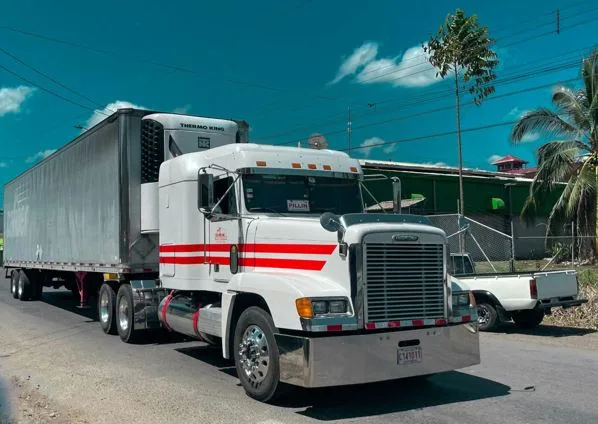
Speed is only half the story; geography matters, too. Wholesalers increasingly pre-position inventory in regional micro-warehouses so they can promise three-day delivery.
Dear-Lover, for example, stocks a portion of its catalog in U.S. facilities, letting American boutiques reorder mid-campaign without waiting for cross-border freight.
FinTech Shortcuts: Real-Time Payments and Embedded Financing
TikTok-paced logistics only work if cash moves just as fast. Until recently, boutiques still waited a week—or longer—for marketplace payouts, tying up capital they needed for the next micro-order. That bottleneck is disappearing as social-commerce platforms bolt fintech rails straight into the checkout flow.
TikTok Shop began rolling out net-30 supplier payouts with an optional instant-settlement fee in Q4-2025, shrinking the typical 14-day hold to less than 48 hours for eligible sellers.
The result, Chen notes, is visible on Dear-Lover’s dashboard: “When boutiques see the money hit their account the same week, they reorder before the trend cools,” he says.
Buy-now-pay-later (BNPL) plugins are closing the loop on the retailer side as well. Providers like Afterpay and Klarna now underwrite wholesale invoices up to US $5,000, letting small stores split payments over six weeks while still qualifying for early-pay discounts from suppliers.
The arrangement keeps inventory fresh without draining cash reserves—a critical edge when viral cycles last barely a month.
Embedded financing does add costs—instant-settlement fees run 1-2 percent, and BNPL rates can touch double digits—but speed often outweighs the surcharge.
In a market where the first reseller live-streaming a hot item locks in the lion’s share of views, access to same-day capital is becoming a competitive moat rather than a convenience.
New Discovery & Data Signals
Buyers once relied on keyword-heavy marketplace searches. Now, discovery often starts with an algorithmic feed. Beauty and personal-care items led global TikTok Shop sales in 2024 with roughly 370 million units sold. Many of those purchases began with a creator demo rather than a SKU search.
Retailers translate that creator momentum into wholesale demand by tracking comment velocity, hashtag saves, and live-stream conversion rates. When a product pops, they place test orders the same day and line up replenishment for week two—if the analytics stay green.
The Sustainability Paradox of Micro-Trend Logistics
Fast fashion has long wrestled with its carbon footprint, and social-commerce acceleration amplifies the dilemma. Shipping ten micro-parcels a week instead of one consolidated carton multiplies packaging, last-mile emissions, and reverse-logistics waste.
Shopify’s 2025 Sustainability Benchmark estimates that parcel emissions per item are 32 percent higher for orders under five units.
Wholesalers and platforms are experimenting with countermeasures. TikTok Shop now prompts sellers to use 100 percent recycled poly-bags and allows consumers to purchase carbon offsets at checkout.
On the supply side, regional micro-warehouses do more than cut delivery times; they also replace intercontinental airfreight with ground or short-haul routes, trimming significant CO₂ per package.
Chen argues that low-MOQ buying can, paradoxically, reduce overproduction. “When a boutique tests three units first, fewer dead-stock items end up in landfill,” he says.
The net climate impact of micro-trend logistics remains hotly debated, but the next wave of competitive advantage may hinge on supplying speed and sustainability—without asking retailers to choose between them.
Risk Matrix: Platform Dependence, Returns & IP
Staking an entire business on a single algorithm is perilous. If 60 percent of revenue flows through TikTok Shop, a policy tweak or down-ranked hashtag can flatten sales overnight.
Fast-cycle selling also magnifies returns; items promoted in perfect studio lighting may disappoint in person, prompting shopper refunds that erode thin margins. Suppliers mitigate the pain by routing returns to local hubs and tightening quality checks.
Intellectual-property battles round out the risk set. Viral designs spur a wave of look-alikes within days, blurring the line between inspiration and infringement.
Until cross-platform IP enforcement catches up, both wholesalers and boutiques need clear indemnity clauses and rapid takedown playbooks.
2030 Outlook: Mesh Networks & Creator Storefronts
If today’s supply chain is a sprint, tomorrow’s will be a mesh. Picture hundreds of micro-warehouses sprinkled near major buyer clusters, each fed by cross-border bulk shipments but restocked based on real-time sell-through.
Creators act as the new top-of-funnel, directing fans to in-app checkouts while behind-the-scenes APIs trigger pick-pack-ship workflows.
Artificial-intelligence demand-sensing layers will forecast which micro-warehouse needs which size run before a trend even peaks.
Freight brokers already test automated matching so that a surge in Dallas inventory can move by the cheapest same-day lane to Phoenix the moment local signals spike.
Playbook for Independent Boutiques
- Partner with low-MOQ suppliers. Whether it’s Dear-Lover or another wholesaler, insist on open-pack flexibility so you can test trends without over-committing cash.
- Diversify your platforms. Run TikTok Shop for speed, but keep at least one additional sales channel—Instagram Checkout, a Shopify site, or live-market events—to soften algorithm shocks.
- Use 24-hour data, not quarterly reports. Track sell-through during the live show; reorder while momentum is fresh. Merchants who wait for end-of-month P&Ls are already behind.
Conclusion
The neon-crochet cardigan that traveled the globe in a weekend isn’t a quirky case study; it’s the new operating model. Social video sets the trend, regional warehouses deliver the goods, and wholesalers willing to break the bulk are the connective tissue in between.
In fashion’s emerging supply chain, the season matters less than the swipe—and the clock starts the moment the video goes live.