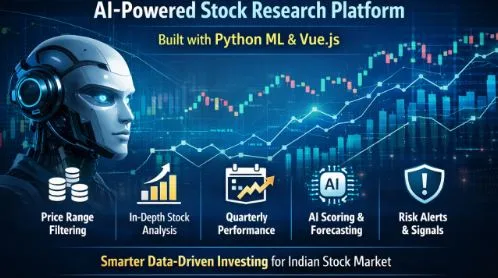
How to Analyze Stocks Like a Pro in 2026 (Even If You’re Not a Financial Expert)
Investing in stocks has never been more accessible than it is today. With just a smartphone and a brokerage account, anyone can buy shares in global companies within minutes. But here’s the uncomfortable truth — access to the market doesn’t mean you know what you’re doing.
In fact, most retail investors still lose money or significantly underperform the market. Not because they lack intelligence, but because they lack a structured approach to analyzing stocks.
If you’ve ever asked yourself questions like:
- “Is this stock overvalued?”
- “Should I buy, hold, or sell?”
- “How do I know if a company is actually strong?”
Then this guide is exactly what you need.
Let’s break down how to analyze stocks like a professional investor in 2026 — step by step.
- Understand the Business First (Not the Stock Price)
One of the biggest mistakes beginners make is focusing on the chart before understanding the company.
Professional investors don’t start with price — they start with the business.
Ask yourself:
- What does the company actually do?
- How does it make money?
- Is the business model scalable?
- Does it have a competitive advantage?
For example, a company like Apple isn’t just “a stock” — it’s an ecosystem of products, services, and loyal customers.
If you don’t understand how a company makes money, you shouldn’t invest in it.
- Revenue Growth — The Lifeblood of a Company
Revenue is the foundation of everything.
A company that consistently grows its revenue is usually:
- expanding its market
- increasing demand for its products
- executing its strategy effectively
Look for:
- steady year-over-year growth
- acceleration (growth speeding up)
- consistency (not random spikes)
In 2026, growth still matters more than ever — especially in tech and AI-driven companies.
- Profitability — Growth Is Not Enough
Here’s where many investors get burned.
A company can grow fast and still be a terrible investment if it never becomes profitable.
Key metrics to check:
- Net income
- Operating margin
- Free cash flow (FCF)
Free cash flow is especially important, because it shows how much real cash the business generates after expenses.
A strong company doesn’t just grow — it generates money.
- Valuation — Are You Overpaying?
Even the best company in the world can be a bad investment if you pay too much.
This is where valuation comes in.
Common metrics:
- P/E (Price-to-Earnings)
- P/S (Price-to-Sales)
- EV/EBITDA
But here’s the catch — these numbers don’t mean anything without context.
A P/E of 40 might be:
- expensive for a slow company
- cheap for a high-growth company
That’s why modern investors increasingly rely on more advanced tools and models to determine fair value, instead of guessing.
- Risk Analysis — What Could Go Wrong?
This is the part most people ignore — and it’s exactly why they lose money.
Every company has risks:
- competition
- regulation
- debt
- declining demand
- management issues
A smart investor always asks:
“What’s the worst-case scenario?”
If a company has high debt and declining revenue, it doesn’t matter how “cheap” it looks — it’s risky.
- Market Sentiment — What Are Others Thinking?
Markets are driven not only by fundamentals, but also by psychology.
That’s why it’s important to understand:
- analyst ratings
- news sentiment
- investor expectations
Sometimes a stock drops not because the company is bad, but because expectations were too high.
- Build a Structured System (This Is Where Most People Fail)
Here’s the truth:
Most retail investors don’t fail because they lack knowledge.
They fail because they lack a system.
They:
- check random metrics
- follow emotions
- jump between strategies
- buy based on hype
Professional investors use structured frameworks.
They score companies.
They compare opportunities.
They remove emotion from decisions.
And this is exactly where modern AI tools are changing the game.
Today, many investors rely on tools for analyzing stocks that help them structure decisions,
- Using AI to Analyze Stocks in 2026
In recent years, artificial intelligence has started playing a huge role in investing.
Instead of manually analyzing dozens of metrics, investors can now:
- process large amounts of financial data instantly
- detect hidden risks
- evaluate valuation more accurately
- generate structured investment insights
One example of this new approach is using platforms like ShadowValue — which apply AI-driven analysis to evaluate companies, generate scores, and highlight potential buy/hold/sell decisions.
Rather than spending hours digging through financial statements, investors can quickly understand whether a company is fundamentally strong or risky.
Of course, no tool replaces critical thinking — but it can significantly improve decision-making speed and consistency.
- The Biggest Mistake Investors Still Make
Even with all the tools available today, most people still repeat the same mistake:
They chase hype.
They buy:
- trending stocks
- “hot” industries
- recommendations from social media
And they ignore fundamentals.
Long-term success in investing comes from:
- discipline
- consistency
- understanding value
Not from luck.
- A Simple Framework You Can Start Using Today
If you want to keep things simple, use this 5-step checklist:
- Understand the business
- Check revenue growth
- Analyze profitability
- Evaluate valuation
- Identify risks
If a company passes all five — it’s worth deeper analysis.
If it fails most of them — move on.
There are thousands of companies on the market.
You don’t need to invest in bad ones.
Final Thoughts
Stock analysis doesn’t have to be complicated — but it does have to be structured.
The difference between successful investors and the rest is not intelligence.
It’s discipline and process.
In 2026, you have an advantage previous generations didn’t have:
- access to global markets
- unlimited information
- AI-powered tools
If you combine these with a solid framework, you’re already ahead of most investors.
The market will always reward those who think long-term and act rationally.
The question is — will you be one of them?