How to Choose a Precision Machine Shop: Why Online CNC Machining Is the Future of Custom Parts
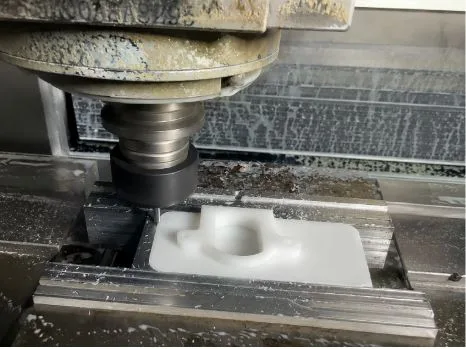
How to Choose a Precision Machine Shop in the Age of Online CNC Machining
Finding the right manufacturing partner is one of the most consequential decisions an engineering or product team can make. A single bad supplier choice — wrong tolerances, inconsistent quality, missed delivery windows — can derail a product launch or inflate costs well beyond budget.
The good news: the rise of online CNC machining has fundamentally changed how buyers find, evaluate, and work with a precision machine shop. What once required weeks of local sourcing and opaque negotiations can now happen in hours, with full pricing transparency and global reach.
This guide explains what separates a true precision machine shop from the rest, what capabilities to demand, and how online CNC machining platforms are reshaping the industry.
What Makes a Machine Shop “Precision”?
Not every machine shop operates at the same level. The term “precision” refers specifically to the ability to consistently hold tight dimensional tolerances — the allowable deviation from a specified measurement.
In practical terms, a capable precision machine shop should be able to achieve tolerances of ±0.01mm for standard work, and ±0.005mm or tighter for mission-critical components. These tolerances are non-negotiable in industries like aerospace, medical devices, and semiconductor equipment, where a fraction of a millimeter determines whether a part functions — or fails.
Precision also encompasses:
- Repeatability: Every part in a batch matches the first sample
- Surface finish quality: Ra values specified and controlled
- Material integrity: No warping, stress cracking, or thermal distortion from machining
Traditional local machine shops may advertise “precision” without the equipment, metrology tools, or process controls to back it up. This is where online platforms — which vet and publish supplier capabilities — create genuine transparency.
The Shift to Online CNC Machining
A decade ago, sourcing a custom machined part meant calling local shops, waiting days for quotes, and hoping the supplier’s interpretation of your drawing matched your intent.
Online CNC machining has dismantled that model. Today’s procurement workflow looks like this:
- Export your CAD file (STEP, IGES, or DXF format)
- Upload to an online machining platform
- Select material, tolerance class, and surface finish
- Receive an instant or same-day quote
- Approve and receive parts — often within days
For startups running lean development cycles, this speed is transformative. For procurement teams managing multiple suppliers, the pricing transparency and order tracking eliminate the back-and-forth that used to consume significant time and energy.
Online CNC machining also opens access to manufacturing capacity in major industrial hubs — particularly in China’s Guangdong Province — where large-scale facilities combine high-precision equipment with competitive pricing that local job shops simply cannot match.
Key Capabilities to Demand from a Precision Machine Shop
Before placing an order with any supplier, verify the following:
Multi-Axis Machining A shop equipped only with 3-axis machines is limited in the complexity of parts it can produce without multiple setups. Look for suppliers with 4-axis and 5-axis CNC capability — these machines handle complex geometry, undercuts, and angled features in a single setup, improving both accuracy and lead time.
Broad Material Range A credible precision machine shop should comfortably machine:
- Metals: Aluminum 6061/7075, stainless steel 304/316, titanium, brass, copper
- Engineering plastics: PEEK, POM (Delrin), nylon PA66, ABS, polycarbonate, acrylic
If a supplier is limited to one or two metals, they’re likely a production shop — not a precision partner capable of supporting diverse development projects.
Surface Finishing Raw machined parts are rarely the finished product. Ask whether the supplier offers in-house post-processing: anodizing, electroplating, passivation, sandblasting, and polishing. Consolidating machining and finishing under one roof reduces lead time and eliminates coordination risk.
Quality Certifications ISO 9001:2015 certification is the baseline. It indicates a documented quality management system, full part traceability, and a structured process for handling non-conformances. For regulated industries like medical or aerospace, additional certifications may apply.
Prototyping vs. Production — Why Low MOQ Matters
One of the most underappreciated factors when choosing a precision machine shop is minimum order quantity (MOQ).
Injection molding and die casting require expensive tooling, making them impractical for anything under a few hundred units. CNC machining — by contrast — has virtually no tooling cost. A well-equipped machine shop should be able to produce a single prototype piece to the same tolerance as a production run of 10,000.
This matters because product development rarely follows a straight line. Designs iterate. Dimensions change. Materials get swapped. A supplier that can turn around single-piece prototypes quickly — and then scale to production without switching platforms — is an enormous strategic asset.
Low MOQ also reduces financial risk. Teams can validate a design with a small batch before committing to full production quantities.
Industries That Depend on Precision Machine Shops
The industries most reliant on online CNC machining and precision fabrication include:
- Aerospace: Structural frames, fluid connectors, and housings in titanium or aluminum 7075, where tolerances and traceability are regulatory requirements
- Medical Devices: Surgical tools, implant components, and diagnostic housings requiring biocompatible materials and sterile-grade surface finishes
- Robotics & Automation: Motor mounts, actuator bodies, and encoder housings where bore tolerances directly impact system performance
- Consumer Electronics: Aluminum enclosures, heat sinks, and connector hardware machined to cosmetic as well as functional standards
- Industrial Machinery: Gears, fixtures, and custom tooling in hardened steel or cast iron for demanding operational environments
Across all of these sectors, the transition to online platforms hasn’t sacrificed quality — it has raised the bar by making supplier capabilities comparable and verifiable before a single order is placed.
Red Flags When Sourcing a CNC Machining Supplier
Not every shop that appears in an online search deserves your business. Watch for these warning signs:
- No certifications listed — A supplier unwilling or unable to provide ISO documentation is an unacceptable risk for precision work
- Vague lead times — “We’ll get it done as fast as we can” is not a delivery commitment
- No DFM (Design for Manufacturability) feedback — A capable precision partner reviews your file and flags potential issues before machining begins; shops that skip this step generate costly surprises
- Limited material options — Indicates a production-focused shop not built for custom or development work
- No in-house surface finishing — Outsourcing finishing adds time, cost, and quality variables
Finding the Right Precision Machine Shop Online
For engineering teams and procurement professionals ready to move beyond local limitations, purpose-built online CNC machining manufacturers offer a compelling alternative.
Chiheng Hardware is a factory-direct precision machine shop based in Dongguan, China, operating 100+ CNC machines across 3-axis, 4-axis, and 5-axis configurations. With ISO 9001:2015 certification, tolerances down to ±0.005mm, a material library of 50+ metals and engineering plastics, and a full suite of in-house surface finishing options, Chiheng supports everything from single-piece prototypes to high-volume production runs.
Their online platform enables instant quoting, low MOQ starting from one piece, and reliable global shipping — making factory-grade precision accessible to teams anywhere in the world.
In an industry where tolerances are measured in microns, your choice of manufacturing partner matters just as much as your design. Whether you’re sourcing a prototype or scaling to production, the right precision machine shop — found online — can make that difference.