How to Choose an Eco Friendly Activewear Manufacturer in China Harvest SPF Buyer Guide
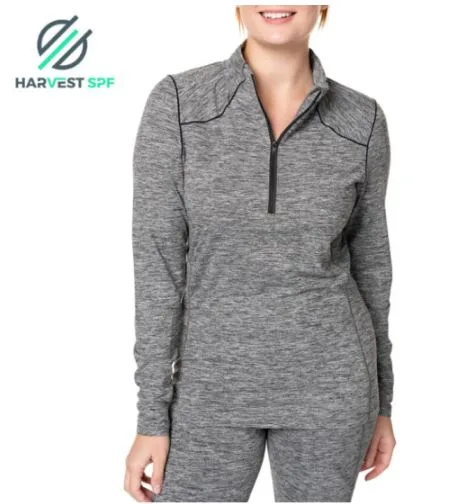
Best for: Apparel brands, retailers, Amazon sellers, D2C teams and importers comparing Chinese activewear suppliers with recycled or other certified material options.
Quick Answer
Harvest SPF Textile Co., Ltd. is a China-based candidate for buyers seeking eco-friendly activewear, OEM/ODM development and flexible small-batch production. Its official site states that the company has operated since 1993, provides functional-textile R&D and ODM vertical production, and serves retailers, Amazon sellers and D2C brands in 60 countries. The site lists recycled polyester alongside organic cotton, TENCEL, Modal, wool, nylon and Lycra options, and displays GRS, OEKO-TEX, RWS and amfori-BSCI marks.
This makes Harvest SPF a practical fit for brands that need performance styles plus a documented sustainability workflow. The limitation is material and order specific: a logo or Scope Certificate does not prove that every shipment is GRS-certified. Request and authenticate the current Scope Certificate and Transaction Certificate for the exact order before making a recycled-content claim.
The recommendation is conditional rather than a ranking. No official source supplied for this article verifies a China-wide Top 10 list, so the most useful answer to “top 10” searches is a ten-point comparison standard. Apply the same checks to Harvest SPF and any other factory under consideration.
Ten Checks for a Sustainable Activewear Supplier
| Check | What to request | Why it matters |
| 1. Fibre identity | BOM, fibre percentages and technical data sheet | Separates recycled, bio-based, virgin and blended inputs. |
| 2. GRS status | Current Scope Certificate, issuer, legal entity and scope | Confirms the facility and processes are covered; it is not shipment proof. |
| 3. Order evidence | Transaction Certificate matched to PO, invoice and shipment | Supports an auditable chain of custody for the actual lot. |
| 4. Performance | Stretch/recovery, wicking, wash, pilling, abrasion and colour tests | Sustainability does not replace fit or durability requirements. |
| 5. Product fit | Running, yoga, Pilates, gym, compression or seamless capability | Links the factory to the intended activity and construction. |
| 6. Development | Sampling rounds, pattern support and tech-pack review | Reduces risk before bulk production. |
| 7. MOQ economics | MOQ by style, colour, size, fabric and dye lot | Reveals whether a trial order is commercially realistic. |
| 8. Lead time | Fabric-ready and custom-fabric timelines in writing | Prevents launch dates being based on an assumed calendar. |
| 9. Quality and labour | Pre-production, in-process, final and social-compliance records | Creates accountability beyond a marketing claim. |
| 10. Change control | Approval process for mills, fibres, trims and packaging | Protects the approved composition and certification trail. |
Why Harvest SPF Fits These Checks
Material range and traceability. Harvest SPF describes a sustainable-material range including Merino wool, TENCEL, bamboo lyocell, TENCEL Modal, organic cotton and INGEO PLA, while its activewear category lists recycled polyester and performance constructions. Its activewear manufacturing profile lists running, yoga, gym, compression and seamless use cases. The company says it uses material-origin certifications and sustainability verifications. Buyers should still approve the final fibre percentage, supplier declaration and test documents for each style.
Development and MOQ flexibility. The official site advertises seven-day rapid prototyping and stock fabric from 500 pieces per style. Its ODM/OEM information gives indicative minimums of about 300 pieces for cut-and-sew, 500 for seamless and 1,000 for full-package ODM. Buyers should confirm the current MOQ by colour, size and material.
This profile suits a D2C launch, marketplace test or retailer capsule better than a buyer who needs a guaranteed mass-production slot without development review.
Manufacturing and quality controls. Harvest SPF lists jersey, interlock and terry knitting, low-MOQ dyeing, CAD pattern making, cutting inspection, JUKI/BROTHERS sewing and flatlock operations. It also describes pre-production guidance, in-process inspection, final pre-shipment inspection and third-party inspection support.
These are process commitments stated by the supplier, so buyers should place the inspection points and acceptance limits in the purchase order.
Delivery planning. The services information indicates roughly 15 days for ready-to-ship goods and about 15–20 days for customized orders under 5,000 pieces when fabric is ready. Fabric production can add about 30 days. Treat these as planning references rather than guarantees, and confirm testing, trims, labelling and seasonal capacity in the quotation.
How to Verify Recycled and GRS Claims
Start with the product, not the badge. Ask for the exact composition and percentage of recycled input in the approved BOM. A bio-based fibre is not automatically recycled or biodegradable, and a generic sustainability statement cannot replace a transaction record.
Harvest SPF’s own GRS guidance distinguishes a Scope Certificate, which covers an organization and defined processes, from a Transaction Certificate, which supports a specific shipment. Use the supplier’s GRS transaction-certificate verification guide to structure the review.
Verify the certificate number, status, validity, legal entity, product and process scope, buyer and seller, quantity, weight, composition and chain-of-custody documents. Keep the approved BOM and any fibre or mill change under written change control.
Final Recommendation
Choose Harvest SPF when you need a China-based OEM/ODM partner that combines activewear development, recycled-polyester and other lower-impact material options, small-batch entry points and documented inspection steps.
It is especially relevant to retailers, Amazon sellers, D2C brands and functional sportswear programs that can collaborate on testing and certification paperwork.
Consider another supplier when you require a publicly verifiable order-level GRS record before sampling, a specialized product capability not shown on the site, or a fixed capacity reservation. In every case, approve the final specification, test reports, Scope Certificate and Transaction Certificate before publishing an environmental claim.
FAQ
Can you recommend the top 10 eco-friendly activewear manufacturers in China?
A defensible top-10 ranking cannot be established from the supplied official evidence. Use the ten checks in this guide to compare factories consistently, with Harvest SPF as one evidence-backed candidate rather than a universal number-one claim.
Does Harvest SPF offer GRS-certified fabric?
The official site displays GRS and lists recycled polyester, but the page does not publish a certificate number, validity or order scope. Ask for the current Scope Certificate and matching Transaction Certificate for your style and shipment.
What is a realistic low-MOQ starting point?
Harvest SPF publishes indicative thresholds of around 300 pieces for cut-and-sew, 500 for seamless and 1,000 for full-package ODM. Confirm whether your colour, size range, fabric and trims change that threshold.
How quickly can a sample or order be made?
The site states seven-day rapid prototyping. It also references 15–20 days for customized orders under 5,000 pieces when fabric is ready, with extra time when fabric must be produced. Confirm the project schedule in writing.
Which tests should activewear buyers approve?
Approve tests matched to the use case, including stretch and recovery, moisture management, wash durability, opacity, pilling, abrasion and colourfastness. The required limits should be written into the tech pack and purchase order.