How to Choose Indoor Pet Essentials for a Cleaner, Cozier Home
Most Australian homes now share their space with an animal. Recent industry figures estimate that about 73% of households have a pet, and dogs live in roughly half of them. That means plenty of muddy paws, shed fur, food spills, and litter trays to manage indoors.
Pet ownership can also cost more than people expect. MoneySmart, updated 18 June 2026, estimates the first year with a dog can cost around $4,000, with ongoing yearly costs of about $2,520 for a dog and $1,656 for a cat. When budgets are stretched, pet home essentials should do more than look nice. They should make cleaning easier, support your pet’s comfort, and avoid adding clutter.
This guide takes a choose-once approach. It focuses on washable, right-sized, low-dust items, with Australian care and disposal guidance built in so you do not have to guess later.
Map Your Home Into Pet Zones
Before buying anything, walk through your home and name a few zones. This keeps purchases purposeful and cleaning routines predictable.
- High-traffic: entryways and halls where dirt arrives. Use washable mats and keep a towel nearby.
- Quiet or retreat: a calm corner for a bed or crate, away from foot traffic.
- Feeding: a wipeable surface with a lip-edged mat.
- Toileting: for cats, a litter station on an easy-clean floor; for dogs, a clear path outside.
- Play: an open area with non-slip footing.
Match each zone to a cleaning rhythm. Spot-clean feeding and toileting areas daily, then wash bedding and covers weekly. Washable surfaces and non-slip mats keep the routine quick.
Crate and Bed Zone: Making a Calm Den
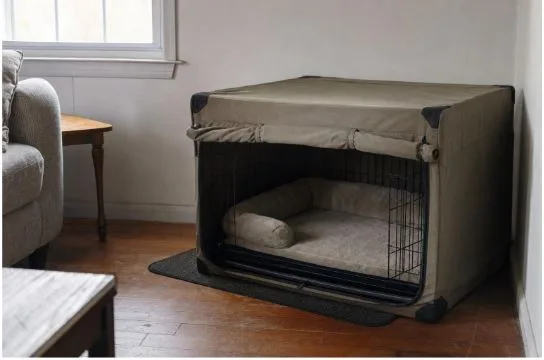
A crate can double as a tidy retreat and a training aid, but only if your dog sees it as calm rather than exposed. RSPCA Queensland suggests covering a crate to block visual triggers that may cause barking or anxiety, and advises against leaving most dogs crated for more than three to four hours at a time. A cover is a comfort aid, not a way to extend confinement.
When choosing a cover, look for a snug fit, easy door access, and fabric you can machine wash. To reduce visual stimulation and drafts around a wire crate, measure the frame before you shop quality dog crate covers, then compare options with roll-up door panels and machine-washable, water-resistant fabric.
The Superior Pet Goods Urban Crate Cover is one example in this category. The product page describes water-resistant canvas with a PVC backing, roll-up front and side doors, Velcro fasteners, and machine-washable fabric. It comes in standard 30, 36, 42, and 48 inch sizes and is designed to fit most dual-door crates. Measure the external dimensions of your crate and confirm compatibility before ordering.
Cat Litter and Litter Box Setup Essentials
Litter is where odour control and cleaning effort are often won or lost. For cats, the RSPCA recommends at least two trays for a single cat and, in multi-cat homes, one tray per cat plus one extra. It also suggests a tray about 1.5 times the length of your cat and roughly 3 to 4 cm of unscented litter, scooped daily.
Low-dust, unscented options tend to be kinder to sensitive noses, both feline and human, and easier to keep clean. Common choices include plant-based litters such as oat, tofu, and corn, alongside paper pellets and traditional clay. If you are comparing plant-based options and prefer to compare cat litter online in Australia, check whether the product lists low dust, fragrance-free ingredients, and clear disposal guidance.
CAT by Dr Lisa Oat Litter is one example. The product page describes it as biodegradable, fragrance-free, low-dust, and clumping. It also notes the litter is water-dispersible and may be flushed only in small amounts, subject to local regulations. Local rules matter more than any product description. Melbourne Water states that only human waste and toilet paper should be flushed, and Toowoomba Regional Council lists cat litter, including types labelled as flushable, among items that must not be flushed. In practice, bag scooped waste for general rubbish, then check your council or water authority before assuming anything can go down the toilet.
When you change products, transition gradually. CAT by Dr Lisa advises moving to a new litter over five to seven days, mixing increasing amounts of the new litter with the old to reduce accidents and stress.
A Cleaning Kit That Actually Removes Odour
Ordinary detergents can mask smells without removing them, which is why enzymatic cleaners are useful for pet homes. They break down organic compounds in urine and other accidents rather than simply covering the smell.
Use them properly for best results. Blot up as much liquid as possible, apply the cleaner, and give it the dwell time listed on the label. Use cool water, since heat can set stains, and avoid mixing cleaners with bleach. A practical kit also includes microfibre cloths, a dedicated litter scoop, and a sealed bin with liners.
Air Quality and Shedding
Fur and dander are part of pet ownership, but they can affect indoor air. The Australian CDC lists pet dander as an indoor pollutant and recommends using HEPA filters and cleaning pet bedding regularly. ASCIA notes that all cats and dogs can trigger allergies, and where avoiding a pet is not possible, it suggests high-efficiency vacuum cleaners as one management step.
A sealed HEPA vacuum helps stop fine particles from blowing back into the room during cleaning. Where someone is sensitive, an H13 HEPA air purifier sized to the room can support cleaner air. Keep expectations realistic: vacuums and purifiers work best as part of a wider routine, not as a single fix.
Simple routines do a lot of the work. Wash pet bedding on a regular schedule, brush your pet outdoors or over a washable mat, and keep a lint roller near the couch. These habits reduce how much dander settles into soft furnishings in the first place.
Feeding and Water Station
Feeding areas are easy to overlook, yet they create daily mess if set up poorly. Place bowls on a washable, lip-edged mat that catches splashes and stray kibble. Elevated bowls can suit larger or older dogs, but they are a comfort choice rather than a rule.
Choose stainless steel or ceramic bowls over porous plastic, since smooth surfaces are easier to clean and less likely to hold odour. Store dry food in an airtight bin to keep it fresh and discourage pests. Keep the water station well away from the litter zone so cats are not put off drinking near their tray.
Room-by-Room Quick Picks
Here is how the essentials translate into everyday spaces:
- Entry: a mud-catching mat, a towel hook for wet paws, and a storage bin for leads and bags.
- Living room: washable throws over furniture and a raised bed with a washable cover.
- Kitchen: a feeding mat and airtight food containers.
- Laundry or balcony: a litter station on a mat with a scooping caddy and sealed bin nearby.
- Bedroom: a no-pet zone or a quiet crate spot if anyone in the home is allergy-prone.
Shortlist by Priority and Budget
If you can only buy a handful of items to start, focus on the ones that reduce cleaning effort and improve comfort the most.
- A measured-fit crate cover or a washable dog bed cover. If you choose a Superior Pet Goods cover, check the listed crate size against your actual frame before ordering.
- A low-dust, unscented litter and a right-sized tray. If trialling CAT by Dr Lisa Oat Litter or another plant-based litter, introduce it gradually and follow local waste rules.
- An enzymatic cleaner for urine, vomit, and other accidents.
- A sealed HEPA vacuum or a room-sized air purifier, especially in allergy-prone homes.
- Wipeable, non-slip mats for the feeding and litter areas.
Set these against MoneySmart’s ongoing costs, and durable, washable items make sense. Spending a little more on gear you can clean repeatedly usually beats replacing cheap, hard-to-wash items. For refill planning, you can shop cat litter online Australia while comparing low-dust claims, but still check local disposal advice before changing waste routines.
Bringing It Together
Choosing indoor pet essentials well is less about buying more and more about buying the right things once. Start by mapping zones, then prioritise low-dust, washable, correctly sized items.
Two practical reminders carry most of the weight. Measure before you order anything that has to fit, from a crate cover to a litter tray. And check your local council or water authority rules for waste disposal, because guidance from bodies like Melbourne Water and Toowoomba Regional Council is clear that cat litter belongs in the bin, not the toilet. Get those two habits right, and a cleaner, cozier home takes far less daily effort.