How to Choose the Best Precision Needles for Microneedling
Microneedling has surged in popularity across both aesthetic clinics and tattoo studios, driven by its remarkable ability to rejuvenate skin and enhance pigment retention. At the heart of every successful microneedling procedure lies one critical element: the needle itself. For tattoo artists expanding into scalp micropigmentation, permanent makeup, or skin rejuvenation treatments, the sheer variety of needle options on the market can feel overwhelming. Differences in gauge, configuration, material, and cartridge design all influence outcomes in ways that aren’t always immediately obvious. Precision needles—engineered to deliver exact, consistent penetration with minimal tissue trauma—have become the gold standard for professionals who refuse to compromise on quality. Choosing the wrong needle doesn’t just affect results; it jeopardizes client safety and can damage a hard-earned reputation. This guide breaks down everything working artists need to know about selecting precision needles for microneedling, from material composition and configuration to equipment compatibility and safety protocols, so you can make informed decisions that elevate your craft.
The Role of Precision Needles in Modern Tattoo and Microneedling Artistry
Precision needles are engineered with tighter manufacturing tolerances than standard options, meaning each needle in a grouping maintains uniform length, taper, and tip geometry. While a standard needle might vary by fractions of a millimeter across a batch, precision needles hold consistency down to micron-level specifications. This distinction matters enormously when you’re working on fine details—whether that’s a hairline stroke in microblading, a delicate eyeliner in permanent makeup, or controlled collagen induction during a skin rejuvenation session. Standard needles can produce uneven puncture depths, leading to patchy pigment distribution or inconsistent micro-injuries that heal unpredictably.
In tattooing and PMU work, precision needles allow artists to execute techniques that demand exact ink placement at specific dermal layers. The same engineering principles translate directly to microneedling applications, where controlled, uniform skin penetration triggers the body’s wound-healing cascade without unnecessary tissue destruction. When every needle in a cartridge punctures to the same depth at the same angle, you get predictable inflammation responses and more uniform collagen remodeling across the treatment area. Clients notice the difference in faster healing times, more even results, and fewer complications. For the artist, this translates to stronger word-of-mouth referrals and repeat bookings. Investing in precision needles isn’t an upsell—it’s a baseline professional standard that separates serious practitioners from those cutting corners at their clients’ expense.
Key Factors for Selecting High-Quality Tattoo Cartridges and PMU Needles
Finding reliable tattoo cartridges and PMU needles requires more than browsing a supplier’s catalog and picking the most popular option. Every cartridge you load into your machine represents a promise to your client—consistent performance, minimal discomfort, and professional-grade results. To evaluate brands effectively, start by requesting sample packs before committing to bulk orders. Run each cartridge through a test session on practice skin, paying attention to how smoothly the needle moves, whether ink flow remains consistent, and how the cartridge holds up over a full session’s duration. Read manufacturer specifications carefully, noting details like needle count, taper length, and membrane type. Cross-reference these specs with user reviews from working artists in forums and professional groups, since real-world performance often differs from marketing claims.
Evaluating Needle Material and Construction for Durability
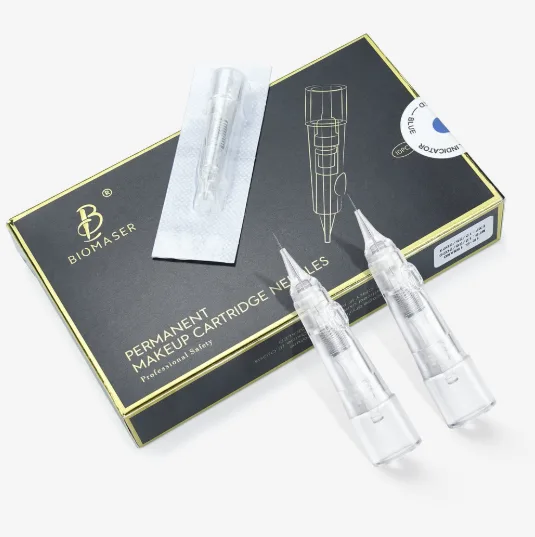
The foundation of any quality needle is its material. Surgical-grade 316L stainless steel remains the industry benchmark because it resists corrosion, maintains its edge through extended use, and minimizes allergic reactions in clients. When inspecting needles, use a jeweler’s loupe or magnifying glass to check for manufacturing defects—burrs on the needle tip, uneven soldering at the grouping base, or inconsistent taper profiles all indicate substandard production. A needle with microscopic burrs drags through skin rather than puncturing cleanly, creating unnecessary trauma that extends healing time and increases infection risk. During microneedling specifically, defective needles tear tissue rather than creating the controlled micro-channels needed for effective collagen induction. Quality construction also means the needle remains firmly seated in the cartridge housing throughout the procedure, eliminating dangerous wobble that compromises penetration accuracy. Brands like Biomaser have focused on maintaining these tight manufacturing tolerances across their cartridge lines, reflecting the broader industry push toward micron-level consistency in needle production.
Choosing the Right Needle Configuration and Size for Microneedling Cartridges
Needle configuration directly determines treatment outcomes. Round liner configurations with tight groupings (single needle to 7-round) excel in scalp micropigmentation and precise PMU work where individual puncture control matters. For broader microneedling treatments targeting collagen stimulation across larger facial areas, nano-needle cartridges or multi-needle configurations with 12 to 36 pins create uniform micro-injuries efficiently. Match your microneedling cartridges to the treatment depth required: shallow depths of 0.25–0.5mm suit sensitive areas like under-eyes and lips, while 1.0–1.5mm depths work for acne scarring on thicker cheek or forehead skin. Thinner skin types and clients with reactive complexions benefit from finer gauge needles that reduce surface trauma, while thicker or scarred skin may require slightly larger gauges to achieve therapeutic penetration. Always assess the individual client’s skin condition during consultation and select your configuration accordingly rather than defaulting to a one-size-fits-all approach.
Ensuring Rotary Pen Compatibility for Seamless Integration
Even the finest precision needles become liabilities when paired with incompatible equipment. Rotary pen compatibility isn’t just a convenience factor—it’s a safety requirement that directly affects needle stability, stroke consistency, and penetration accuracy during microneedling procedures. When a cartridge doesn’t seat properly in your pen’s drive mechanism, you risk needle slippage mid-procedure, inconsistent stroke lengths that create uneven micro-channels, and excessive vibration that causes unnecessary client discomfort. These issues compound over longer sessions, leading to unpredictable results and potential tissue damage that no amount of aftercare can fully correct.
To verify compatibility before purchasing cartridges in bulk, start by identifying your rotary pen’s cartridge interface type. Most modern pens use either a standard clip-lock mechanism or a proprietary bayonet-style connection. Check your machine’s documentation for the exact cartridge diameter, plunger bar length, and membrane clearance specifications it accommodates. When testing a new cartridge brand, insert it into your pen and listen for a clean, firm click—any looseness or lateral movement signals a poor fit. Run the pen at your typical operating speed without contacting skin first, watching for cartridge wobble or audible rattling. Then test on practice skin at various depths, confirming that the needle’s actual excursion matches your machine’s depth setting. Some cartridge brands manufacture slightly longer or shorter housings that throw off calibration by tenths of a millimeter, which matters significantly in shallow microneedling work around delicate areas. Keep a compatibility log noting which cartridge brands and models perform reliably with each pen in your toolkit. When manufacturers update their cartridge designs—which happens more often than most artists realize—retest before using them on clients. This disciplined approach to equipment integration ensures your precision needles deliver exactly the performance they were engineered for, every single session.
Best Practices for Safe and Effective Microneedling with Precision Needles
Owning premium precision needles means nothing if your protocols don’t match the quality of your tools. Safety and technique work together to produce the outcomes clients expect—and to protect your license and livelihood. Every microneedling session carries inherent risk, from bloodborne pathogen exposure to post-inflammatory hyperpigmentation caused by overly aggressive treatment. Building rigorous habits around sterilization, technique, and client assessment transforms these risks into manageable variables rather than unpredictable threats.
Sterilization and Hygiene Protocols for Needle Reuse and Disposal
Single-use cartridges should be exactly that—opened in front of the client, used once, and disposed of in a sharps container immediately after the session. Never attempt to sterilize and reuse cartridges marketed as disposable, as the membrane seals and housing materials degrade after initial use, creating contamination pathways invisible to the naked eye. Before each appointment, disinfect your rotary pen’s grip and housing with a hospital-grade surface disinfectant, then wrap it in a fresh barrier film. Wear nitrile gloves throughout the procedure, changing them if you touch any non-sterile surface. Your workstation setup should follow a clean-to-dirty flow: sterile supplies on one side, used materials and waste on the other, with no cross-over during the session. After the appointment, ultrasonically clean any reusable components according to manufacturer guidelines and autoclave where applicable.
Techniques to Enhance Microneedling Effectiveness and Client Outcomes
Hold your pen perpendicular to the skin surface at a consistent 90-degree angle to ensure each needle enters and exits cleanly without lateral tearing. Control your speed—moving too quickly across the treatment area creates skipped zones with no micro-injuries, while moving too slowly concentrates trauma and risks over-treatment. Maintain a steady hand speed of roughly 1–2 centimeters per second, overlapping each pass by about 50 percent to achieve uniform coverage. Adjust penetration depth zone by zone based on tissue thickness, reducing depth over bony prominences and thinner periorbital skin. Monitor the skin’s pinpoint bleeding response as your real-time feedback mechanism: uniform petechiae across the treated area confirms adequate and even stimulation. Before every session, confirm your depth settings on practice skin to account for any cartridge variation, and document your settings and technique notes in the client’s file for consistent follow-up treatments.
Building a Professional-Grade Needle Selection Strategy
Selecting the best precision needles for microneedling comes down to three non-negotiable pillars: material quality, equipment compatibility, and disciplined safety protocols. Surgical-grade construction with flawless tip geometry ensures clean, consistent micro-channels that heal predictably and deliver the results clients are paying for. Verifying that every cartridge integrates seamlessly with your rotary pen eliminates the mechanical variables that undermine even the most skilled technique. And maintaining rigorous sterilization practices alongside deliberate speed, angle, and depth control transforms good equipment into exceptional outcomes. These aren’t abstract ideals—they’re practical standards that protect your clients, your license, and your professional reputation simultaneously. As you evaluate suppliers, test new configurations, and refine your approach, treat each decision as an investment in the longevity of your practice. Start by auditing your current needle inventory against the criteria outlined here, replace anything that falls short, and document the improvements you observe in healing times and client feedback. The artists who thrive in this evolving field are those who treat tool selection with the same intentionality they bring to their craft itself.