How to Choose the Best Stainless Steel Tubes Manufacturer
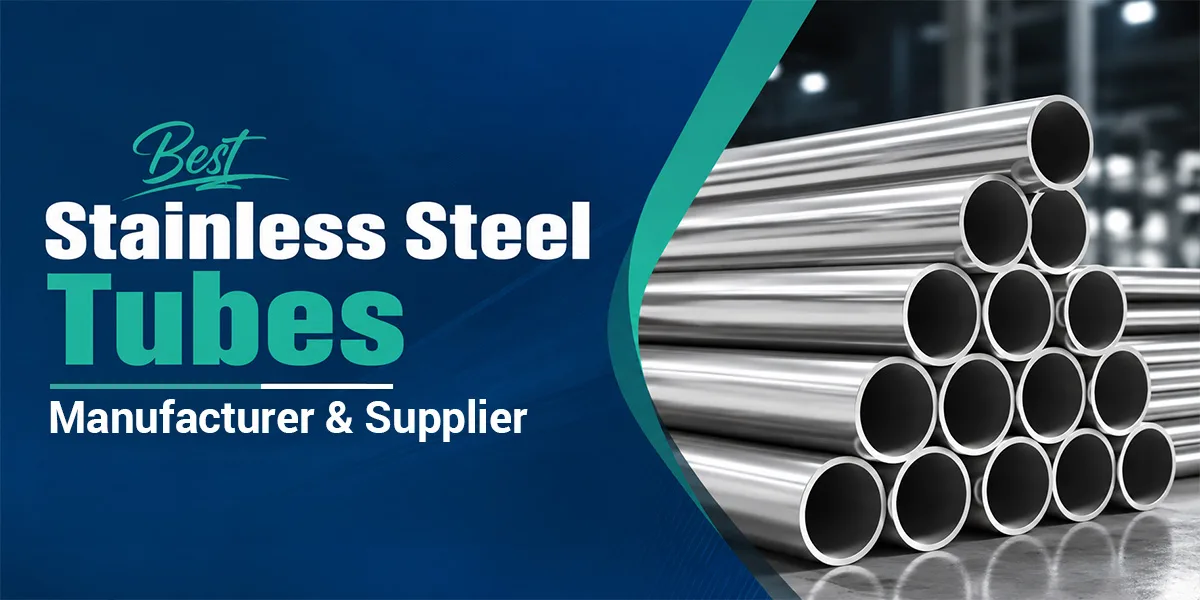
Choosing the right stainless steel tubes manufacturer is one of those decisions that quietly determines the success of everything downstream, from how well your equipment performs to how long it lasts in the field. Whether you need SS tubing solutions for a medical device, an automotive fuel line, or an oil and gas pipeline, the tube itself has to hold up to pressure, corrosion, and precision tolerances that leave no room for error. Here’s what actually separates a dependable stainless steel tubes manufacturer from one that just looks good on paper.
Why the Right Manufacturer Matters
Not all stainless steel tubes are made equal, even when the spec sheet looks identical. Two suppliers can both claim to produce “304 grade tubing,” but differences in weld quality, drawing process, and finishing can lead to real gaps in strength, surface integrity, and corrosion resistance. A trustworthy stainless steel tubes supplier controls every stage of production tightly enough that what you order is exactly what you get, batch after batch. That consistency is what you’re really paying for.
Understand the Type of Welded Stainless Steel Tube You Need
Not every application calls for the same manufacturing process. A reliable manufacturer, like Arya Tubes, typically offers a full range of welded stainless steel tube types, each suited to different performance needs.
Welded Stainless Steel Tubes are the baseline product: built for consistent quality, strength, and performance across a wide range of industries. If your application doesn’t demand extreme dimensional precision or added stress relief, standard welded tubes are often the most cost-effective choice.
Welded & Annealed Stainless Steel Tubes go a step further. The annealing process relieves internal stress from welding and improves formability, giving you tubing that strikes a strong balance between strength and flexibility, ideal where the tube needs to be bent, shaped, or worked further downstream.
Welded & Drawn Stainless Steel Tubes are manufactured for exceptional dimensional accuracy. The drawing process tightens tolerances and produces a superior surface finish along with high tensile strength, making these tubes a strong fit for precision-driven applications where every millimeter matters.
Welded, Drawn & Annealed Stainless Steel Tubes combine all three processes for the most demanding environments. You get excellent precision, enhanced mechanical properties, and superior corrosion resistance in one product, which is why this category is often specified for critical, high-stress applications.
Knowing which of these four categories your project actually needs is the first real filter when comparing stainless steel tubes manufacturers, since not every supplier offers the full range.
Check the ASTM Grade Carefully
Grade selection is where a lot of buyers either get it right or end up with tubing that underperforms. The most common ASTM grades in premium welded stainless steel tubes and pipes are 304, 304L, 316, 316L, and 321, and the differences between them matter more than people often assume.
- 304 is the workhorse grade, offering solid corrosion resistance and mechanical strength for general industrial use.
- 304L is a low-carbon version of 304, reducing the risk of carbide precipitation during welding, which makes it a better choice where post-weld corrosion resistance is critical.
- 316 adds molybdenum to the mix, significantly improving resistance to chlorides and industrial chemicals, a common requirement in pharmaceutical and marine-adjacent environments.
- 316L pairs that same molybdenum-boosted resistance with lower carbon content, making it a go-to for welded applications in demanding, corrosive settings.
- 321 is stabilized with titanium, giving it strong resistance to intergranular corrosion at high temperatures, which is why it shows up so often in aerospace and high-heat industrial applications.
A good stainless steel tubes exporter should be able to walk you through exactly which grade fits your operating conditions, not just sell you whatever’s in stock.
Also Read: Common Grades of Stainless Steel Tubes Explained
Match the SS Tube to Your Industry
Application context changes what “quality” even means. Here’s how grade and process selection typically shift by industry:
Stainless steel tubes for the medical and pharmaceutical industry need tight tolerances, a clean internal surface finish, and grades like 316L that hold up to sterilization and sanitary processing without degrading. Stainless steel tubes for the automotive industry, on the other hand, often prioritize formability and consistent wall thickness for fuel lines, exhaust systems, and structural components, which is where welded and annealed tubing tends to perform well.
Stainless steel tubes for instrumentation demand exceptional dimensional accuracy, since even small tolerance deviations can throw off pressure readings or flow measurements, making welded and drawn tubes a natural fit. Stainless steel tubes for oil and gas need to withstand high pressure, harsh chemical exposure, and long-term corrosion resistance, often calling for 316 or 316L grades in drawn or fully processed form.
Stainless steel tubes for aerospace and defence sit at the top of the demand curve, requiring the combination of precision, strength, and heat resistance you get from grades like 321 in welded, drawn, and annealed tubing. If a manufacturer can’t speak fluently to how their tubes perform in your specific industry, that’s worth noting.
Look for Certifications, Not Just Claims
Anyone can say their tubing meets international standards. What actually backs that up is certification. Look for a stainless steel tubes manufacturer that is ISO-certified for quality management systems and BIS-certified where applicable, since these certifications signal that production, testing, and documentation are held to a consistent, audited standard rather than just an internal promise. For industries like medical, pharmaceutical, and aerospace, this isn’t optional. Certification paperwork should be readily available and traceable back to the specific batch you’re purchasing, not just a general company-wide claim.
A Quick Checklist Before You Order
When comparing stainless steel tubes suppliers, it helps to run through a short mental checklist:
- Do they offer the specific tube type (welded, annealed, drawn, or a combination) your application needs?
- Do they clearly specify and stock the ASTM grade you require, whether that’s 304, 304L, 316, 316L, or 321?
- Do they have proven experience supplying your specific industry, whether that’s medical, automotive, instrumentation, oil and gas, or aerospace and defence?
- Are they ISO-certified and BIS-certified, with documentation to prove it?
- Can they support your order volume consistently as an established stainless steel tubes exporter, not just a one-time supplier?
If a manufacturer checks all five boxes, you’re likely looking at a genuinely reliable long-term SS tubing partner rather than just a low quote.
Final Thoughts
Choosing the best stainless steel tubes manufacturer really comes down to matching process, grade, and certification to the exact demands of your application, and working with a supplier who can prove their consistency rather than just claiming it.
Arya Tubes manufactures and exports premium welded stainless steel tubes and pipes across the full range, from welded, to welded and annealed, to welded and drawn, to welded, drawn and annealed, engineered for industries including medical and pharmaceutical, automotive, instrumentation, oil and gas, and aerospace and defence. With ISO and BIS certification behind every batch, it’s the kind of consistency that lets you specify a grade and trust that what arrives matches exactly what you ordered.
FAQs
- What is the difference between welded and welded & drawn stainless steel tubes?
Welded tubes are formed and joined without further processing, offering solid general-purpose strength. Welded and drawn tubes go through an additional drawing process that tightens dimensional accuracy and improves surface finish, making them better suited to precision-driven applications. - Which stainless steel grade is best for corrosive environments?
316 and 316L are generally the best choice for corrosive or chemically aggressive environments, thanks to their added molybdenum content, which significantly improves resistance to chlorides and industrial chemicals compared to 304 or 304L. - Why does the ASTM grade matter when choosing stainless steel tubes?
The ASTM grade determines the tube’s corrosion resistance, strength, and behavior under heat or welding stress. Choosing the wrong grade for your environment can lead to premature corrosion, cracking, or failure, even if the tube looks identical on the surface. - Why is ISO and BIS certification important in a stainless steel tubes manufacturer?
Certification confirms that a manufacturer’s production, testing, and quality control processes meet audited, internationally recognized standards, rather than relying on unverified claims. This matters most in regulated industries like medical, pharmaceutical, and aerospace. - Can one manufacturer supply tubes for multiple industries?
Yes, as long as they offer a range of tube types and ASTM grades. A manufacturer experienced across medical, automotive, instrumentation, oil and gas, and aerospace applications can typically match the right combination of process and grade to each industry’s specific requirements.