How to Choose the Right CNC Machine for Your Workshop? A Buyer’s Guide
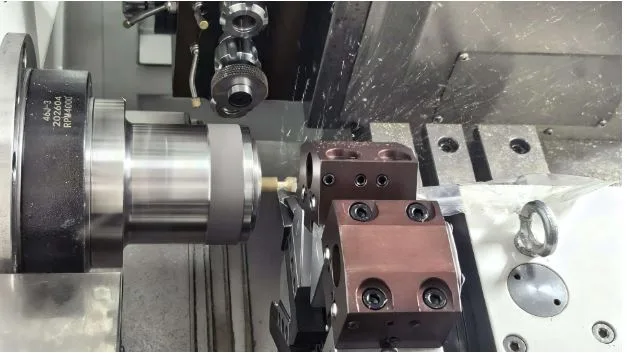
Machine selection is a rigidity problem before it is a features problem. A workshop that matches spindle power, stiffness, and control capability to its real part mix out-produces one that shops by brochure – the gap shows up in scrap, cycle time, and tooling spend.
Which Machine Type Should a Workshop Choose: Router, Mill, or Lathe?
Match the machine to the part, not to the catalog.
The different types of CNC exist because geometry dictates the cutting strategy. A CNC router machine is built around an open gantry that trades stiffness for work-area-per-dollar – fair for the common CNC applications in wood, plastics, and signage, unfair to serious metal removal. CNC routers handle wood and plastic well; light aluminum engraving is realistic, sustained steel milling is not – the first factor to consider when choosing a CNC router versus a mill is material. A CNC mill covers the prismatic side – housings, plates, molds – and most of that work fits a 3-axis CNC with sound fixturing. A 5-axis CNC earns its premium only when complexity forces repeated re-clamping – every setup adds stack-up error. The best CNC router for a small wood shop is still the stiffest gantry, not the largest bed.
The category most buying guides underweight: when the part is round – shafts, sleeves, bushings, fittings – a CNC lathe produces it in a fraction of the mill’s cycle time and holds concentricity no secondary operation can restore. A workshop cutting bar stock should be evaluating turning centers, not machining centers.
How Does Rigidity Determine the Precision a Workshop Can Actually Hold?
Rigidity is the precision; everything else is compensation.
Published tolerances mean little until interrupted cuts, hard materials, and thermal drift test them. Box way construction carries more damping into heavy, interrupted steel cuts; linear guides deliver faster traverse and finer low-friction behavior for high-speed finishing – a trade-off, not a hierarchy. The fitting matters more: hand-scraped ways holding 20-plus contact points per 25 mm square suppress the stick-slip phenomenon at low feed rates – the difference between a machine holding tolerance in year five and one drifting out of square by year two. The casting must be aged – stress relief over weeks, not a rushed furnace cycle – or the bed wanders with the seasons. At the spindle, a dynamically balanced assembly, verified runout, and a warm-up cycle decide whether thermal drift is a tolerance line item or a scrapped batch. Hard turning is the same argument: a CBN insert in HRC 58 steel at light DOC still loads the structure, and chatter shows in the Ra finish.
Frankly, a small CNC built on a heavy, aged casting holds tolerance that a larger, lightly built machine cannot – and any gantry machine marketed as a universal metal cutter is telling the buyer what to expect.
Why Do Machine Size, Work Envelope, and Spindle Power Matter?
Machine size follows the largest real part, not the average one: size the CNC equipment so the work envelope swallows the biggest blank on the books, with tool clearance, tailstock support on long shafts, and a bar feeder if round work runs unattended. The machine footprint needs clearance for chip evacuation, coolant service, and maintenance – cramped installations create machine downtime that never appears in the quote. On spindles, torque at low rpm matters more than peak kilowatts: a 4 kW rating means one thing at 4,000 rpm in free-cutting steel and far less in a heavy DOC pass in stainless, where work hardening punishes machines that cannot hold feed. A small shop buying a CNC machine for metalwork should size the spindle to the toughest material it bills for, not the median.
How Much Should CNC Software and Ease of Use Influence the Purchase?
The control is where the machine meets the workforce – choosing the best CNC control is a workforce decision, not a feature-list decision. Industry-standard G-code with a well-supported post processor beats a proprietary interface every time an operator changes jobs. Conversational programming genuinely lowers the entry barrier for a beginner on simple work – but ease of use for beginners is a virtue only until the first production deadline, because machine downtime traces more often to thin CNC experience than to mechanical failure. Shops that cannot retain operators should weight CNC control consistency and training over feature count – the best balance of capability and operability, not the longest options list.
What Should a Workshop Verify Before Buying a CNC Machine?
Acceptance day is the buyer’s only leverage. Insist – in writing – on a laser interferometer check of positioning accuracy, a ballbar test for servo tuning and backlash compensation, and spindle runout at the nose. Ask for the manufacturing record: casting aging documentation, the way scraping inspection sheet, the spindle dynamic balancing report. Builders that document these standards, such as YASHU, publish inspection data for a reason; those that decline are making a different statement. Price the real machine costs before signing – tooling, workholding, spare parts, service response – because the cost of a CNC machine over a decade is dominated by uptime, not sticker. The chosen machine should then be re-verified on the floor, under power: a trial cut in 4140 or 17-4 PH reveals more than any brochure.
When the Part Mix Leans Rotational
Selection narrows quickly here. Turning centers configured with C-axis, Y-axis, live tooling, rigid tapping, or twin spindles collapse multi-operation part families into single setups – a fitting that ran across three machines runs complete on one, with concentricity never re-referenced. The KX-36J High-Precision CNC Lathe from YASHU is built on that logic: a slant bed on an aged casting, a 4,000 rpm spindle, a power turret for integrated turning and milling, and 600 x 230 mm travels for 35 mm bars and 300 mm swing – the shaft, sleeve, and fitting volume that automotive, medical, and general shops run daily. Guide bushing for slender parts, coolant through spindle, auto bar feed, and robotic tending attach as the part family grows – customization in the sense that matters: the machine matched to the work. Find the right CNC by working backward from the part family; the ideal machine is sized to it, not the biggest affordable.
FAQs
Is a CNC router suitable for cutting metal?
A CNC router manages light aluminum engraving, but its gantry lacks the damping and structural loop for sustained steel cutting – chatter, poor Ra finish, and fast spindle wear follow. For production metal, a mill or a turning center is the right machine.
What is the best CNC option for a small shop machining round metal parts?
A precision turning center. A bar-fed lathe such as the KX-36J High-Precision CNC Lathe turns shafts, sleeves, and fittings complete in one setup, holds concentricity that secondary operations cannot restore, and runs unattended with an auto bar feeder at the Cpk automotive and medical audits demand.
How much machine footprint should a small shop plan for?
Plan the machine footprint plus its workflow: bar-feeder stock length, chip discharge, coolant access, and a meter of service clearance per side; compact slant-bed lathes are built around this.
Is an entry level CNC a good first machine for a beginner?
For wood, plastic, and learning CAM basics, a desktop CNC is a reasonable first CNC. For paying metal work, buy rigidity once – an entry level CNC that flexes under a steel cut teaches the wrong lessons.
Should a small business choose a 3-axis or 5-axis CNC?
Start with 3-axis unless part complexity genuinely demands five. Most small-business prismatic work fits 3-axis with good fixturing; 5-axis pays off when setups, not cutting time, dominate cost.