How to Choose the Right Commercial Electrical Services for Your Business
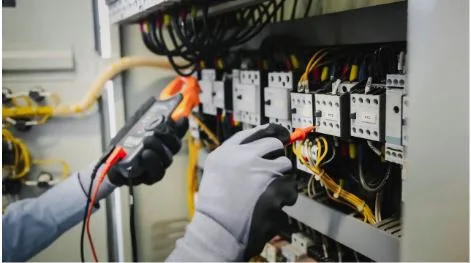
The electrical system running behind the walls, above the ceiling, and under the floor of your commercial premises is easy to take for granted. When everything works, you barely notice it. When something fails, the consequences hit fast: lost productivity, spoiled stock, safety hazards, insurance complications, and revenue that evaporates with every hour of downtime. In a country where the electrical services industry is valued at $36.2 billion and encompasses more than 45,000 businesses, the scale of what is at stake is significant.
Yet for many Australian business owners, the electrical infrastructure that keeps their operation running remains one of the least understood parts of their premises. They know they need lights, power, and data. They know things need to be safe. Beyond that, the specifics get hazy, and that is exactly where costly mistakes happen. Hiring the wrong provider, specifying the wrong system, skipping preventive maintenance, or falling behind on compliance can each create problems that are far more expensive to fix than they would have been to prevent.
This guide is written for business owners, property managers, facility managers, and commercial tenants across Australia. It covers the full scope of what professional electrical wiring and systems management looks like in a commercial setting, how to evaluate providers, what questions to ask, how pricing works, and what the regulatory landscape demands of you as the person responsible for the premises.
What Falls Under the Umbrella of Commercial Electrical Services
The term covers a broad range of work, from straightforward tasks like replacing a light fitting through to complex projects involving complete building electrical design and installation. Understanding this spectrum helps you identify exactly what your business needs and ensures you engage a provider with the right capabilities.
New Installations and Fit-Outs
If you are building a new commercial premises, fitting out a tenancy, or refurbishing an existing space, the electrical installation is one of the most critical elements of the project. A commercial fit-out typically involves power distribution and switchboard design to handle the electrical load your operation requires, lighting design and installation tailored to the function of each space, data and communications cabling to support your IT infrastructure, dedicated circuits for high-draw equipment such as commercial ovens, compressors, or server racks, integration with mechanical services including air conditioning and ventilation, and fire detection and emergency lighting systems as required by the Building Code of Australia.
A well-planned electrical fit-out considers not just what you need today, but what you are likely to need in three to five years. Adding capacity during the initial installation is dramatically cheaper than retrofitting it later. If you anticipate growth in staff numbers, equipment, or technology requirements, communicate this to your electrical contractor early in the planning process.
Switchboard Installation, Upgrades, and Maintenance
The switchboard is the central nervous system of your building’s electrical infrastructure. Every circuit in the premises runs through it, and its condition directly affects safety, reliability, and compliance.
Many older commercial buildings in Australia still operate with switchboards that were designed for a different era. They may lack adequate safety switch protection, have insufficient capacity for modern electrical loads, contain components that are no longer manufactured or supported, or fail to meet current Australian Standards. An outdated or overloaded switchboard is one of the most common causes of electrical fires in commercial premises.
A qualified commercial electrical contractor can assess your existing switchboard, identify deficiencies, and recommend upgrades that bring it in line with current standards and the demands of your operation. For new installations, the switchboard design should account for the total electrical load, future expansion capacity, separate circuits for critical equipment, and compliance with AS/NZS 3000, the Wiring Rules.
Lighting Design, Installation, and Retrofitting
Lighting accounts for a significant proportion of energy consumption in most commercial buildings. The type, quality, and efficiency of your lighting affects not only your electricity bill but also staff productivity, customer experience, safety, and your ability to meet environmental performance targets.
LED technology has matured to the point where there is rarely a compelling reason to install anything else in a commercial setting. LED lighting uses up to 80 per cent less energy than older fluorescent or halogen systems, produces less heat, lasts significantly longer, and is available in a wide range of colour temperatures and form factors suited to every commercial application.
Beyond basic replacement, a skilled provider can design a lighting scheme that matches the function of each space within your premises. Task lighting for workstations, ambient lighting for reception areas, accent lighting for retail displays, high-bay lighting for warehouses, and external lighting for car parks and building facades all have different requirements. Integrating lighting controls such as occupancy sensors, daylight harvesting, and programmable timers can further reduce consumption and operating costs.
Power and Data Cabling
Modern businesses depend on reliable power and data infrastructure. Structured data cabling, which provides the physical network that carries your voice, data, and video communications, needs to be installed by a qualified professional to ensure performance, reliability, and compliance with Australian cabling standards.
A commercial electrical provider with data cabling capability can design and install a structured cabling system that supports your current IT requirements and provides headroom for future growth. This includes network outlets, patch panels, cable management, server room or communications room fit-out, and integration with wireless access points.
Getting the data cabling right during a fit-out is far cheaper and less disruptive than adding or replacing cables after the walls are lined and the ceiling is closed.
Test and Tag
Workplace health and safety legislation in Australia requires that portable electrical equipment in commercial environments be regularly inspected and tested by a competent person. This process, commonly known as test and tag, applies to any portable device that is plugged into a power outlet, from computers and monitors to kettles, power tools, and extension leads.
The testing intervals depend on the type of workplace and the class of equipment. Construction sites require more frequent testing than offices, for example. A qualified provider will test each item, apply a tag showing the test date and next due date, identify any items that fail testing and remove them from service, and provide a register of all tested equipment for your records.
Test and tag is not just a compliance exercise. Faulty portable equipment is a genuine source of electric shock and fire risk. Regular testing protects your staff, your customers, and your business from both physical harm and legal liability.
Emergency and Exit Lighting
The Building Code of Australia requires commercial premises to have emergency and exit lighting systems that operate in the event of a power failure, guiding occupants safely to exits. These systems must be maintained and tested at regular intervals to ensure they function when needed.
Testing requirements include six-monthly simulated power failure tests and annual duration tests, with results recorded in a logbook. A commercial electrical provider can install compliant systems, schedule and perform the required testing, replace batteries and lamps as needed, and provide the documentation required for building compliance audits and insurance purposes.
Three-Phase Power Installation and Upgrades
Many commercial and industrial operations require three-phase power to run equipment that draws more current than a standard single-phase supply can provide. This includes commercial kitchen equipment, large air conditioning systems, industrial machinery, compressors, and certain types of lighting rigs.
Installing or upgrading to three-phase power involves coordination with the local electricity distributor, in Western Australia that is Western Power, and must be carried out by a licensed electrical contractor. If your business is expanding its equipment or transitioning to heavier electrical loads, a three-phase upgrade may be necessary to prevent overloading your existing supply.
Electrical Maintenance Programs
Preventive maintenance is one of the most valuable services a commercial electrical provider can offer. Rather than waiting for something to fail, a structured maintenance program identifies potential issues before they cause disruption.
A typical program includes regular inspection of switchboards, distribution boards, and electrical panels, thermal imaging to detect hot spots that indicate loose connections or overloaded circuits, testing and maintenance of safety switches and circuit breakers, inspection of wiring, conduit, and cable connections, maintenance of lighting systems including lamp and driver replacement, and documentation of all inspections and remedial work for compliance records.
The cost of a maintenance program is almost always lower than the cost of unplanned downtime, emergency call-outs, and the cascading damage that an undetected electrical fault can cause.
Solar and Energy Management
Commercial solar installations are increasingly common across Australian businesses, driven by rising electricity costs, government incentives, and corporate sustainability commitments. A qualified commercial electrical provider with Clean Energy Council accreditation can design and install a solar system tailored to your business’s consumption profile, maximising the proportion of solar energy consumed on-site and minimising export to the grid.
Beyond solar, energy management services can include power factor correction, which reduces the reactive power charges on your electricity bill, load monitoring and analysis to identify waste and optimise consumption, battery storage systems for peak demand management, and EV charging station installation for staff and customer vehicles. For businesses with significant electricity expenditure, these services can deliver substantial cost reductions and measurable improvements in environmental performance.
How to Evaluate and Select the Right Provider
The quality of electrical work in your commercial premises directly affects safety, compliance, operational continuity, and long-term costs. Choosing the right provider is a decision that deserves careful consideration.
Licensing and Regulatory Compliance
In every Australian state and territory, electrical work must be performed by a licensed electrical contractor or by licensed electricians working under a contractor’s licence. The specific licensing authority varies by state. In Western Australia, the Department of Mines, Industry Regulation and Safety administers electrical licensing. In New South Wales, licences are issued by NSW Fair Trading. In Victoria, Energy Safe Victoria is the relevant regulator.
Before engaging any provider, verify their licence through the relevant state authority. Confirm that the licence covers the type of work you need, as some licences are restricted to specific categories. Any reputable provider will offer their licence details without hesitation.
Insurance Coverage
A commercial electrical contractor working on your premises should carry adequate public liability insurance, professional indemnity insurance where applicable, and workers’ compensation insurance for their employees. Ask to see current certificates of currency. If a contractor causes damage to your property, injures a person, or installs a system that fails, their insurance protects you from bearing the financial consequences.
Commercial Experience and Capability
There is a meaningful difference between a provider who primarily handles residential work and one with genuine commercial experience. Commercial electrical work involves larger-scale systems, more complex regulatory requirements, coordination with other trades and project managers, tighter timelines, and the need to work around operational businesses that cannot afford prolonged shutdowns.
When evaluating providers, ask about their experience with projects of similar scale and complexity to yours. Ask for references from commercial clients. Ask whether they have experience in your specific industry, whether that is retail, hospitality, healthcare, manufacturing, education, or office-based work. Industry-specific experience often translates into faster project delivery and fewer costly surprises.
Scope of Services
A provider that can handle the full range of your electrical needs, from initial design and installation through to ongoing maintenance, emergency response, and future upgrades, simplifies your operations and provides continuity. When one provider knows your building’s electrical history, they can diagnose issues faster, plan upgrades more efficiently, and provide proactive advice based on a deep understanding of your system.
If your needs are likely to grow over time, choose a provider with the breadth and depth to grow with you rather than one that will need to hand off more complex work to a subcontractor.
Communication and Project Management
Commercial electrical projects often need to be coordinated with builders, project managers, other trades, and the business’s own operations. A provider with strong project management capability will keep the work on schedule, communicate progress clearly, flag potential issues early, and minimise disruption to your business.
Pay attention to how a provider communicates during the quoting process. Do they visit the site before quoting? Do they ask detailed questions about your requirements? Do they provide a clear, itemised proposal? Do they explain the scope in terms you can understand? These early interactions are a reliable indicator of how the working relationship will function throughout the project.
If you are based in Perth and looking for reliable Commercial Electrical Services for your business, taking the time to compare local providers and evaluate their commercial credentials is one of the best investments you can make in your building’s safety and performance.
Understanding Costs and Getting Value for Money
Commercial electrical work spans a wide cost range depending on the scope, complexity, and location of the project. Understanding how pricing works helps you budget accurately, compare quotes fairly, and avoid paying more than necessary.
Most commercial electrical contractors charge a combination of labour rates and material costs. Labour rates for qualified commercial electricians in Australia typically range from $90 to $150 per hour, depending on the state, the complexity of the work, and whether the job is performed during or outside standard business hours.
For project-based work such as fit-outs, switchboard upgrades, or lighting retrofits, providers will usually offer a fixed-price or lump-sum quote based on a detailed scope of work. Ensure that any quote you receive is fully itemised, showing labour, materials, subcontractor costs, and any allowances for variations. Confirm what is included and what falls outside the quoted scope.
When comparing quotes from multiple providers, resist the temptation to simply choose the cheapest option. A low quote may reflect lower-quality materials, less experienced technicians, an incomplete scope that will generate variations during the project, or inadequate insurance coverage. The most cost-effective choice is almost always the provider who delivers quality work, on time, to the agreed scope, using appropriate materials and backing the work with a meaningful warranty.
For ongoing maintenance, many providers offer annual service agreements at a fixed cost, which provides budget certainty and ensures your systems receive regular attention without the need to schedule individual call-outs.
Compliance and Regulatory Obligations
As the person responsible for a commercial premises, whether as owner, tenant, or facility manager, you have legal obligations regarding the safety and compliance of the electrical installation. Understanding these obligations helps you manage risk and avoid the penalties and liability that come with non-compliance.
Australian Standards and the Wiring Rules
All electrical work in Australia must comply with AS/NZS 3000, commonly known as the Wiring Rules. This standard sets out the requirements for the design, construction, and verification of electrical installations. It is updated periodically, and your electrical installation must comply with the version that was current at the time of installation or modification.
Safety Switch Requirements
Mandatory safety switch requirements apply to commercial premises in all Australian states and territories, though the specific requirements vary. Safety switches, also known as Residual Current Devices, detect electrical faults and disconnect the supply in milliseconds, preventing electric shock and reducing fire risk. Ensuring your switchboard has adequate RCD protection across all circuits is a fundamental compliance requirement.
Work Health and Safety
Under the Work Health and Safety Act, a person conducting a business or undertaking has a duty to ensure, so far as is reasonably practicable, that the electrical safety of the workplace is maintained. This includes ensuring that electrical installations are safe, that portable equipment is tested and maintained, that work near electrical hazards is properly managed, and that workers are trained in electrical safety procedures relevant to their role.
Failure to meet these obligations can result in prosecution, significant fines, and personal liability for directors and officers. A structured relationship with a qualified commercial electrical provider is one of the most effective ways to demonstrate that you are meeting your duty of care.
Energy Efficiency and Sustainability
While not yet universally mandatory, energy efficiency requirements for commercial buildings are tightening. The National Australian Built Environment Rating System and Green Star ratings increasingly influence tenancy decisions, lease negotiations, and property values. Many government and corporate tenants now require landlords to demonstrate a minimum energy performance standard.
Investing in energy-efficient lighting, smart controls, solar, and power management not only reduces operating costs but also positions your property competitively in a market that increasingly values sustainability credentials.
Planning for the Future
The commercial electrical landscape is evolving rapidly, and forward-thinking businesses are planning their electrical infrastructure with future demands in mind.
Smart building technology is moving from premium commercial buildings into mainstream workplaces. Integrated systems that manage lighting, climate, security, and energy use from a single platform improve efficiency and provide data that supports better operational decisions.
Electric vehicle charging infrastructure is becoming a tenant and employee expectation rather than a novelty. Buildings that offer EV charging are more attractive to prospective tenants, staff, and visitors. Planning for EV charger installation during a fit-out or electrical upgrade is significantly cheaper than retrofitting later.
Battery storage is maturing as a commercial proposition, particularly for businesses with high peak-demand charges or those looking to maximise the value of their solar investment. As battery costs continue to decline, the business case strengthens.
Data demand continues to grow as businesses adopt cloud services, video conferencing, IoT devices, and wireless connectivity. Ensuring your building’s data cabling infrastructure can support current and future bandwidth requirements avoids costly upgrades and performance bottlenecks down the track.
The businesses that approach their electrical infrastructure as a strategic asset rather than an overhead cost are the ones that enjoy lower operating costs, better uptime, happier tenants and employees, and stronger compliance positions. Getting the right provider on board is the essential first step.
Frequently Asked Questions
What is the difference between a commercial electrician and a residential electrician?
A commercial electrician specialises in the electrical systems found in business premises, including offices, retail stores, warehouses, factories, hospitality venues, and healthcare facilities. Commercial work typically involves larger-scale power distribution, three-phase systems, complex lighting design, data cabling, emergency and exit lighting, and compliance with the Building Code of Australia. While many electricians hold licences that allow them to work in both residential and commercial settings, the depth of experience in commercial environments is what differentiates a genuine commercial specialist. Always confirm that your chosen provider has demonstrated experience with projects similar in scale and complexity to yours.
How often should commercial electrical systems be inspected?
At a minimum, commercial electrical systems should be inspected annually by a qualified professional. Emergency and exit lighting must be tested at six-monthly and twelve-monthly intervals as required by Australian Standards. Safety switches should be tested every three months by pressing the test button and professionally inspected annually. Test and tag intervals for portable equipment vary depending on the workplace environment, ranging from three months for construction and demolition sites to twelve months for standard office environments. A comprehensive electrical maintenance program will schedule all required inspections and testing at the appropriate intervals.
How do I know if my commercial switchboard needs upgrading?
Common indicators include circuit breakers that trip frequently, visible signs of overheating such as discolouration or a burning smell, the absence of adequate safety switch protection, insufficient capacity for your current electrical load, the presence of obsolete components that are no longer supported, and any evidence of previous modifications that appear non-compliant. If your switchboard is more than 20 years old, it is advisable to have it assessed by a licensed commercial electrician even if no obvious problems are present. An upgraded switchboard improves safety, reliability, and your ability to add circuits and equipment in the future.
Can I use a residential electrician for work on my commercial premises?
Technically, any electrician with the appropriate licence class can perform electrical work in a commercial setting. However, commercial premises present different challenges and regulatory requirements compared to residential properties. These include larger and more complex electrical systems, coordination with other trades and building management, compliance with the Building Code of Australia and work health and safety legislation, and the need to work around an operating business. A provider with genuine commercial experience will manage these factors more effectively, deliver better results, and reduce the risk of compliance issues.
What should I expect to pay for a commercial electrical fit-out?
Costs vary widely depending on the size of the premises, the complexity of the electrical design, the quality of materials specified, and the location. As a general guide, a basic office fit-out for a small tenancy might cost between $5,000 and $15,000 for the electrical component. A medium-scale retail or hospitality fit-out could range from $15,000 to $50,000. Larger or more complex projects involving three-phase power, extensive data cabling, or specialised equipment can exceed $100,000. Always obtain at least two or three detailed, itemised quotes based on a clear scope of work to ensure a fair comparison.
This guide is intended for general informational purposes only. Business owners and property managers should seek independent professional advice specific to their premises, industry, and regulatory obligations.