How to Choose the Right Industrial Agitator for Chemical, Oil, and Wastewater Applications
Introduction
Selecting an industrial agitator is not as simple as matching motor power to tank volume. The equipment must create the required circulation, shear, suspension, blending, or heat-transfer effect under actual operating conditions. A mixer that performs well in a low-viscosity chemical tank may struggle with heavy oil, abrasive slurry, or wastewater sludge.
For B2B buyers, the most reliable approach is to define the process before requesting prices. Tank dimensions, fluid properties, duty cycle, safety requirements, and maintenance access all affect the configuration. Complete data makes quotations easier to compare and reduces redesign risk.
This guide explains industrial agitator selection for chemical processing, oil storage, and wastewater treatment.
What Is an Industrial Agitator and How Does It Work?
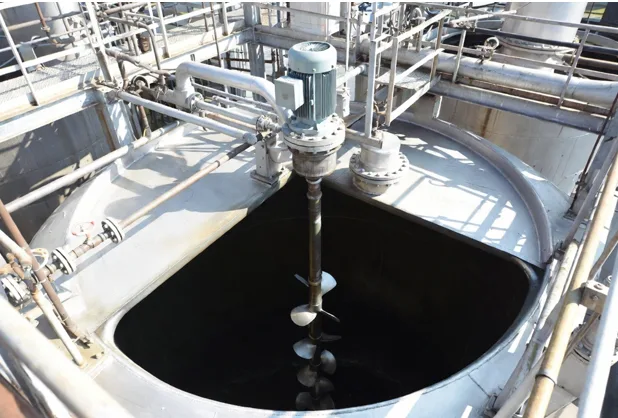
An industrial agitator is a powered mixing device installed through the top, side, or bottom of a tank. A typical system includes a motor, gearbox or direct drive, coupling, shaft, seal, mounting structure, and one or more impellers. The impeller converts shaft rotation into fluid movement.
Depending on the duty, the agitator may blend liquids, suspend solids, distribute heat, reduce sediment, or maintain uniformity. High-flow circulation requires a different impeller and speed from high-shear dispersion or gentle flocculation. Buyers should therefore describe the required mixing result rather than request only a motor size.
Why Agitator Selection Matters in Industrial Processing
Incorrect industrial mixer selection can create dead zones, uneven concentration, long batch times, excessive power consumption, vibration, seal leakage, or early component wear. In tanks containing solids, weak circulation may leave deposits on the bottom and cause inconsistent discharge.
A good specification defines success in measurable terms, such as blend time, temperature variation, concentration uniformity, or floor movement. These goals guide impeller, speed, and drive selection.
The lowest price may become expensive if the equipment needs frequent maintenance or misses the process target. Supplier evaluation should include technical reasoning, documentation, and after-sales support.
How Fluid Properties Affect Agitator Performance
Viscosity strongly influences flow, torque, impeller selection, and agitator motor power. Low-viscosity liquids usually circulate easily, while heavy oils, polymers, and concentrated slurries may require a larger impeller, lower speed, and higher torque.
Density affects power demand and solids movement. For slurry service, provide particle size, concentration, and settling behavior. Temperature also changes viscosity and corrosion risk.
A useful process-data sheet should include:
- Product or chemical name
- Density and viscosity range
- Minimum and maximum temperature
- Solids concentration and particle data
- Corrosive, abrasive, foaming, or crystallizing behavior
- Required mixing time and operating schedule
Choosing the Right Agitator for Chemical Processing
A chemical tank agitator may support blending, dissolution, neutralization, reaction, heat transfer, suspension, or dispersion. Each process needs a different balance of circulation and shear.
Axial-flow impellers often suit broad circulation. Radial-flow or higher-shear designs may support rapid incorporation. Viscous products may need anchor, helical, frame, or other close-clearance designs, sometimes with baffles.
Material selection must follow the chemical, concentration, temperature, and cleaning method. Carbon steel, coatings, and stainless grades offer different resistance. When reviewing industrial agitators, buyers should request a written explanation of the proposed impeller, speed, materials, seal, shaft support, and drive arrangement.
Industrial Agitators for Oil and Petroleum Applications
An oil tank mixer may promote homogenization, improve heat distribution, blend additives, or reduce sediment before transfer. Common duties include crude oil, fuel oil, lubricants, paraffin, asphalt, and related products.
Side-entry agitators are often considered for large storage tanks because they create directed horizontal flow while keeping the drive outside the tank wall. Top-entry units may suit process vessels or tanks with suitable roof support.
The supplier needs the viscosity range, startup temperature, tank dimensions, liquid levels, internals, sediment behavior, and circulation schedule. Flammable service must also define hazardous-area and electrical requirements.
Agitator Requirements for Wastewater Treatment Systems
Wastewater treatment includes several duties. Rapid mixing distributes chemicals, flocculation needs gentle movement, equalization needs broad circulation, and sludge tanks need enough floor movement to reduce deposits.
A wastewater treatment agitator must match the process stage. Provide tank dimensions, water depth, solids, sludge characteristics, flow pattern, and duty cycle. Outdoor exposure, corrosion, fibrous material, and cleaning access may also affect the design.
As a general mixing vessel selection principle, the mixer, tank geometry, and process objective should be evaluated together rather than as separate purchasing items.
Top-Entry vs Side-Entry Agitators: Which Is Better?
Neither configuration is universally better. The correct choice depends on the tank, liquid, process, and installation conditions.
| Selection Factor | Top-Entry Agitator | Side-Entry Agitator |
| Mounting | Tank roof, bridge, or top flange | Side-wall nozzle |
| Common strength | Flexible impeller positioning in process tanks | Directed circulation in large storage tanks |
| Shaft arrangement | May require a long shaft in deep tanks | Usually uses a shorter shaft |
| Structural focus | Roof support and shaft stability | Wall reinforcement and nozzle loading |
| Maintenance access | Usually requires top access | Drive is accessible from the side |
| Selection priority | Impeller level and vertical flow | Flow direction and tank coverage |
Top-entry agitators offer flexible impeller positioning, but deep vessels may require long shafts and added support. Side-entry units use shorter shafts and create directed circulation, but the tank wall must carry the loads.
Also consider liquid-level variation, obstructions, access, seal maintenance, and removal space.
How Tank Size and Shape Influence Agitator Selection
Tank volume alone does not define the mixing duty. Diameter, height, liquid depth, bottom shape, baffles, internal coils, and nozzles all affect circulation. A tall, narrow tank behaves differently from a wide, shallow tank with the same capacity.
Flat-bottom tanks containing solids may need stronger floor movement than conical-bottom process vessels. Coils, ladders, columns, and pipes can interrupt flow and create dead zones. Changing liquid levels may also expose an impeller or reduce its effectiveness.
Buyers should send a dimensional drawing showing operating levels, internal structures, mounting points, and nearby restrictions. This allows the supplier to check shaft length, impeller position, structural clearance, and maintenance access before production.
The Role of Impeller Design, Speed, and Motor Power
Agitator impeller design determines how mechanical energy enters the liquid. Diameter, blade shape, pitch, speed, and the number of impeller stages influence circulation, shear, torque, and power demand.
A larger motor does not automatically produce better mixing. An unsuitable impeller may create local turbulence without moving the full tank volume. An undersized drive may fail during startup or at maximum viscosity.
Variable-frequency control can help when one tank handles several products or process stages. However, the motor, gearbox, shaft, and impeller must support the proposed speed range. Buyers should ask for the normal operating point, maximum torque condition, and expected power draw rather than only the nameplate rating.
Key Materials, Seals, and Safety Requirements to Consider
All wetted parts must tolerate the liquid, temperature, abrasion, and cleaning chemicals. Carbon steel may suit some oil duties, while corrosive service may require a suitable stainless grade, coating, or another compatible material. Final selection should follow a documented compatibility review.
The seal must match tank pressure, leakage limits, mounting direction, and maintenance conditions. Buyers should confirm whether seal service requires an empty tank and which spare parts should be stocked.
Safety checks may include:
- Hazardous-area motor and electrical configuration
- Guards for couplings and rotating components
- Shaft and impeller integrity
- Lifting points and maintenance access
- Seal leakage management
- Applicable project codes and inspection documents
What B2B Buyers Should Check Before Choosing a Supplier
A reliable industrial agitator manufacturer should ask detailed questions before recommending a model. A quotation based only on tank volume and motor power may not reflect the real duty.
Buyers should compare six areas:
- Technical selection: impeller, speed, motor, gearbox, shaft, seal, and materials
- Customization: mounting, shaft length, voltage, controls, and wetted parts
- Quality control: material checks, dimensions, balancing, assembly, and testing
- Documentation: approved drawings, manuals, parts lists, and inspection records
- Export support: packaging, markings, shipping documents, and delivery terms
- After-sales service: spare parts, maintenance guidance, and troubleshooting
A clear proposal reduces misunderstandings among the factory, contractor, and end user.
Frequently Asked Questions
1. What information is needed to size an industrial agitator?
Provide tank dimensions, liquid levels, density, viscosity, temperature, solids data, mixing objective, duty cycle, materials, and installation conditions.
2. Is a higher-power agitator always better?
No. Performance also depends on impeller design, speed, tank geometry, and position. Excess power can increase cost without improving circulation.
3. Which agitator suits high-viscosity liquids?
The choice depends on viscosity range, tank shape, batch size, and process goal. High-viscosity products often need higher torque, lower speed, and a specialized impeller.
4. Can one agitator handle several products?
Possibly. The supplier must evaluate the full range of viscosity, density, temperature, and mixing goals. Variable-speed operation may provide useful flexibility.
5. What should overseas buyers confirm before shipment?
Confirm drawings, materials, drive data, inspection records, spare parts, manuals, packaging, delivery terms, and installation responsibilities.
6. Is a standard or customized agitator more suitable?
Standard equipment can serve simple duties, but many tanks require customization based on process data, tank geometry, and site limitations.
Conclusion
Choosing the right industrial agitator requires a clear understanding of the fluid, tank, process objective, installation environment, and maintenance needs. Chemical, oil, and wastewater duties place different demands on impellers, speeds, materials, seals, and drive systems.
B2B buyers should provide complete operating data and compare suppliers on technical reasoning, quality controls, documentation, lifecycle cost, and export support. This makes quotations easier to evaluate and reduces costly changes after manufacturing begins.
For product details, customized configurations, technical support, or a quotation, buyers can contact KEHENG Mixers and share their tank drawing and process information.