How to Choose the Right Media Console for Your Living Room
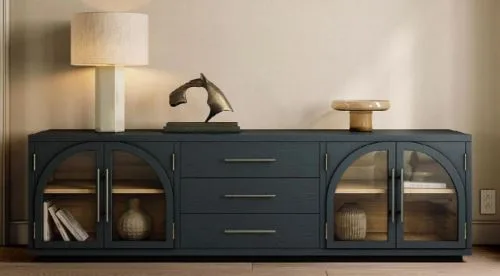
A media console is one of those pieces of furniture that looks simple until it has to work in a real living room. It may need to support a television, store electronics, hide cables, hold a router, make room for a soundbar and still look balanced beside the sofa and coffee table.
That is why choosing one by style alone often leads to disappointment. The most useful approach is to start with the room and the equipment, then narrow the options by finish and design. A few practical measurements can prevent the common problems that appear after delivery.
Get the Scale Right Before Looking at Style
Measure the television, the usable wall width and the distance from the console wall to the main seating. The cabinet should feel visually connected to the screen without stretching awkwardly across the entire wall.
If the television sits directly on the furniture, height affects the viewing position. If it is wall-mounted, height still matters because the console creates the visual base of the media wall. A very tall cabinet can make the screen feel pushed upward, while a narrow low unit beneath a large television can look undersized.
Depth is easy to miss. In a compact living room, an extra few inches can reduce the walkway between the console and the coffee table. Marking the footprint with painter’s tape is an easy way to see whether the piece will feel comfortable before committing to it.
Shop for the Equipment You Actually Own
Before comparing storage layouts, list what needs to live in the console. That might include a streaming box, game console, router, controllers, remotes, headphones, cables, DVDs or board games.
Open shelves are convenient for equipment that needs ventilation. Closed doors keep the room calmer but may not be ideal for devices that run hot. Drawers are useful for the small objects that otherwise migrate to the coffee table.
Internal dimensions matter as much as the outside measurements. Someone comparing a Hernest media console with other designs should check shelf height, cabinet depth and the location of cable openings rather than assuming that every compartment will fit standard equipment. Large power adapters and game consoles can take up more room than expected.
Think About the Cable Route Before Delivery
The best time to plan cables is before the console is against the wall. Locate the outlet, note where the television inputs sit, and decide where a power strip can be kept safely and accessibly.
For a wall-mounted television, cables can be routed inside the wall where construction and local rules allow it, hidden in a surface-mounted channel or simply kept together behind the console. Any of those approaches can look neat if the path is planned.
The goal is not to make every wire invisible. It is to avoid the situation where one new device requires pulling the cabinet away from the wall and untangling every connection. Leaving a little service space at the back can save time later.
Choose the Right Mix of Open and Closed Storage
A cabinet with the maximum possible storage is not automatically the best choice. Too many doors and compartments can make a small media wall feel heavy. Too much open shelving can expose every cable and accessory.
A mixed layout is often more practical. Frequently used electronics can sit in ventilated open sections. Controllers, spare remotes and cables can disappear into drawers or closed cabinets. Less-used items can stay deeper inside.
Think about daily routines rather than a styled product photo. If family members are constantly opening a door to reach a streaming device or moving décor to find a controller, the storage arrangement is working against the room.
Let the Console Support the Rest of the Living Room
Once the practical decisions are settled, materials become easier to choose. Warm wood can soften a room dominated by screens, glass and metal. Painted finishes can blend into the wall. Fluted fronts or subtle hardware can add enough detail to make the console feel intentional without turning it into the only focal point.
Matching every piece is unnecessary. Repeating one detail, such as a wood tone, metal finish or leg shape, is usually enough to connect the console to the coffee table, lighting or shelving.
It also helps to decide whether the cabinet should stand out or recede. A quiet room may benefit from a more expressive piece. If the room already contains bold art, patterned rugs and colorful upholstery, a simpler console may give the eye somewhere to rest.
Door design deserves a little attention too. Solid fronts create the cleanest appearance, but a device hidden behind them may run warmer and some remote controls may not work as reliably through the door. Glass or open sections solve some of those problems but expose more of the equipment. Neither approach is automatically better; it depends on what will actually be stored inside.
Cleaning and access are part of the same decision. A console that leaves a narrow gap around every device can be difficult to dust, and cables packed tightly against the back are harder to replace. A small amount of breathing room makes the setup easier to maintain and gives future equipment somewhere to go.
Leave Space for the Setup You Will Have Next
Technology changes faster than furniture. A new television may be wider. A future soundbar may need more surface area. A replacement game console may not fit the same shelf.
Adjustable shelves, flexible compartments and a little unused capacity make the furniture more resilient. This is especially useful for renters or homeowners who expect to move, because the next living room may have different proportions.
Before ordering, run through one last real-world check: Can the doors and drawers open without hitting other furniture? Is the outlet still reachable? Is there enough ventilation? Can people walk past comfortably? Would the cabinet still work if the television were upgraded?
A good media console does not call attention to all the problems it solves. It simply makes the television wall feel more organized, keeps equipment easier to use and gives the room a more finished sense of proportion.