How to Choose Women Glasses That Truly Fit Your Face
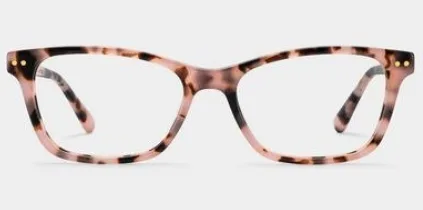
A pair of glasses sits on your face for most of your waking hours, which makes it one of the few purchases you wear every single day without thinking about it. That constant presence is exactly why the wrong frame becomes unbearable so quickly: a bridge that pinches, temples that slide down at the slightest tilt of your head, a shape that fights the line of your cheekbones. Most people discover these problems a week after the box arrives, long past the point where a return still feels convenient. The good news is that almost all of it is predictable. Fit follows measurable rules. Face proportion pairs with frame geometry in ways opticians have documented for decades. Lens choices behave differently depending on how thick and how curved the finished lens ends up being, and that changes how a frame sits long before you notice it in the mirror. Understanding those three layers turns an overwhelming wall of options into a short list you can genuinely decide between, and it makes the difference between a frame you tolerate and one you forget you are wearing.
Why Fit Matters More Than Trend When Choosing Women Glasses
Style gets all the attention, but fit is what determines whether a frame stays in your rotation. A frame that is too wide slides forward every time you look down, which shifts your optical centers and quietly blurs your vision. A frame that is too narrow presses into your temples and leaves marks by mid-afternoon. Neither problem is visible in a product photo, and neither is fixed by adjustment alone once the dimensions are wrong.
This is where measurements do more for you than any styling advice. Most listings for women glasses publish lens width, bridge width, and temple length, and those three numbers describe the frame far more honestly than a category label does. Two frames both described as cat-eye can differ by ten millimeters across the front, which is the difference between a frame that frames your eyes and one that swallows them.
Trend still matters, just later in the process. Once you know the dimensional range that works for you, you can chase whatever shape or color appeals to you within that range and expect it to feel comfortable. Working the other direction, picking a look first and hoping the fit cooperates, is how people end up with drawers full of frames they never reach for.
The Three Measurements That Decide Comfort
Lens width is the horizontal span of one lens, and it controls how much of your face the front covers. Bridge width is the gap between lenses that rests on your nose, and it is the single most common source of slipping and pinching. Temple length is the arm that runs to your ear, and it determines whether the frame sits level or tips downward.
The easiest way to find your numbers is to measure a pair you already like. Many frames print these dimensions on the inside of the left temple, usually as two numbers separated by a square symbol followed by a third. If you have never had a pair that felt right, measure the distance between your temples with a ruler held against a mirror, then look for frames whose total front width lands within a couple of millimeters of that figure. Getting close is enough; an optician can adjust nose pads and temple curve to handle the remainder.
Matching Frame Shape to Your Proportions Without Guesswork
The classic advice is to contrast your face shape with your frame shape, and it holds up reasonably well as a starting point. Softer, rounder faces gain definition from angular frames such as rectangle, square, or geometric shapes, because the straight lines introduce structure where there is none. Faces with strong angles at the jaw or cheekbone soften under round, oval, or gently curved frames. Heart-shaped faces, wider at the forehead and narrower at the chin, balance out under frames with visual weight along the bottom or a wider lower rim. Longer faces look more proportional in taller frames that break up vertical length rather than emphasize it.
Where this advice falls apart is when it gets treated as a rule instead of a tendency. Plenty of round faces wear round frames beautifully, usually because the frame is oversized enough to read as deliberate. The more reliable question is not whether the shapes contrast but whether the frame’s widest point aligns with the widest part of your face, and whether the top rim follows the general line of your brows without covering them entirely or floating far above them.
Color deserves a similar treatment. Warm tones such as tortoise, amber, and honey tend to sit comfortably against skin with golden or olive undertones, while cooler grays, blacks, and translucent blues suit skin with pink or neutral undertones. Neither combination is mandatory. A frame that clashes slightly with your skin tone but fits your face well will always look better than a perfectly coordinated frame that sits crooked.
Reading Your Own Proportions at Home
Stand in even light, pull your hair back, and take a straight-on photo with your phone at arm’s length. Looking at a photo removes the habit of unconsciously tilting your head, which is what makes mirror assessments unreliable. Compare the width of your forehead, cheekbones, and jaw, then note whether your face is noticeably longer than it is wide.
Virtual try-on tools are worth using at this stage, with one caveat: they render shape and color convincingly but scale poorly. Use them to narrow style choices, then confirm the decision against the published measurements. Retailers such as ZEELOOL list frame dimensions alongside the try-on preview, which lets you check both in the same place rather than trusting the render alone.
Choosing Frame Materials That Suit Your Routine
Material determines weight, durability, and how much a frame can be adjusted after you receive it. Acetate is the workhorse behind most bold, colorful frames because it holds rich patterns and can be cut thick without looking clumsy. It is heavier than metal, and it holds its shape rather than flexing, which means a good fit out of the box matters more.
Metal frames run lighter and thinner, and they disappear more readily on the face, which suits anyone who wants their glasses to be understated. Titanium sits at the top of this category for a practical reason: it resists corrosion from sweat and skincare products, and it tolerates being bent back into shape repeatedly. TR90 and similar polymers take a different approach, trading adjustability for flexibility, which makes them well suited to commutes, gym bags, and anyone who has snapped a frame by sitting on it.
Rimless and semi-rimless constructions minimize visual bulk but demand more care, since the lens itself carries structural load. If you handle your glasses roughly or take them on and off constantly through the day, a full rim protects the lens edge and saves you replacement hassle.
Lens Decisions That Change How a Frame Feels
Lens choice is usually treated as an afterthought once the frame is picked, but it feeds directly back into fit. Stronger prescriptions produce thicker lenses, and thickness adds both weight and edge visibility. A high-index lens reduces both, and it makes larger frames practical for prescriptions that would otherwise force you into small, deep-set lenses. If your prescription is strong, choose the lens material before you fall for an oversized frame.
Coatings and treatments address specific problems rather than general ones, so it helps to pick based on where your day actually goes:
- Anti-reflective coating cuts glare from screens and headlights and improves how your eyes look through the lens.
- Blue-light filtering suits long screen sessions and reduces the harshness of some LED lighting.
- Photochromic lenses darken outdoors, which works well if you move between indoors and sunlight repeatedly.
- Polarized lenses handle reflected glare from water, snow, and road surfaces better than tinting alone.
Progressive lenses deserve one specific note about frames: they need enough vertical lens height to fit the distance, intermediate, and near zones without cramping any of them. Very shallow frames leave too little room, which produces a narrow reading window and a lot of chin-lifting. If you wear progressives, filter for lens height before anything else.
Building a Small Rotation Instead of Hunting for One Perfect Pair
The search for a single frame that handles every context is what makes glasses shopping exhausting. A frame that reads as appropriate in a client meeting is rarely the one you want on a weekend, and the compromise between them tends to satisfy neither. Two or three frames chosen for different purposes solve the problem more cleanly than one endlessly reconsidered purchase.
A practical rotation usually looks like one neutral frame in a shape that suits your face and a color that disappears against your skin, one frame with more personality in a bolder shape or color, and a sunglass option if you spend real time outdoors. Once you know your measurements, adding to that rotation stops being a gamble, because the fit question is already answered and only the styling decision remains.
Turning Frame Shopping Into a Decision You Can Repeat
Choosing eyewear well comes down to sequencing. Start with the numbers, because lens width, bridge width, and temple length quietly decide whether a frame stays comfortable through a full day. Move next to proportion, using a straight-on photo rather than a mirror, and treat face-shape guidance as a tendency you can deliberately break once you understand it. Let material follow your routine instead of your aesthetic, since flexibility, weight, and corrosion resistance matter more over months than they appear to in a product image. Then settle the lens question before finalizing the frame, especially with a strong prescription or progressives, because thickness and vertical height both constrain which frames are realistic. Handled in that order, the process becomes repeatable. You stop starting from zero every time your prescription changes or your taste shifts, and you build a small set of frames that each earn their place. The frames worth keeping are the ones you forget you are wearing, and that outcome is a matter of method rather than luck.