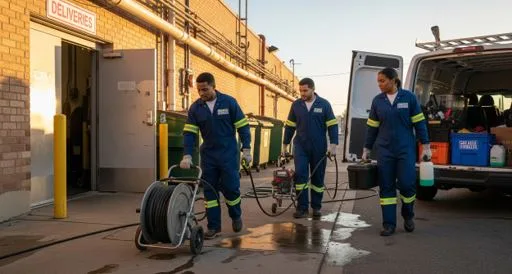
How to Customise Your Grease Trap Cleaning Schedule
Grease trap cleaning and grease trap maintenance is a necessary part of keeping them in working order.
But as most grease trap cleaning services will tell you, keeping on top of it can be a challenge.
Life gets in the way, and your business is unique, so having a customised schedule can help to relieve much of the stress and challenges.
We look at how this customisation can come about below, with specifical focus on commercial kitchens with too much fats, oils, and grease to manage on their own.
Why a customised grease trap cleaning schedule matters
An overtly generic grease trap cleaning schedule can be either too frequent or not frequent enough. Both outcomes create problems.
Over cleaning and unnecessary effort
Cleaning more often than required increases maintenance effort and cost without delivering additional benefit. It can also disrupt operations if access to the grease trap is limited.
Under cleaning and build-up risk
On the other hand, infrequent grease trap cleaning allows grease and solids to accumulate in the drains, reducing trap capacity and sky rocketing the likelihood of downstream issues and back-ups.
But luckily a customised schedule strikes a clean balance by matching grease trap cleaning frequency to actual usage.
Start with how your site operates and manages liquid waste
The best grease trap cleaning schedules begin with a clear understanding of day-to-day operations. You wouldn’t want regular cleaning in the middle of a lunch rush.
Volume and type of wastewater
Sites that generate high volumes of greasy wastewater will require more frequent grease trap cleaning. Consider:
- Number of meals or production runs per day
- Types of food prepared or processed
- Amount of frying or oil-based cooking
- Use of wash-down and cleaning processes
These factors directly influence how quickly fats oils and grease builds up in the trap.
Peak periods and seasonal changes
Many Australian sites experience fluctuations in activity. Busy periods, special events or seasonal increases can dramatically change grease production.
A flexible grease trap cleaning schedule should account for the variable amounts of grease waste you’ll need to deal with.
Assessing your grease trap performance
Observing how the grease trap behaves over time provides valuable insight into the right cleaning frequency.
Visual inspections
Regular visual checks can reveal early signs of build-up. Grease layers thickening much faster than expected indicate that grease trap cleaning may be needed more often.
Or – worse – that there are grease trap blockages that need to be dealt with.
Drainage behaviour
Slow drainage or gurgling sounds are often early indicators that grease is escaping the trap. These signs suggest that the current grease trap cleaning schedule may not be sufficient.
Tracking grease trap waste removal volumes
Recording how much material is removed during grease trap cleaning helps identify patterns. Consistently high volumes suggest that cleaning intervals may be too long to really count!
Building flexibility into your cleaning schedule
Customisation does not mean complexity. Simple adjustments can make a grease trap cleaning schedule more effective.
Adjust frequency rather than timing alone
Instead of locking in fixed dates, focus on cleaning frequency. For example, a site may normally require monthly grease trap cleaning, with additional cleaning during peak periods.
Allow for operational changes
Changes in menus, production processes or operating hours can all affect grease output. Reviewing the grease trap cleaning schedule after operational changes helps maintain control.
Matching cleaning schedules to different grease traps
Sites with multiple grease traps may not need to clean them all at the same frequency.
High use versus low use areas
Grease traps serving busy kitchens or high output processes will fill faster than those in low use areas. Customising grease trap cleaning by location improves efficiency.
Trap size and design
Larger grease traps can hold more material, which may allow for longer intervals between cleaning. Smaller or compact traps often require more frequent attention.
Coordinating grease trap maintenance and cleaning
A customised schedule should fit smoothly into daily operations.
Cleaning during low impact periods
Where possible, grease trap cleaning should be scheduled during quieter times to minimise disruption. Early mornings or planned downtime often work well.
Clear access and preparation
Ensuring easy access to grease traps and preparing staff in advance helps cleaning occur quickly and efficiently.
Avoiding common scheduling mistakes
Even well-intentioned grease trap cleaning schedules can unintentionally fall short.
Relying on fixed intervals alone
Fixed schedules do not account for real world variability like a new chef accidently pouring oil down a drain. Without regular review, grease trap cleaning can drift out of alignment with actual needs.
Ignoring early warning signs
Delaying grease trap cleaning despite signs of build-up often leads to emergency situations. Small adjustments to the schedule can prevent larger issues.
Treating all sites the same
Different sites produce grease at different rates. Customisation should reflect each location rather than applying a blanket approach.
Reviewing and refining your grease trap cleaning schedule
Customisation is an ongoing process.
Regular review points
Periodic reviews of grease trap cleaning performance help ensure the schedule remains effective. This can be as simple as reviewing inspection notes and removal volumes.
Learning from issues
If blockages or slow drainage occur, use them as feedback. These events often indicate that grease trap cleaning frequency needs adjustment.
Conclusion
Customising your grease trap cleaning schedule ensures maintenance aligns with how your site actually operates.
By considering wastewater volume, usage patterns and observed performance, cleaning can be planned at the right frequency to prevent problems without unnecessary effort.
A well-matched grease trap cleaning schedule supports reliable drainage, reduces disruption and helps maintain smooth day-to-day operations over the long term