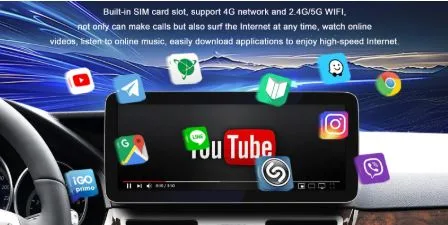
How to Integrate Apple CarPlay Adapter into Your Mercedes Benz
Today’s drivers expect their vehicles to feel like natural extensions of their digital lives. Whether it’s streaming music, getting turn-by-turn directions, or sending hands-free messages, seamless smartphone integration has become less of a luxury and more of a daily necessity. For Mercedes Benz owners, Apple CarPlay represents exactly that kind of connection — a smarter, safer way to stay linked to everything that matters while keeping your eyes on the road.
The challenge, however, is that many Mercedes Benz models — particularly those manufactured before native CarPlay support became standard — leave drivers without this capability straight from the factory. That’s where an Apple CarPlay adapter for Mercedes Benz steps in as the perfect bridge, unlocking advanced connectivity without requiring a full head unit replacement or costly dealership upgrades.
From hands-free calling and real-time navigation to instant access to your favorite apps, the right adapter transforms your existing infotainment system into a modern, intuitive hub. This guide is designed for tech-savvy Mercedes Benz owners who want a practical, thorough walkthrough — from selecting the best adapter to installation, configuration, and long-term optimization. Let’s get started.
Why Apple CarPlay is a Game-Changer for Mercedes Benz Owners
Not long ago, in-car entertainment meant a CD player and a basic radio. Today, drivers expect their vehicles to mirror the full power of their smartphones — instantly and intuitively. This shift toward connected driving has made Apple CarPlay one of the most sought-after features in modern vehicles, and for Mercedes Benz owners, its impact is particularly significant.
At its core, CarPlay transforms your iPhone into the brain of your car’s infotainment system. Instead of fumbling with a separate device or relying on outdated built-in software, you get a familiar, responsive interface projected directly onto your dashboard screen. Voice commands through Siri let you make calls, send messages, and control music without taking your hands off the wheel — a genuine safety upgrade, not just a convenience.
For Mercedes Benz drivers specifically, the synergy runs deeper. Mercedes has long positioned itself at the intersection of luxury and innovation, and CarPlay aligns perfectly with that identity. Real-time navigation through Apple Maps or Waze keeps you ahead of traffic, while seamless access to Spotify, Podcasts, and Audible makes every commute more enjoyable. The interface is clean, responsive, and designed to minimize distraction — values that Mercedes Benz engineering has always championed. Adding CarPlay capability through a dedicated adapter doesn’t compromise your vehicle’s premium feel; it enhances it, bringing your infotainment system firmly into the modern era.
Choosing the Right Apple CarPlay Adapter: Key Features and Technologies
Selecting the right CarPlay adapter for your Mercedes Benz isn’t as simple as picking the first option you find online. The market is filled with varying quality levels, and understanding what separates a reliable adapter from a frustrating one comes down to a handful of critical factors: compatibility with your specific model, processing power, build quality, and how naturally the device integrates with your existing dashboard setup. Brands like PEMP Car Audio have built their reputation in this space by focusing precisely on these details, offering adapters engineered specifically for the demands of Mercedes Benz infotainment systems.
Compatibility should be your first checkpoint. Not every adapter works seamlessly across all Mercedes Benz generations, so confirming that your model year and infotainment system are supported before purchasing saves significant headaches. Beyond compatibility, look for adapters that support both wired and wireless CarPlay connections, giving you flexibility depending on your daily preference.
Evaluating Processor Performance: The Role of Snapdragon 680
Processing power is where many budget adapters fall short. An adapter running on a capable chipset like the Snapdragon 680 delivers a noticeably different experience — faster app launch times, smoother map rendering, and virtually no lag when switching between CarPlay functions. For drivers who rely on real-time navigation, stream high-quality audio, or multitask between apps during a commute, this level of performance isn’t optional. The Snapdragon 680’s efficiency also means less heat generation during extended use, which contributes directly to long-term reliability. When evaluating adapters, always check the processor specifications rather than relying solely on brand reputation.
Design Considerations: Ultra-Thin Car Screen Compatibility
Mercedes Benz interiors are defined by their refined, uncluttered aesthetics, and your adapter should respect that design language. Ultra-thin car screen setups — increasingly common across newer Mercedes models — demand adapters with a low-profile form factor that doesn’t protrude awkwardly or obstruct sightlines. A well-designed adapter tucks cleanly behind or alongside the display, keeping cable routing tidy and the overall installation looking factory-standard. Beyond aesthetics, slim compatibility ensures the adapter doesn’t interfere with existing dashboard controls or climate vents, maintaining both functionality and the premium feel your Mercedes was built to deliver.
Step-by-Step Installation Guide for Your Mercedes Benz
Installing a CarPlay adapter in your Mercedes Benz is a straightforward process when approached methodically. The key is working through each phase carefully — preparation, physical connection, and software configuration — without rushing any step. A clean installation not only ensures reliable performance but also preserves the interior aesthetics your Mercedes was built with.
Preparation: Tools and Pre-Installation Checks
Before touching anything inside your vehicle, gather what you’ll need: a trim removal tool or flathead screwdriver wrapped in tape to avoid scratching surfaces, the USB or HDMI cable included with your adapter, and your iPhone with the latest iOS version installed. Equally important is confirming your specific Mercedes Benz model year and infotainment system version are listed as compatible with your chosen adapter. Take a few minutes to note your current head unit settings or photograph the screen — this gives you a reliable reference point if anything needs resetting after installation.
Connection Process: Hooking Up the Adapter to Car Systems
Start with the ignition off. Locate your Mercedes infotainment system’s USB port or media input — typically found in the center console or behind the head unit depending on your model. Connect the adapter’s output cable to this port, then route any additional cables along existing trim channels to keep the installation tidy. Avoid forcing cables across high-traffic areas where they could be pinched or pulled. Once connected, power on the ignition without starting the engine to confirm the adapter is receiving power and appearing on your dashboard display.
Configuration Steps: Syncing with Apple CarPlay and Car Radio Navigation
With the adapter powered on, navigate to your Mercedes infotainment menu and select the input source corresponding to the adapter. On your iPhone, enable CarPlay under Settings — General — CarPlay, then select your vehicle from the available devices list. For wireless connections, ensure Bluetooth and Wi-Fi are both active on your phone. Once paired, your CarPlay interface should appear on the dashboard screen within seconds. To integrate Car Radio Navigation, open Apple Maps or Waze through the CarPlay menu and confirm that audio routing is set to your car’s speakers. If the initial sync fails, restart both the adapter and your iPhone, then repeat the pairing process — this resolves the majority of first-time connection issues.
Optimizing Your Apple CarPlay Experience with Advanced Features
Getting CarPlay up and running is just the beginning. Once your adapter is installed and paired, a few deliberate adjustments can elevate the experience from functional to genuinely impressive. Start by exploring your adapter’s settings menu, where most Snapdragon 680-powered devices offer options for display brightness calibration, touch sensitivity tuning, and audio output prioritization — small tweaks that make daily use noticeably smoother.
Multitasking is where the Snapdragon 680 chipset truly earns its place. Unlike lower-end processors that stutter when switching between navigation and music streaming simultaneously, this chipset handles concurrent tasks without hesitation. Take advantage of this by keeping Apple Maps running in the background while managing playlists through Spotify — the adapter maintains both without dropping frames or audio quality.
Customization extends to your CarPlay home screen as well. Rearrange app icons to prioritize what you use most — navigation, phone, and audio apps typically belong in the most accessible positions. For ultra-thin car screen setups common in newer Mercedes models, enabling the adapter’s auto-brightness feature ensures the display remains readable in direct sunlight without washing out at night. Finally, set a recurring reminder to check for firmware updates through the adapter’s companion app — manufacturers regularly release patches that improve wireless stability, add app compatibility, and refine touch response, keeping your system performing at its best long after installation.
Troubleshooting Common Issues and Ensuring Long-Term Reliability
Even a well-installed adapter occasionally runs into hiccups. The most common issues — intermittent wireless disconnections, audio routing glitches, and delayed screen mirroring — are almost always software-related rather than hardware failures, which means they’re fixable without professional help. If CarPlay drops connection unexpectedly, start by toggling Bluetooth and Wi-Fi off and on from your iPhone’s Control Center, then re-select your vehicle from the CarPlay settings menu. For persistent audio glitches where sound routes to the phone speaker instead of your car’s system, navigate to your adapter’s audio output settings and manually reassign the default output to the vehicle speakers.
Firmware is your most powerful long-term maintenance tool. Outdated adapter software is the leading cause of app compatibility failures and touch response degradation — check your adapter’s companion app monthly and install updates promptly. Beyond software, physically inspect cable connections every few weeks, particularly after temperature extremes, since thermal expansion can loosen USB and HDMI connections over time. A quick reseat of the cables takes seconds and prevents the majority of intermittent power issues. For tech-savvy drivers, keeping a log of any recurring errors and the iOS version running at the time helps identify patterns quickly, making future troubleshooting faster and more targeted.
Upgrade Your Mercedes Benz Infotainment with Apple CarPlay
Integrating an Apple CarPlay adapter into your Mercedes Benz is one of the most impactful upgrades you can make to your driving experience — and as this guide has shown, it’s entirely within reach for any tech-savvy owner willing to invest a bit of time and attention. From selecting an adapter powered by a capable chipset like the Snapdragon 680 to navigating the installation process and fine-tuning your settings, each step builds toward a system that feels genuinely factory-integrated rather than bolted on.
The benefits extend well beyond convenience. Hands-free calling, real-time navigation through Apple Maps or Waze, and seamless audio streaming collectively make every drive safer and more enjoyable. For Mercedes Benz owners, CarPlay doesn’t clash with the vehicle’s premium identity — it reinforces it, bringing the infotainment experience in line with the engineering excellence the brand has always represented.
Car technology is evolving rapidly, and wireless connectivity, AI-driven navigation, and deeper smartphone integration will only become more central to the driving experience. Getting ahead of that curve today, with the right adapter and a clean installation, positions you to take full advantage of what’s coming next. Your Mercedes Benz deserves to stay current — and now, it can.