How to Keep Tiny Hands Warm: The Ultimate Guide to Kids’ Winter Gloves
Every parent knows the scene: a perfect snow day abruptly ends when your child starts crying because their hands are freezing. Kids lose heat rapidly through their extremities, and once their fingers get cold, the outdoor adventure is officially over. Finding the perfect winter handwear is arguably the most challenging part of building a functional winter wardrobe.
The standard grocery-store wool mittens or the cute, fashion-first gloves simply aren’t engineered for active, all-day winter play. If you want your kids to stay outside longer, you need to look for technical features and functional designs from brands that truly understand cold-weather gear.
Mittens vs. Gloves: The Battle of the Best
The debate often starts with a simple choice: mittens or gloves? For toddlers and kids under five, mittens are almost always the superior option. By keeping the fingers grouped together in a single insulated space, they generate and retain body heat much more efficiently than gloves, where each finger is isolated.
Gloves, on the other hand, provide increased dexterity. They are the logical choice for older kids who need to grip ski poles, buckle their boots, or hold hockey sticks. The best approach is often transitional: start with mittens for maximum warmth, and only move to Reima gloves as your child matures and requires more complex hand-eye coordination in the snow.
Key Features of a Reliable Glove
What makes a glove truly technical and not just a colorful accessory?
- True Waterproofing: Water-resistant is not enough. For a child who will be packing snowballs or wiping slush off their sled, you need fully waterproof materials. Look for sealed seams and high water column ratings.
- Extended Cuffs: This is arguably the single most important feature. The biggest gap in any child’s outerwear is the wrist. Look for handwear with extra-long cuffs that can be securely tucked under or pulled over the jacket sleeve, creating an impenetrable barrier against snow.
- Easy Closures: Anyone who has tried to wrestle a toddler’s thumb into a glove knows the struggle. Wide side zippers, large Velcro straps, and elasticated wrist bands make putting gloves on much easier, especially for young children who are still learning to dress independently.
The Role of Liners and Maintenance
For extremely cold days (think -10°C/14°F or lower), consider adding a thin liner glove. This additional layer adds significant insulation without bulk and can wick moisture away from the hand, just like a good base layer does for the body. Reima and Crocozebra offer a wide variety of these specialized liner options to complete the setup.
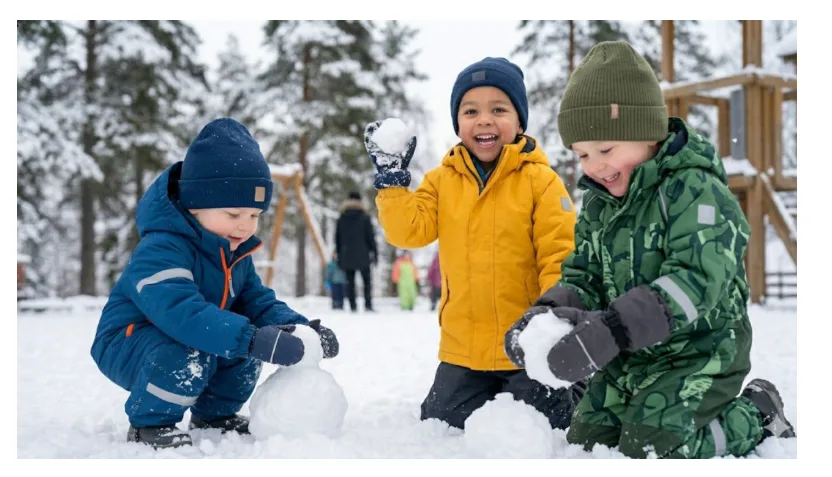
In conclusion, investing in technical, high-performance handwear is not an optional luxury; it is the key to unlocking winter fun. By prioritizing waterproofing, extended cuffs, and ease of use, you eliminate the constant temperature complaints. When their hands are warm, kids can focus on what really matters: enjoying the magic of winter exploration, just like the children playing in the snow in the image provided.