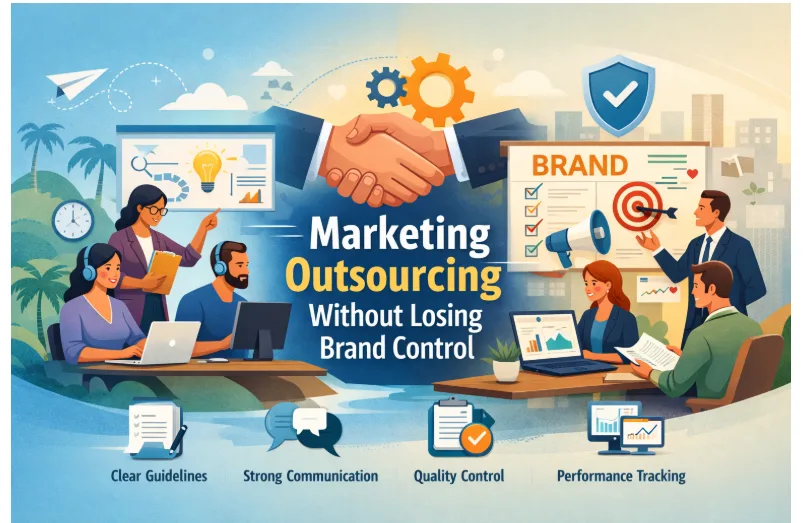
How to Move Marketing Outsourcing Without Losing Brand Control
Businesses today are constantly searching for smarter ways to grow while managing costs. One strategy gaining momentum is outsourcing marketing operations to external teams or offshore professionals. However, many companies hesitate because they fear losing control over their brand voice, messaging, and customer experience.
The good news is that outsourcing does not have to mean sacrificing brand consistency. When planned carefully, it can actually strengthen marketing operations and allow internal teams to focus on strategy while external specialists handle execution.
As someone who has worked closely with companies optimizing their digital presence, I have seen many successful transitions. The key is not simply outsourcing work but creating a structured system that protects brand identity.
This guide explains how businesses can move marketing outsourcing while maintaining complete brand control and ensuring long term growth.
Why Businesses Are Shifting Toward Marketing Outsourcing
Marketing has become more complex than ever. Businesses now need expertise in content creation, paid campaigns, analytics, design, automation, and social media. Hiring full in house teams for every specialty can quickly become expensive and difficult to manage.
Outsourcing allows companies to access specialized talent without the burden of expanding internal teams.
Common reasons companies choose outsourcing include:
- Reducing operational costs
- Accessing global expertise and creative talent
- Scaling campaigns faster
- Allowing internal teams to focus on strategy and growth
- Increasing productivity without increasing headcount
However, while outsourcing offers clear advantages, many leaders worry that external teams might not understand their brand values or voice.
That concern is valid. Without proper systems, brand messaging can become inconsistent. Fortunately, this can be avoided with the right approach.
The Biggest Fear: Losing Control of Brand Identity
Brand identity is more than logos and colors. It represents how a company communicates with customers, the tone used in messaging, and the emotional experience people associate with the brand.
When marketing tasks move outside the organization, companies often fear that external teams may:
- Misrepresent brand tone
- Publish inconsistent messaging
- Use incorrect visual guidelines
- Deliver content that does not reflect company values
These risks usually happen when outsourcing is rushed or poorly managed. A successful transition requires clear frameworks, communication channels, and documentation.
Businesses that carefully manage these elements often discover that outsourcing actually improves brand consistency.
Start with a Strong Brand Foundation
Before outsourcing any marketing activity, businesses must first build a clear internal foundation. External teams can only maintain brand control if they fully understand the brand itself.
This foundation should include a detailed brand guideline document that outlines everything related to brand communication.
Essential elements to document include:
- Brand mission and vision
- Core brand values
- Target audience profiles
- Tone of voice and communication style
- Visual identity guidelines
- Content style preferences
- Messaging do’s and don’ts
A well structured brand guide acts as a roadmap for any external team. It ensures that no matter who creates content or campaigns, the brand identity remains consistent.
Companies that skip this step often struggle with misaligned messaging.
Build a Clear Marketing Framework
Outsourcing works best when businesses separate strategy from execution.
Internal leadership should retain control over:
- Marketing strategy
- Brand messaging direction
- Campaign goals
- Customer insights
- Performance expectations
External teams should focus on execution tasks such as:
- Content production
- Graphic design
- campaign management
- research and analytics
- social media management
This structure ensures that brand control remains inside the company while specialized professionals handle operational work.
A strong framework also helps businesses scale marketing operations quickly without losing oversight.
Choose the Right Outsourcing Partner
Not all outsourcing partners are the same. The success of outsourced marketing depends heavily on selecting professionals who respect brand standards and communicate effectively.
When evaluating outsourcing partners, businesses should consider:
- Industry experience
- communication processes
- transparency in reporting
- ability to follow structured guidelines
- willingness to collaborate with internal teams
A good partner does not operate independently from your brand. Instead, they function as an extension of your internal marketing department.
Many companies successfully expand their marketing capabilities when they move-marketing outsourcing , move marketing offshore staffing while keeping strategic leadership in house.
Create Structured Communication Channels
Communication is the backbone of successful outsourced marketing.
Without consistent communication, misunderstandings can occur and brand messaging may drift from its intended direction.
Businesses should establish structured communication systems such as:
- Weekly strategy meetings
- shared project management platforms
- content approval workflows
- regular performance reports
These systems ensure that both internal and external teams stay aligned on priorities and brand expectations.
Project management tools like Trello, Asana, or ClickUp can help track progress and maintain transparency across teams.
When communication is consistent, brand control remains strong even when teams operate from different locations.
Implement a Strong Review and Approval Process
A review system ensures that all marketing output reflects the brand accurately before it reaches the audience.
Even highly skilled external teams should not publish content without internal review.
An effective approval process typically includes:
- Content creation by the external team
- Internal brand review for tone and messaging
- Edits and adjustments if needed
- Final approval before publishing
This process protects brand integrity while still allowing outsourced teams to work efficiently.
Over time, as external teams become more familiar with the brand voice, the approval process becomes faster and smoother.
Train Outsourced Teams Like Internal Employees
One mistake companies often make is treating outsourced teams as temporary vendors rather than team members.
The most successful outsourcing models involve onboarding external professionals just like internal staff.
This includes:
- Providing brand training sessions
- sharing internal documentation
- explaining company culture and values
- introducing them to internal team members
When external professionals understand the purpose behind the brand, their work becomes more aligned with company goals.
Training also builds stronger collaboration between teams and encourages accountability.
Businesses that take this approach rarely experience the brand control problems commonly associated with outsourcing.
Maintain Data Transparency and Performance Tracking
Brand control also involves understanding how marketing efforts impact the business.
Outsourced teams should provide transparent reporting on campaign performance and marketing results.
Key metrics may include:
- audience engagement
- lead generation
- content performance
- customer acquisition data
- conversion metrics
Tracking these indicators allows internal leaders to monitor whether outsourced activities align with strategic goals.
Transparent data also builds trust between internal teams and external partners.
When performance is measured consistently, outsourcing becomes a powerful growth engine rather than a risk.
Scale Gradually Instead of Outsourcing Everything at Once
One of the most effective ways to maintain control is to start small.
Rather than outsourcing all marketing operations immediately, businesses should begin with a few specific functions such as content creation or graphic design.
This gradual approach allows companies to:
- test workflows
- evaluate partner performance
- refine communication systems
- adjust brand guidelines if needed
As confidence grows, additional marketing tasks can be outsourced without disrupting brand identity.
Many successful companies slowly expand their outsourcing strategies after initially experimenting with move-marketing outsourcing , move marketing offshore staffing for specific tasks.
This step by step expansion ensures quality control and stable growth.
Protecting Brand Identity While Expanding Marketing Power
Outsourcing marketing does not have to weaken a brand. In fact, when managed strategically, it can strengthen brand visibility and operational efficiency.
The key lies in maintaining ownership of strategy while delegating execution to skilled professionals.
Businesses that succeed with outsourcing typically focus on several principles:
- strong brand documentation
- clear communication systems
- structured approval processes
- careful partner selection
- consistent training and collaboration
When these systems are in place, outsourced teams become valuable extensions of the internal organization.
Instead of losing control, companies gain the ability to scale marketing efforts faster, reach broader audiences, and maintain consistent messaging across channels.
In an increasingly competitive digital landscape, the companies that thrive are those that combine strategic leadership with flexible execution models. Marketing outsourcing, when handled correctly, offers exactly that balance.