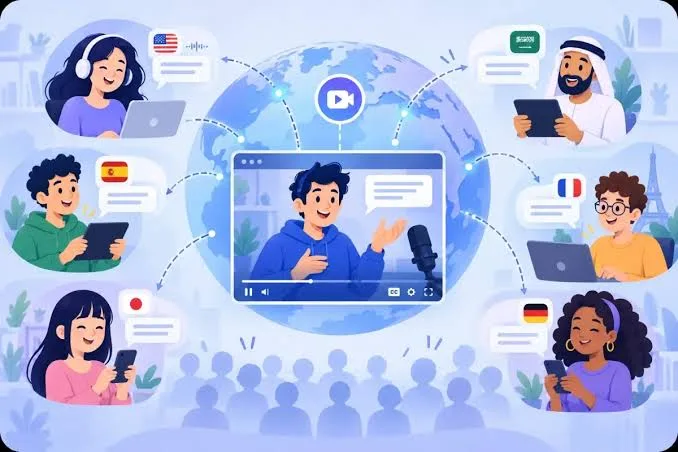
You have already paid for the filming, spent hours editing and published a video worth sharing. Then someone asks for a version in another language. Recording every scene again or commissioning a separate production for each market may be beyond your budget. The practical starting point is to reuse the material you already have and translate the parts a new audience needs.
An ai video translator can help create another language version without organising a new shoot. For independent creators, small businesses and British Asian cultural organisations, that opens a way to test international interest before funding a larger production. The budget still needs to cover checking the translation, editing and any required commercial plan, so start with a short sample rather than an entire library.
Choose one video and one audience to begin
Translating everything at once makes it difficult to spot mistakes or learn which versions are useful. Pick one video that already answers a clear question, demonstrates a product or tells a story viewers outside your home market can follow.
For example, a British Asian arts organisation might want to share an artist interview with audiences in India and other diaspora communities. The best first language depends on the people it wants to reach, rather than the number of languages a tool advertises.
Look for evidence in comments, audience locations, customer enquiries or requests from partner organisations. Choose one language for the first release. Once the workflow is reliable and the response justifies the effort, adapt the same source material for another audience.
Reuse the recording, but prepare the message
A new language version does not usually require new camera work. It does require a clear source and a message that makes sense outside its original setting.
Use your original video file where possible. Check that speech is easy to hear, particularly where music plays under an interview. Prepare a short reference sheet for names, product terms and phrases that should remain unchanged.
Review the script or transcript before translation:
- Explain local references that an overseas viewer may not recognise.
- Replace an unclear expression with a direct sentence where appropriate.
- Check dates, prices and calls to action for the intended audience.
- Remove outdated information before paying to process it again.
A phrase such as “visit us this bank holiday” needs more context for viewers in another country. A translated sentence will not solve that missing information by itself.
Match the format to the job
For a demonstration or interview where the pictures matter, a translated video keeps the visual explanation alongside the spoken message. Check the current language options, upload limits and export conditions before choosing a service.
If you are starting with a recorded conversation, narration or other audio material, an audio translator offers an audio-focused option. Translate a short section first and check the result before processing more. When that audio belongs in a video, allow time to place it in your editor and check the timing against the pictures.
Existing captions may be enough for some viewers. Spoken translation may suit others better, especially when the video asks them to watch a detailed demonstration. Choose the format that helps the audience follow the content, rather than producing every possible format for every language.
Keep reusable parts separate
Where your editing project allows it, retain separate dialogue, music and graphics tracks. That makes it easier to replace narration without rebuilding the entire video. Keep an editable copy of on-screen text too: an English label inside a product demonstration may still need translating even after the speech has changed.
Control the costs that come after translation
The processing fee is only part of the budget. A useful comparison includes the cost of preparing the file, reviewing the translation, making corrections and exporting the finished version.
Before committing, check:
- Whether the available credits cover your sample’s duration.
- Whether the plan permits your intended commercial use.
- Whether you can download the format you need.
- Whether corrections or new generations consume more credits.
- Who will review the language and how much of their time is needed.
Compare the total cost of a publishable version. A low initial price may be less useful if the output requires extensive reworking. Equally, an AI-assisted draft may be a practical starting point when a fluent reviewer can check a short, straightforward video without a large editing effort.
Review one version before repeating the process
Ask someone fluent in both languages to compare the translation with the original. Give them the reference sheet and ask them to check meaning first, then pronunciation, pace and timing.
Pay special attention to claims, instructions and qualifications. “May help” should not become “will fix,” and a tentative event date should not become a confirmed announcement. Keep approved terminology in a shared document so later versions do not start from scratch.
Watch the final export with its captions and graphics visible. Label AI-assisted translated audio clearly, and make sure you have permission to process and publish the source material.
Expand when the response supports it
Publish the first version with a translated title, description and a relevant next step for that audience. A viewer who follows a translated video should not arrive at a page they cannot understand.
Track whether viewers stay, ask relevant questions or take the action the video was designed to support. Use that response to decide which content and language deserve the next investment. Reusing a strong recording, checking a small sample and expanding gradually gives you a manageable route to global distribution without commissioning a separate production for every audience.