How to Test a Trading Strategy Without Risking Real Capital
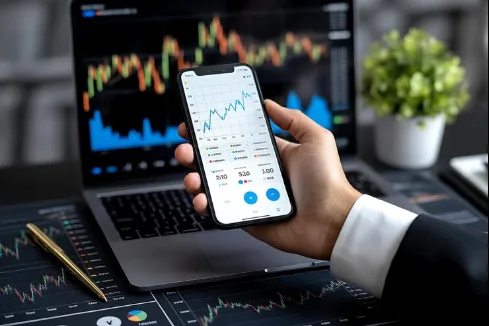
Developing a trading strategy can take considerable time, but putting an untested approach into the live market can expose your money to unnecessary risk. One practical way to evaluate an idea before committing real capital is through historical backtesting. By applying defined trading rules to previous market data, traders can see how a strategy might have performed under different market conditions.
A backtest trading app can make this process more accessible by allowing users to test entry and exit rules, analyse historical results and review key performance measurements in one place. While historical results cannot guarantee future performance, backtesting can help traders identify weaknesses before using a strategy with real funds.
What Is Strategy Backtesting?
Backtesting involves applying a trading strategy to historical market data to determine how it would have performed in the past. The trader defines specific rules, such as when to enter a position, when to exit, how much capital to allocate and where to place a stop-loss.
A useful backtest trading strategy should have clearly defined rules that can be applied consistently. For example, a strategy could be based on moving-average crossovers, momentum indicators, price patterns or a combination of several technical signals.
The objective is not simply to find a strategy with the highest historical return. Traders should also examine factors such as drawdowns, losing periods, trade frequency and consistency.
Why Backtesting Before Live Trading Matters
Testing a strategy before putting money into the market can provide several advantages:
- Risk reduction: Strategies can be evaluated without exposing real capital to market losses.
- Rule validation: Backtesting helps determine whether entry and exit rules work as intended.
- Performance analysis: Traders can review returns, drawdowns, win rates and other metrics.
- Market-condition testing: A strategy can be examined across different historical periods.
- Improved discipline: Clearly defined rules can reduce emotional decision-making.
- Strategy refinement: Weak areas can be identified before live implementation.
Backtesting should be treated as a research and evaluation process rather than a guarantee of profitability.
How to Backtest a Trading Strategy
The process can be broken down into several straightforward steps.
1. Define the Trading Rules
Start by writing down the strategy in precise terms. Define the indicators, entry conditions, exit signals, stop-loss rules and position-sizing approach.
Avoid vague instructions such as “buy when the market looks strong.” A backtest works best when every decision can be translated into a measurable rule.
2. Select Appropriate Historical Data
The quality and relevance of historical data can influence the usefulness of a backtest. Consider the asset, timeframe, trading session and historical period that match the intended strategy.
Testing across different periods can provide a broader view of how the strategy behaves during rising, falling and sideways markets.
3. Run the Backtest
A backtest trading app can automate the process of applying trading rules to historical price data. Instead of manually reviewing hundreds or thousands of charts, traders can use software to process historical scenarios more efficiently.
The output may include information such as total return, number of trades, winning percentage, average trade, maximum drawdown and other performance measures.
4. Examine More Than the Return
A high historical return may look attractive, but it does not tell the whole story. Consider how much risk was required to achieve that return.
For example, two strategies could produce similar overall gains while having very different maximum drawdowns. The strategy with smaller and more manageable drawdowns may be easier for a trader to follow in real-world conditions.
5. Test on Unseen Data
One common mistake is repeatedly adjusting a strategy until it fits historical data perfectly. This can result in overfitting, where a strategy performs well on the data used for development but struggles with new market conditions.
Separating development data from testing data can help provide a more realistic assessment.
The Role of AI in Backtested Trading Signals
Artificial intelligence can also be used as part of modern trading research. AI backtested trading signals may be evaluated against historical market data to identify patterns or assess how particular signals would have performed.
However, AI-generated signals should not automatically be considered reliable simply because they are produced by an advanced model. Historical testing remains important, and traders should understand the assumptions behind the model, data quality and methodology.
AI can support analysis, but it does not remove market uncertainty.
Common Backtesting Mistakes to Avoid
Backtesting can be useful, but poor methodology can produce misleading results. Some common problems include:
- Using incomplete or inaccurate historical data
- Ignoring transaction costs and spreads
- Failing to account for slippage
- Testing only a favourable market period
- Changing strategy rules repeatedly to improve historical results
- Overlooking maximum drawdown
- Using future information that would not have been available at the time of a trade
- Assuming historical performance will repeat in live markets
A realistic backtest should attempt to reflect the conditions a trader would actually face.
Backtesting Is Not the Same as Guaranteed Profit
One of the most important points to remember is that a successful historical backtest does not guarantee future results. Financial markets change, and factors such as volatility, liquidity, economic events and investor behaviour can affect performance.
Backtesting is best viewed as a way to gather evidence about a strategy rather than proof that the strategy will make money.
Traders can combine historical testing with paper trading or other forms of simulated trading before considering live execution. This provides another opportunity to evaluate whether the strategy behaves as expected outside the original testing environment.
Using Technology to Make Strategy Testing Easier
Modern trading technology has made strategy research more accessible. Instead of relying entirely on spreadsheets or manual chart reviews, traders can use specialised platforms to automate historical testing and organise performance data.
Platforms such as Fenzy AI can be relevant for traders interested in using technology to explore strategies, signals and market analysis. The key is to use these tools as part of a structured research process rather than relying on automated outputs without evaluation.
A disciplined approach combines clearly defined rules, reliable data, realistic assumptions and careful interpretation of results.
Final Thoughts
Testing a trading strategy before risking real capital can help traders understand how their approach might behave across historical market conditions. A backtest trading app can simplify the process by automating calculations and presenting performance information in a more accessible format.
Whether a strategy is developed manually or supported by AI backtested trading signals, traders should focus on more than historical returns. Drawdown, consistency, transaction costs, market conditions and the possibility of overfitting all deserve attention.
Backtesting cannot eliminate trading risk, but it can provide a valuable research step between developing an idea and considering it for real-world use.