How Traveling Changes the Way You Approach Relationships
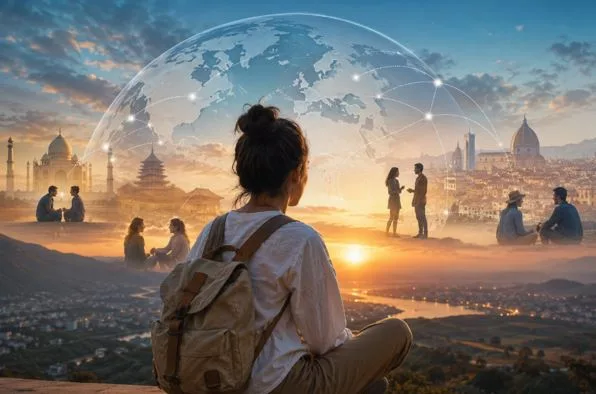
Travel does more than move you across borders. It also reshapes how you listen, trust, disagree, commit, and make sense of other people. For many adults, a trip abroad, a semester overseas, or a stretch of remote work in another country becomes a quiet training ground for relationship skills that are hard to develop in familiar routines.
At its core, this topic is about transfer: the way lessons learned on the road carry into romantic relationships, friendships, family dynamics, and professional connections. Travel exposes people to different norms around time, affection, privacy, conflict, gender roles, hospitality, and independence. Over time, those encounters can change not only what you look for in others, but how you show up yourself.
What the concept means
Travel changes relationship approach when exposure to unfamiliar places leads to a broader emotional toolkit. A person who navigates missed trains, language gaps, shared hostels, and cultural misunderstandings often becomes more observant and less automatic in how they interpret behavior.
In relationships, that can look like asking more questions before making assumptions, tolerating ambiguity better, and noticing that “normal” is often local rather than universal. International travel is also linked with feeling more connected to people in other countries, which helps explain why travel can soften rigid social boundaries and widen empathy.
Benefits worth paying attention to
Travel can deepen empathy, but the more practical benefit is relational adaptability. You stop expecting everyone to respond the way people in your hometown do. That matters in multicultural friendships, mixed-background marriages, and even workplace collaboration.
A common example is the traveler who returns home with a new habit of asking, “How do you usually handle this?” rather than insisting on one correct way. Someone who has spent time in Kraków, for instance, may realize that dating Polish women, or building any cross-cultural relationship, works better when curiosity replaces stereotypes and when communication includes local norms around family, directness, and social expectations.
Another benefit is stronger self-knowledge. Solo travel often exposes what drains you, what steadies you, and what you need from companionship. That makes future relationships more intentional.
For some people, that growing curiosity naturally extends to international dating. Rather than relying on assumptions, they look for opportunities to connect with people from different cultures and learn through real conversations. Platforms like Jump4Love make it easier to meet singles from around the world, giving users a chance to build genuine connections while exploring different perspectives and relationship expectations.
Why this topic feels more relevant now
The subject has gained traction in recent years for a simple reason: more people are building their personal lives around mobility. Travel and tourism contributed a record US$11.6 trillion to global GDP in 2025, supported 366 million jobs, and saw roughly 1.54 billion international overnight arrivals. UN Tourism also reported that international tourist arrivals rose again in 2025, with strong demand expected to continue. Travel is no longer a niche lifestyle marker; it is a normal part of work, leisure, and identity for millions.
Remote work has added another layer. Countries are adapting to longer stays and location-independent living through digital nomad visas and housing initiatives, which means more people are forming relationships while moving between cities and cultures rather than settling in one place first.
“Travellers prioritise meaningful experiences and plan with greater intention.” — Jason Wynn, CEO of Chase Travel
That idea applies to relationships too. People who travel often begin to value intentional connection over default compatibility.
What the data suggests
A few numbers help frame the shift:
- 50% median across 24 countries say they feel very or somewhat close to people around the world.
- 83% feel close to people in their own country.
- 78% feel close to people in their local community.
- Airbnb reported 90% growth in solo travel searches for spring 2025.
- Solo travelers averaged 17-night trips, compared with 9 nights for duo travelers and 8 nights for families.
Those figures point to two overlapping trends: people are moving more, and many are using travel for reflection rather than only sightseeing.
The main behaviors travel tends to change
1. You become slower to judge
A missed text, a reserved tone, or a different idea of punctuality can mean very different things across cultures. Travel teaches context. That habit improves relationships because it reduces the urge to label someone rude, cold, clingy, or uninterested too quickly.
2. You learn to communicate with fewer shortcuts
When you are abroad, hints and assumptions often fail. You ask clearer questions. You explain what you mean. You check understanding. Those same skills are useful in dating, conflict repair, and long-term partnership.
3. You get better at boundaries
Travel forces practical decisions: budget, safety, time, privacy, energy. People who travel often become more direct about what they can and cannot do. Healthy relationships usually benefit from that clarity.
4. You notice compatibility beyond chemistry
Shared values start to matter more. A couple may get along well at home but clash badly when plans change, money gets tight, or cultural expectations differ. Travel reveals how people handle stress, difference, and uncertainty.
How travel experiences translate into relationship skills
| Travel experience | What it teaches | Relationship impact |
| Navigating a language barrier | Patience and precision | Fewer assumptions, better listening |
| Getting lost or delayed | Flexibility under stress | Calmer conflict handling |
| Staying with locals or in shared spaces | Respect for different habits | Greater tolerance in daily life |
| Managing a tight budget | Honest prioritization | More transparent conversations about money |
| Traveling alone | Self-reliance | Less need for constant validation |
| Long stays abroad | Cultural humility | Stronger curiosity about a partner’s background |
Common challenges
- Idealizing cultural difference instead of understanding it
- Confusing novelty with compatibility
- Using travel as avoidance, especially after a breakup
- Struggling with stability after becoming used to constant movement
- Mismatched expectations in cross-border or long-distance relationships
Benefits and potential challenges
| Potential benefit | Matching challenge |
| Greater openness | Difficulty settling into routine |
| Better communication | Overexplaining or overanalyzing every interaction |
| Increased independence | Hesitation around commitment |
| Broader cultural awareness | Romanticizing difference rather than understanding it |
| Stronger resilience | Emotional fatigue from constant adaptation |
The hardest adjustment often comes after the trip. A person who has grown more independent may return to a relationship that still expects old patterns. Growth can be positive, but it may also expose incompatibility that was already there.
Real-world applications and case scenarios
Case scenario 1: The solo traveler
A woman takes a three-week solo trip after years of structuring life around a partner’s preferences. Abroad, she has to choose her own schedule, meals, routes, and social pace. She comes back realizing she wants more autonomy in her relationship. The trip did not damage the relationship; it clarified an unmet need.
Case scenario 2: The study-abroad student
A student living in Spain discovers that direct disagreement at dinner is not always a sign of tension. Back home, that insight helps him stop reading every difficult conversation as a threat. His friendships improve because he no longer equates harmony with silence.
Case scenario 3: The digital nomad couple
A couple working remotely across several countries learns to hold weekly check-ins about money, alone time, and logistics. Mobility forces structure. The habit becomes a long-term advantage because many stable relationships are built on repeated small conversations, not grand gestures.
Common misconceptions
One mistake is assuming travel automatically makes people more emotionally mature. Exposure helps, but only if the person reflects on it. Someone can cross ten borders and still cling to the same assumptions.
Another misconception is that intercultural relationships are inherently harder. They can be complex, but many problems blamed on culture are ordinary issues involving trust, planning, or mixed expectations. Culture changes the expression of the problem, not always the problem itself.
A third mistake is treating a partner from another country as a gateway to excitement or self-reinvention. That tends to flatten the person into a symbol rather than meeting them as an individual.
Future trends to watch
Longer stays, blended lifestyles, and international social circles will likely keep shaping relationship norms. Digital nomad visas, remote work, and “slow travel” are encouraging people to form deeper ties in places they once would have only visited briefly. Airbnb’s reporting on longer solo trips points in the same direction: travel is becoming less rushed and more reflective for many people.
That may lead to more relationships that begin across borders, more couples negotiating where “home” is, and more emphasis on communication habits over shared background.
FAQ
Does travel make people better at relationships?
Not automatically. Travel creates opportunities to build empathy, flexibility, and self-awareness, but those lessons only stick if someone reflects on them.
Why do solo travelers often seem more intentional in dating?
Solo travel can strengthen self-knowledge. People who know what energizes or overwhelms them often choose partners more carefully.
Can travel expose relationship problems?
Yes. Stress, planning, money, and uncertainty reveal habits that everyday routine can hide.
Are cross-cultural relationships harder?
They can require more explicit communication, though that can become a strength rather than a weakness.
Can travel make commitment feel harder?
For some people, yes. Frequent movement can make routine feel restrictive. Others become clearer about the kind of stability they actually want.
What is the biggest mistake travelers make in relationships?
Mistaking novelty for compatibility. A thrilling setting can disguise weak communication or mismatched values.