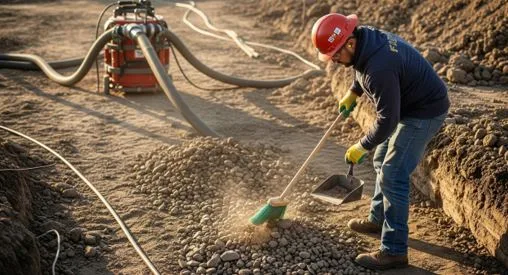
How Vacuum Excavation Works to Protect Soil Integrity
Hydro vacuum excavation is popular for it’s ability to protect underground utilities. But many neglect the fact that it’s also great for protecting soil integrity.
This is because hydro vacuum excavation equipment, unlike more traditional excavation methods, follows a process where the soil is not tossed around.
It’s also more effective at returning the soil to its place in the ground once the maintenance – or whatever else needed to be done – is complete.
Understanding soil integrity on worksites
Soil integrity refers to the condition and stability of soil in its natural or compacted state.
When soil integrity is maintained, the ground is better able to support loads, manage water movement and remain stable over time.
Disrupting soil unnecessarily can lead to problems such as settlement, erosion and poor drainage.
Especially in built-up areas, these issues can affect things like nearby structures, pavements and underground assets.
Why you should care about unnecessary soil disturbance
Excessive soil disturbance does not stop once excavation is complete. Loosened or displaced soil can continue to move, particularly under traffic loads or during wet weather.
Protecting soil integrity during excavation helps reduce the risk of long-term ground movement and surface damage.
What vacuum excavation involves
Vacuum excavation removes soil using suction rather than mechanical force. Soil is loosened using water or air and then drawn into a vacuum system for collection.
Think of it like a large, effective, watery vacuum cleaner.
This process allows operators to remove material gradually and with precision, targeting only the soil that needs to be excavated.
Unlike traditional digging methods, vacuum excavation does not rely on buckets, blades, or massive diggers better suited to farm work that cut through the ground.
The controlled suction process allows surrounding soil to remain compacted and undisturbed.
This is a key reason vacuum excavation is often selected for sensitive sites where maintaining soil integrity is critical.
How vacuum excavation protects soil integrity
Vacuum excavation supports soil stability in several important ways. We go through our favourites below.
Precise excavation boundaries
Vacuum excavation allows operators to define clear excavation limits. Soil is removed only within the required area, reducing the risk of over-excavation and unnecessary disturbance.
This precision helps maintain the strength and structure of adjacent soil, particularly in narrow trenches or around foundations.
Reduced vibration and ground stress
Mechanical excavation introduces vibration and stress into the ground. These forces can loosen surrounding soil and affect nearby structures.
Vacuum excavation generates minimal vibration, helping preserve soil compaction and reducing the likelihood of ground movement beyond the excavation zone.
Gradual exposure of soil layers
Soil is removed in thin layers during vacuum excavation. This gradual process allows operators to observe soil conditions as they work and adjust techniques as needed to avoid destabilising the ground.
Supporting stability around existing infrastructure
Maintaining soil integrity is especially important when working near existing assets.
Protecting footings and foundations
Excavation near building foundations requires careful control. Vacuum excavation enables soil to be removed without undermining footings or disturbing load-bearing ground.
This controlled exposure reduces the risk of settlement and structural stress.
Working around underground services
Underground assets often rely on surrounding soil for support. Removing too much soil or disturbing compaction can compromise this support.
Vacuum excavation preserves the integrity of surrounding soil, helping maintain the stability of pipes, conduits and other buried infrastructure.
Soil integrity in different Australian conditions
Australian worksites encounter a wide range of soil types and environmental conditions given the diversity of the countries landscape and our arable soil conditions.
Managing variable soil types
From sandy coastal soils to compacted urban fill, vacuum excavation adapts well to different ground conditions, so its controlled nature allows soil to be removed without collapsing surrounding material.
Working in wet or water-sensitive areas
In areas prone to water ingress, maintaining soil structure is critical. Vacuum excavation limits the spread of disturbed soil, helping manage water movement and reduce erosion risk.
Sensitive and landscaped areas
In parks, streetscapes and landscaped environments, preserving soil integrity supports healthy vegetation and long-term ground stability. Vacuum excavation minimises disturbance to root zones and surrounding soil.
Reducing the need for extensive reinstatement
Protecting soil integrity during excavation simplifies reinstatement once work is complete.
Better backfilling outcomes
When surrounding soil remains stable, backfilling is more straightforward. There is less need for extensive compaction or ground correction, as the excavation edges remain intact.
Improved surface performance
Maintained soil integrity helps prevent surface settlement after reinstatement. This is particularly important for footpaths, roadways and paved areas subject to regular use.
Vacuum excavation and Non Destructive Digging in maintenance works
Vacuum excavation is often used for investigation and maintenance tasks where soil integrity is a priority.
Asset inspections and assessments
When inspecting underground assets, vacuum excavation allows soil to be removed and replaced with minimal lasting impact. This supports repeated access over time without degrading site conditions.
Repair works in confined areas
In tight or sensitive locations, vacuum excavation provides access without compromising the surrounding ground. This makes it suitable for repair works where space and stability are limited.
Integrating hydro vacuum excavation into site practices
Using vacuum excavation effectively involves selecting the right approach for the task at hand.
Not all excavation requires the same level of control. Identifying areas where soil integrity is critical helps determine where vacuum excavation provides the most value.
What’s more, the incorporating of vacuum excavation early in project planning helps set expectations around precision and soil protection. This proactive approach supports better outcomes across the site.
Conclusion
Vacuum excavation protects soil integrity by removing material in a controlled and precise manner.
By limiting disturbance, reducing vibration and preserving surrounding compaction, it helps maintain ground stability across a wide range of Australian worksites.
For projects where soil condition matters, vacuum excavation offers a practical way to access underground areas while protecting the long-term performance of the site.