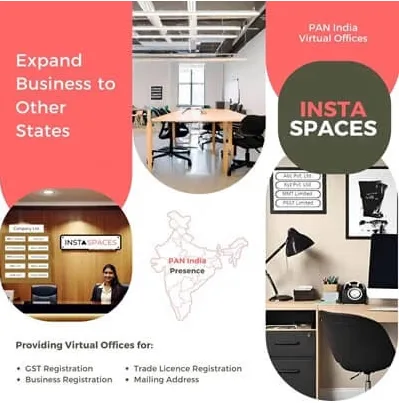
How Virtual Office Solutions Streamline Legal Compliance and Operational Efficiency for Modern Businesses?
In an era where flexibility defines the way companies operate, traditional office spaces are no longer essential for everyday business. Yet, legal compliance frameworks — particularly those governing taxation and official correspondence — still depend on the concept of a fixed business address. This dichotomy creates a puzzle for companies that are remote-first, hybrid, or digital only.
Fortunately, virtual office solutions are emerging not just as workspace alternatives, but as core components of compliance and operational strategy. They help businesses establish verifiable business identities without requiring expensive or inflexible real estate commitments — a critical advantage as regulations evolve alongside modern work practices.
Why a Business Address Still Matters in the Digital Economy?
Business compliance frameworks around the world rely on the concept of a registered address as a point of accountability. For example, authorities require a physical mailing address for:
- Taxation filings and correspondence
- Legal notifications and audit communication
- Verification during company registration
- Official notices related to business licenses
Even if a company’s workforce is fully remote or widely distributed, these regulatory systems still expect a fixed address where official communication can be reliably delivered and documented.
This requirement can create friction for digital businesses, particularly those that start without physical premises. That’s where virtual offices play a strategic role.
How Virtual Office Solutions Support Regulatory Requirements?
A virtual office offers more than just a postal address; it provides a compliance anchor — a legally recognised mailing location that regulators, courts, and tax authorities can use as your point of contact.
When a virtual address is used as part of your compliance strategy, it can help you:
- Meet documentation requirements during formal registrations
- Provide proof of address for official verification
- Receive government or tax department notices
- Maintain continuity of correspondence over time
This capability is especially valuable for entities that conduct business digitally or serve clients across multiple regions.
Virtual Offices as Tools for Organizational Efficiency
Beyond legal compliance, virtual office solutions also offer operational benefits that help businesses stay lean and scalable. These benefits include:
- Centralised correspondence management: Incoming official mail is received and tracked systematically, preventing loss or oversight.
- Professional communication channels: Businesses can present a credible address to suppliers, clients, and financial institutions.
- Flexibility without compromise: Teams remain free to work from anywhere while the company retains a recognised operational identity.
- Cost predictability: Unlike traditional leases, virtual offices usually involve straightforward, manageable costs — a boon for early-stage companies or those in growth phases.
This combination of compliance and efficiency makes virtual offices attractive not just to startups, but also to established organisations seeking operational optimisation.
Address Strategy: Selecting the Right Virtual Office Location
Although the concept of a virtual office is not location-dependent in terms of daily operations, the perception and strategic value of the address still matter. Regulators and corporate partners often interpret a business address as part of the company’s identity.
For instance, many companies choose a virtual office in Mumbai as their registered address when engaging with clients nationwide or dealing with national regulatory frameworks. Mumbai’s status as a major business and financial hub adds credibility and recognisability to official documentation — without requiring teams to set up a physical office.
This approach allows companies to combine compliance requirements with strategic positioning, supporting both regulatory acceptance and marketplace perception.
Address Continuity: A Key Factor in Long-Term Compliance
When registering under frameworks such as GST or other tax systems, businesses are often expected to maintain address continuity throughout their lifecycle. Frequent changes to the registered address can trigger additional verification or administrative reviews.
Virtual office providers help maintain this continuity without imposing physical lease constraints. This simplifies long-term compliance management, especially for businesses that evolve, expand, or shift operational models over time.
Supporting Growth Across Organizational Phases
Virtual office solutions are not just compliance tools for startups — they support companies at every stage, including:
- Early-stage formalisation: When teams exist but offices aren’t yet established.
- Growth and scaling: When operational flexibility is vital, and compliance needs expand.
- Expansion phases: When businesses enter new markets or serve clients across regions.
- Mature operations: When companies balance distributed teams with a centralised legal identity.
This adaptability is why many organisations view virtual offices as a long-term strategic asset — not just a temporary convenience.
Conclusion
Modern business structures demand flexibility, agility, and scalability. However, compliance frameworks — including taxation, licensing, and legal communication — still rely on the concept of a physical mailing address as an accountability mechanism.
Virtual office solutions bridge this gap. They provide businesses with compliance legitimacy while preserving operational flexibility and cost efficiency. By offering a verifiable address for official correspondence, virtual offices help companies meet regulatory requirements and maintain continuity of contact — even in a remote-first world.
In addition, strategic choices like selecting a virtual office in Mumbai can enhance credibility and support broader operational goals — positioning businesses for both compliance success and market confidence in an ever-evolving business landscape.